Carnivore Dinner Recipes
Carnivore dinner is the evening meal most carnivore eaters build their day around. Dinners run heavier than breakfast — typically 40 to 60g of protein and 30 to 50g of fat, anchored by a single piece of muscle meat. Common centers are ribeye, smash burgers, ground beef bowls, lamb chops, and pork chops, cooked in butter or beef tallow over high heat for 8 to 12 minutes. The standard format is one main protein cooked simply, no sides. Carnivore dinner doesn't need vegetables, starches, or sauces — the cooking fat plus salt does all the work. The dinner recipes on this site cover the major formats: butter-basted ribeye for the centerpiece meal, smash burgers for the weeknight default, and the related comparison guides for picking your cut at the butcher.
Recipes in this category
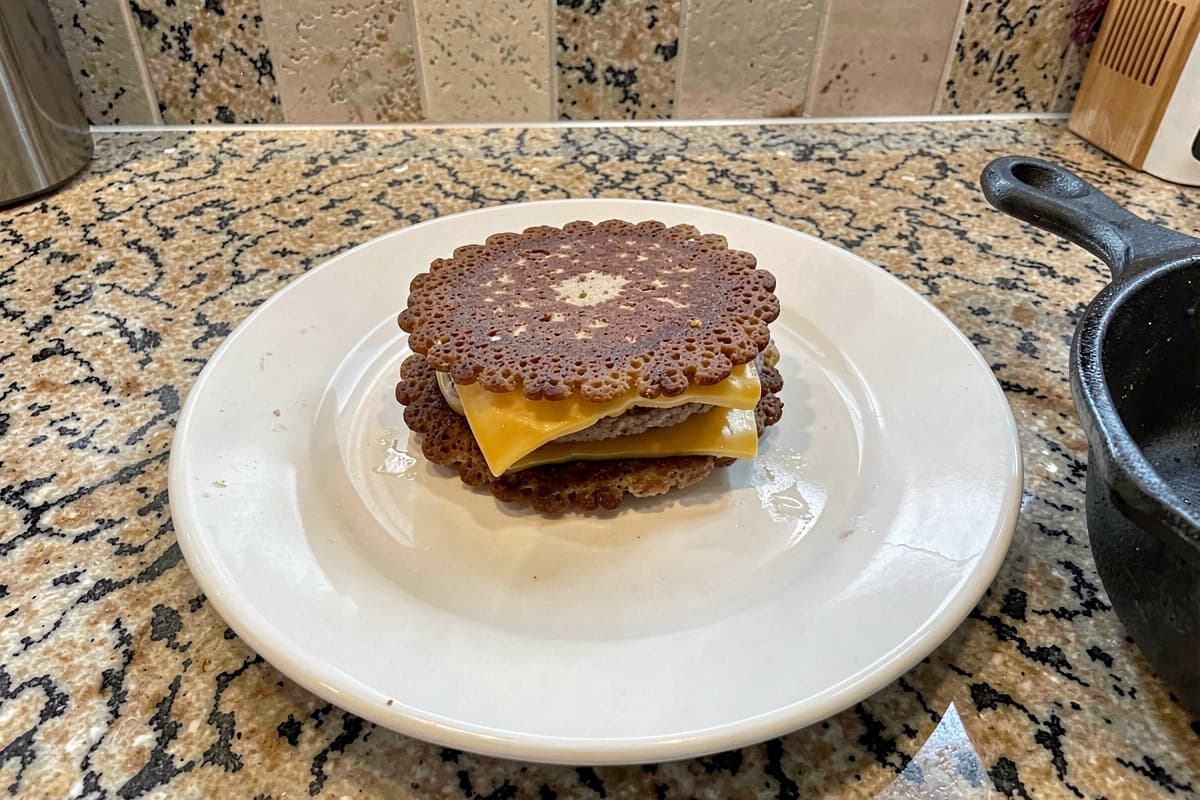
Carnivore Smash Burgers
Crispy-edged, juicy smash burgers made with 80/20 ground beef and butter. The ultimate simple carnivore meal ready in under 15 minutes.
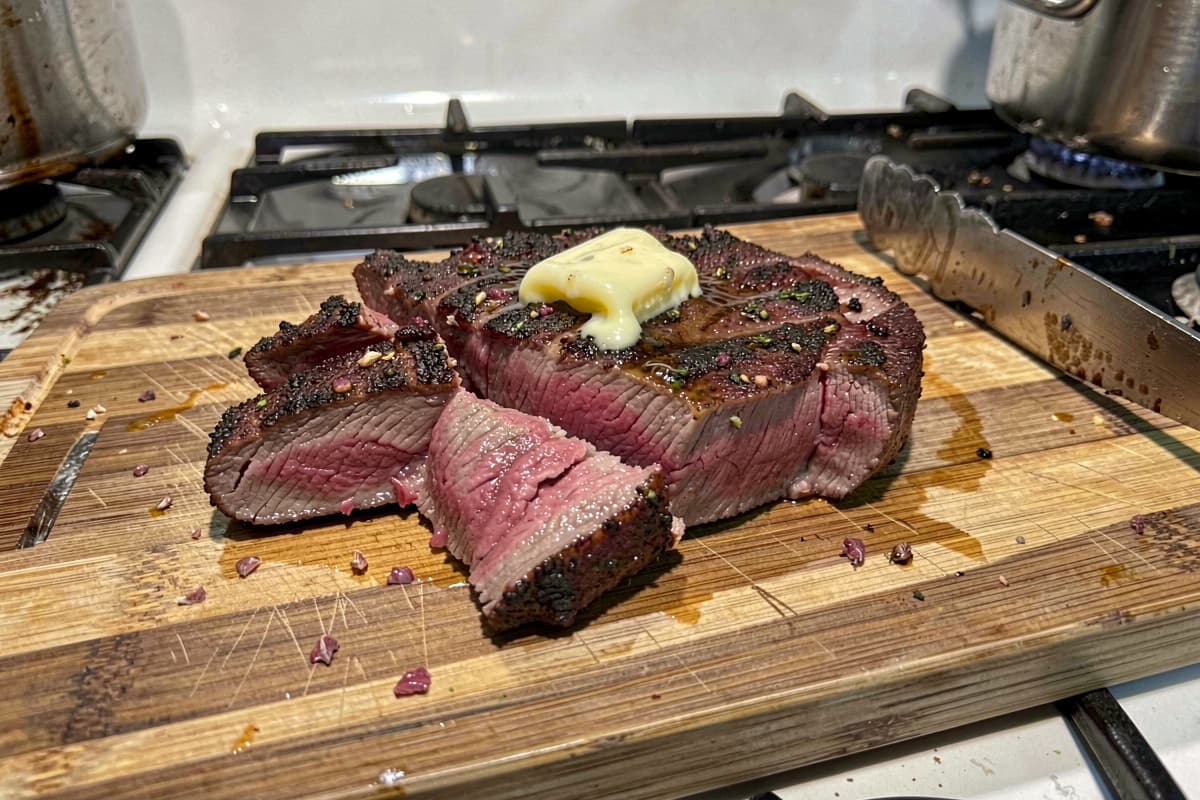
Butter-Basted Ribeye Steak
A perfectly seared ribeye basted in golden butter — the king of carnivore dinners. 48g protein and 42g fat per 10 oz cooked. Pull at 130°F medium-rare.
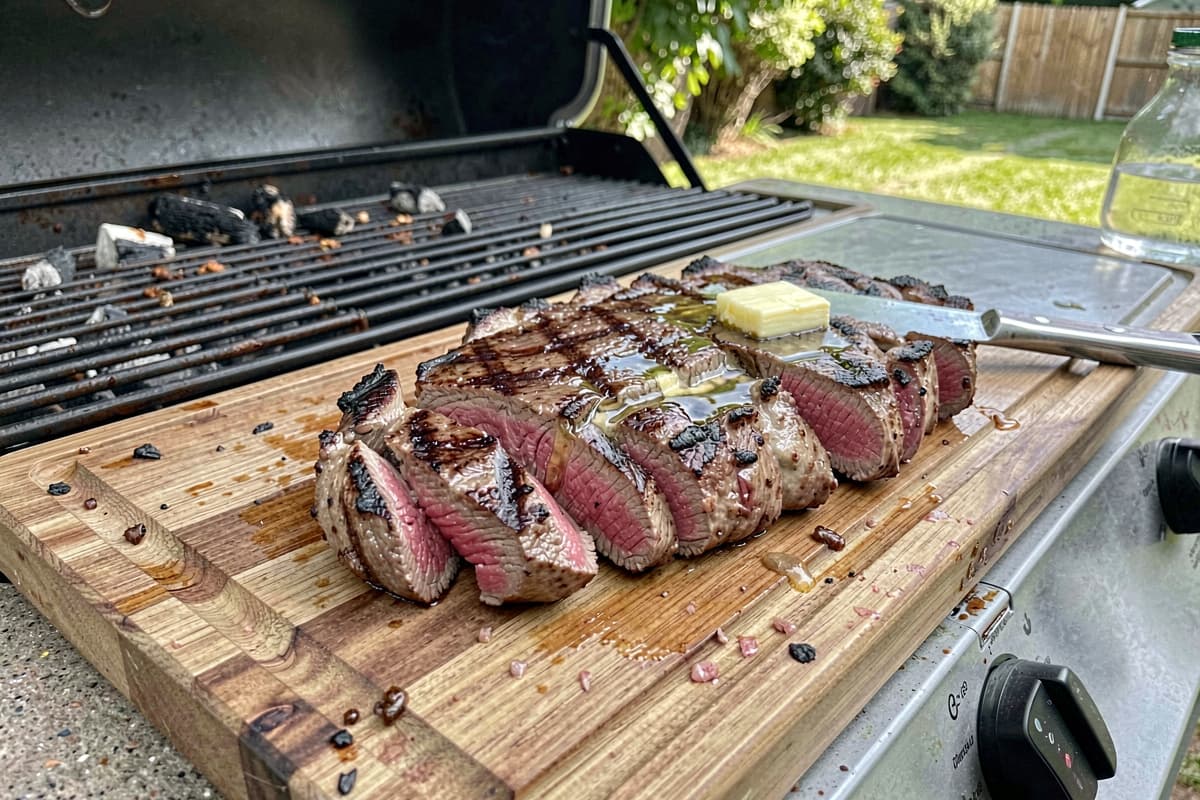
Grilled Top Sirloin Steak
Lean, beefy top sirloin grilled over high heat in 8 minutes. The carnivore answer to a fattier ribeye when you want more protein per calorie.
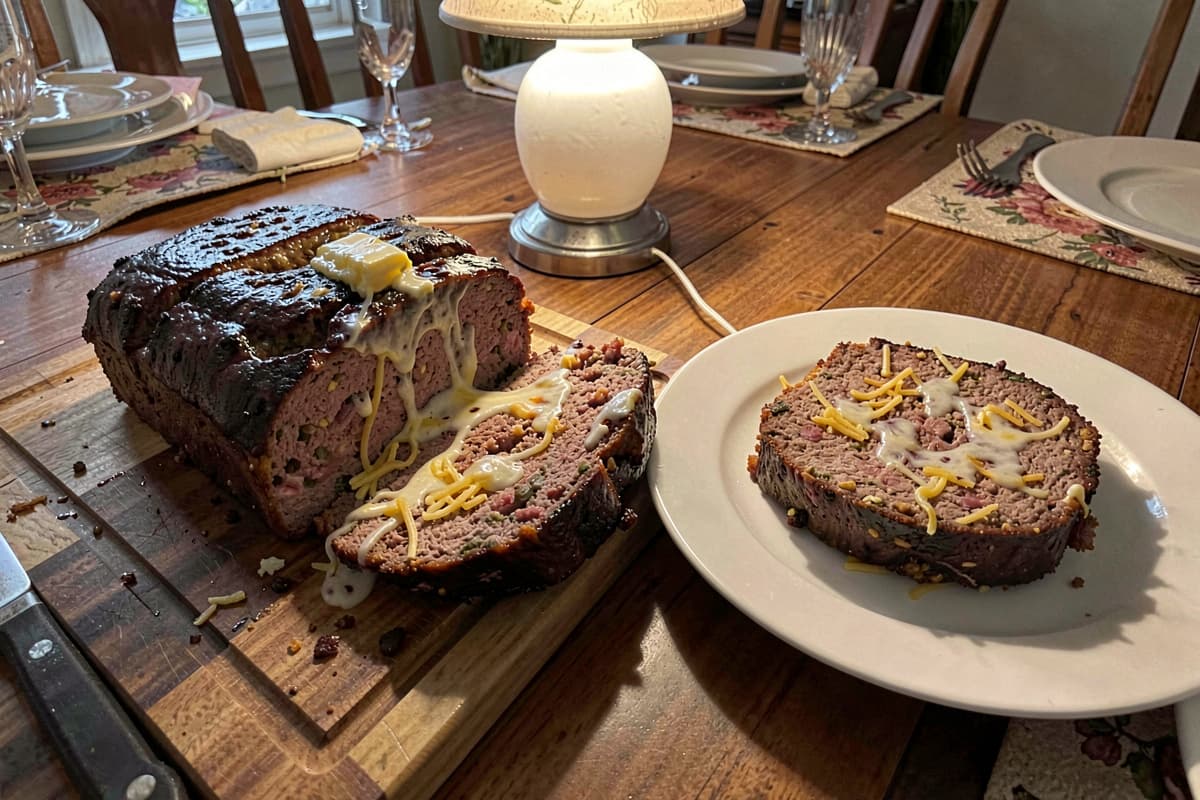
Carnivore Meatloaf (No Breadcrumbs)
All-meat meatloaf bound with eggs and cheese instead of breadcrumbs. 1.5 lb of 80/20 ground beef makes 6 servings at 32g protein, 26g fat each.
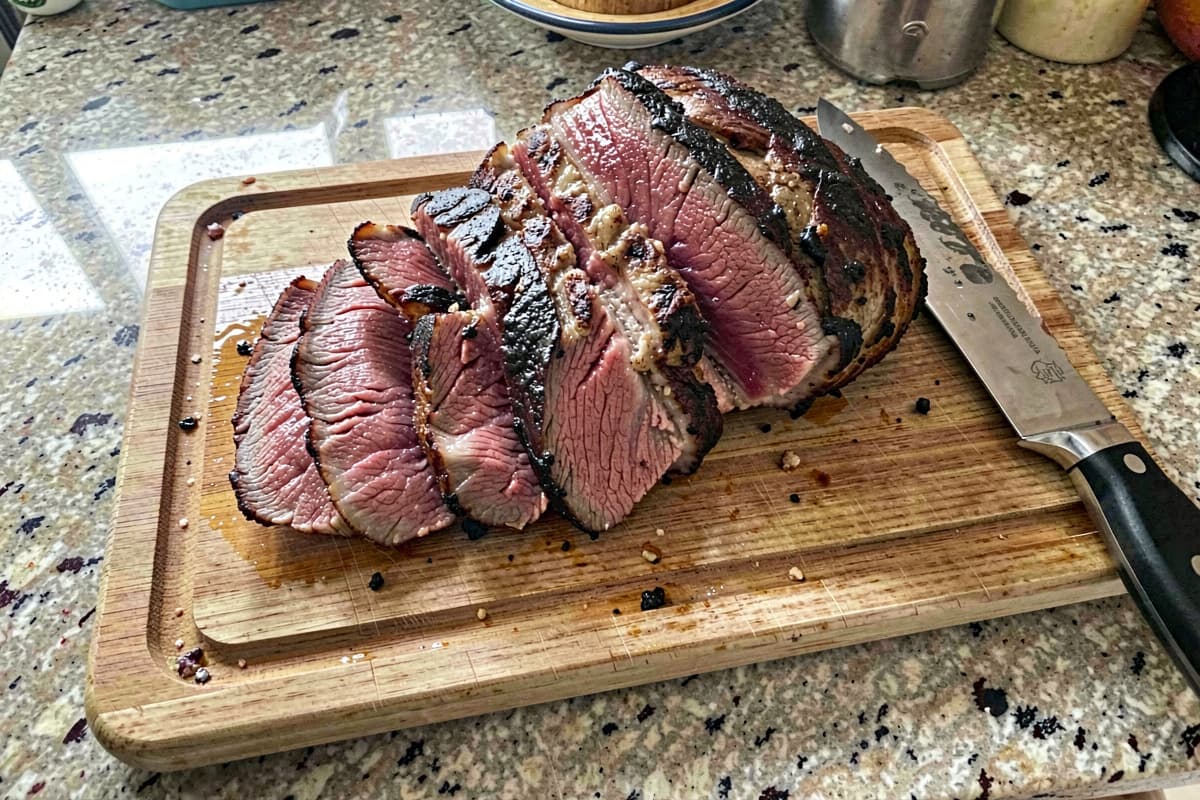
Tri-Tip Steak (Salt + Sear + Roast)
Tri-tip is a 1.5-3 lb triangular roast from the bottom sirloin. Sear all sides, oven-roast to 130°F, slice against the grain. ~$10/lb, 30 min total.
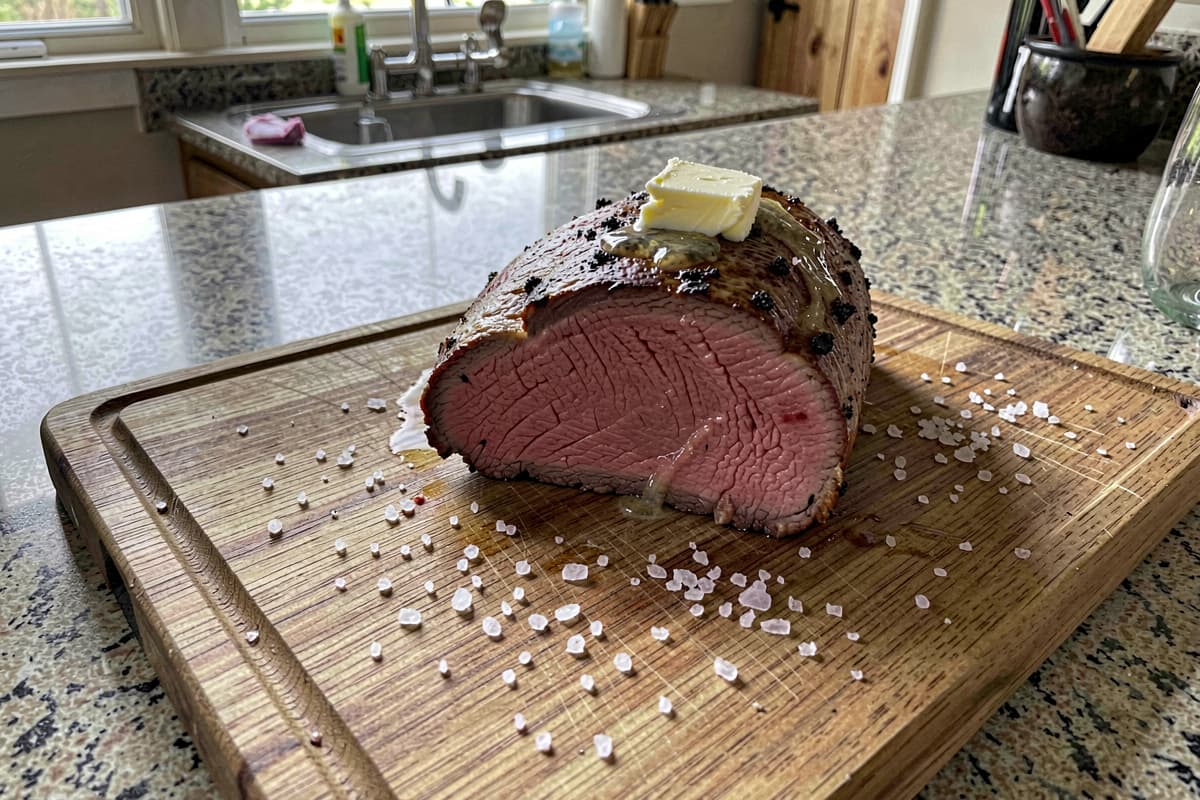
Teres Major Steak (The Filet's Cheap Twin)
Teres major is a 1 lb shoulder cut as tender as filet mignon at half the price. Pan-sear 3 minutes per side, rest, slice across the grain. 27g protein per 100g.
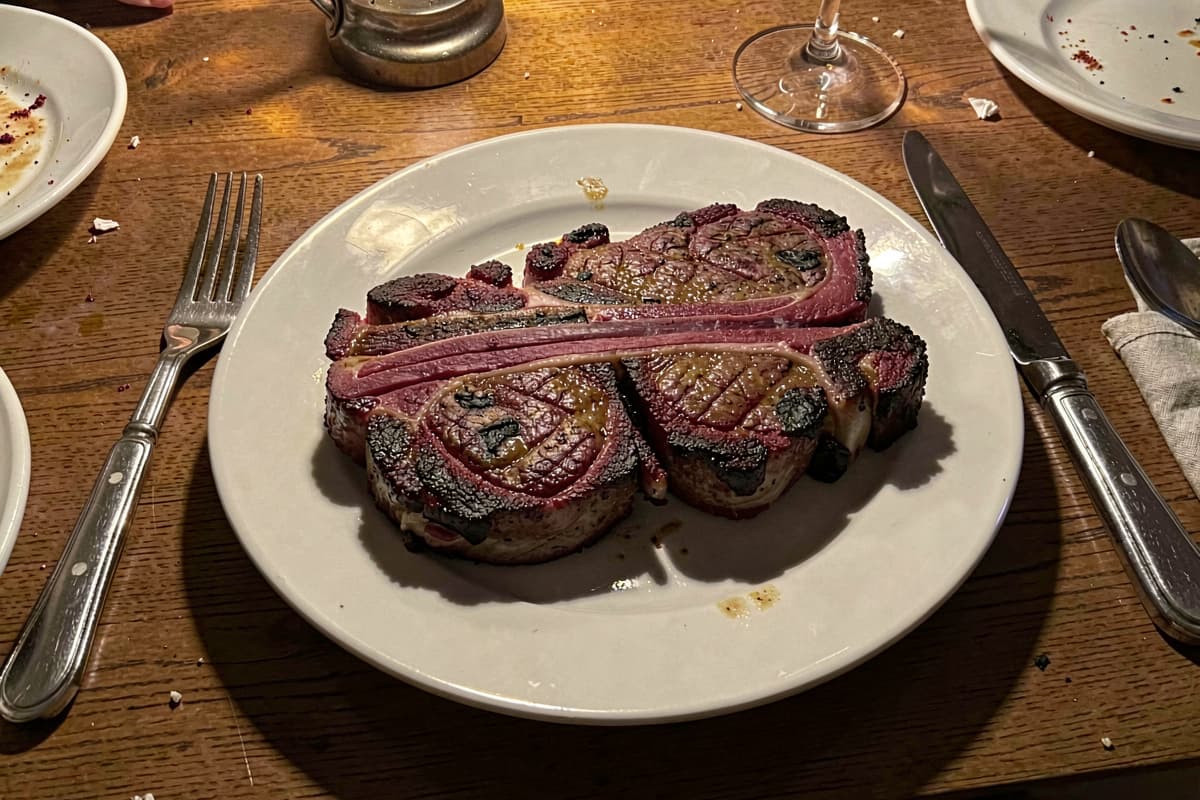
Chuck Eye Steak (Poor Man's Ribeye)
Chuck eye is the same muscle as ribeye, butchered from the chuck end. 24g protein, 16g fat per 100g cooked. Pan-sear 4 min/side, $7-10/lb vs $15+ for ribeye.
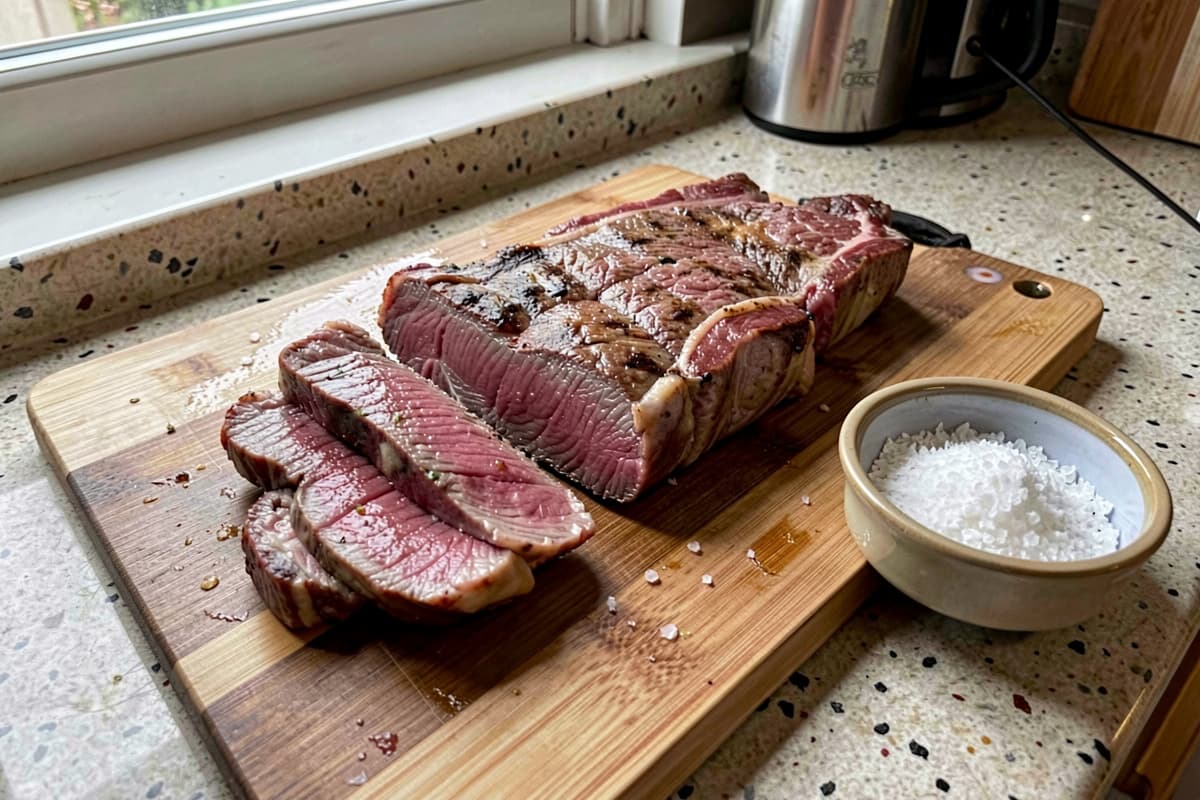
Flat Iron Steak (Pan-Seared, 8 Minutes)
Flat iron is a 6-8 oz shoulder steak with ribeye-level tenderness at $8-12/lb. Pan-sear 3-4 min/side. 27g protein, 13g fat per 100g cooked.
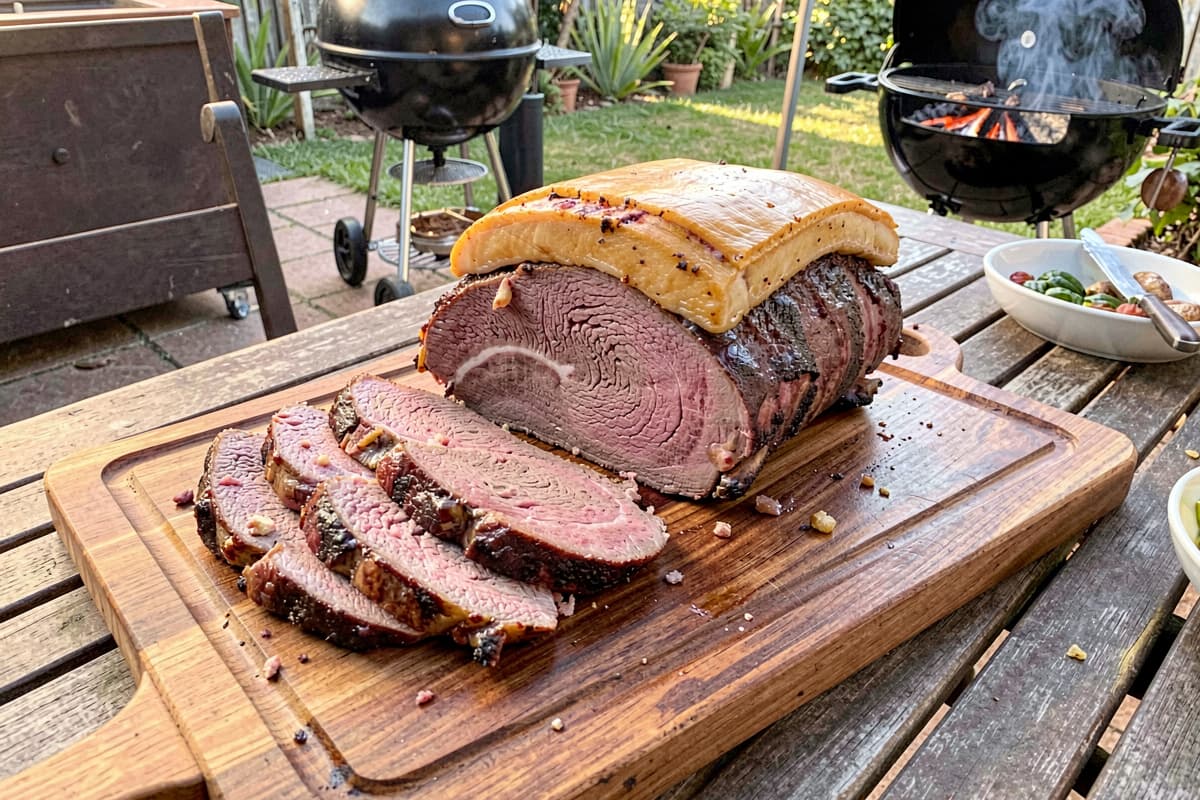
Picanha (Brazilian Top Sirloin Cap, Salt-Only)
Picanha is the top sirloin cap with fat cap intact — Brazilian steakhouse classic. Roast at 350°F to 130°F internal, slice across the grain.
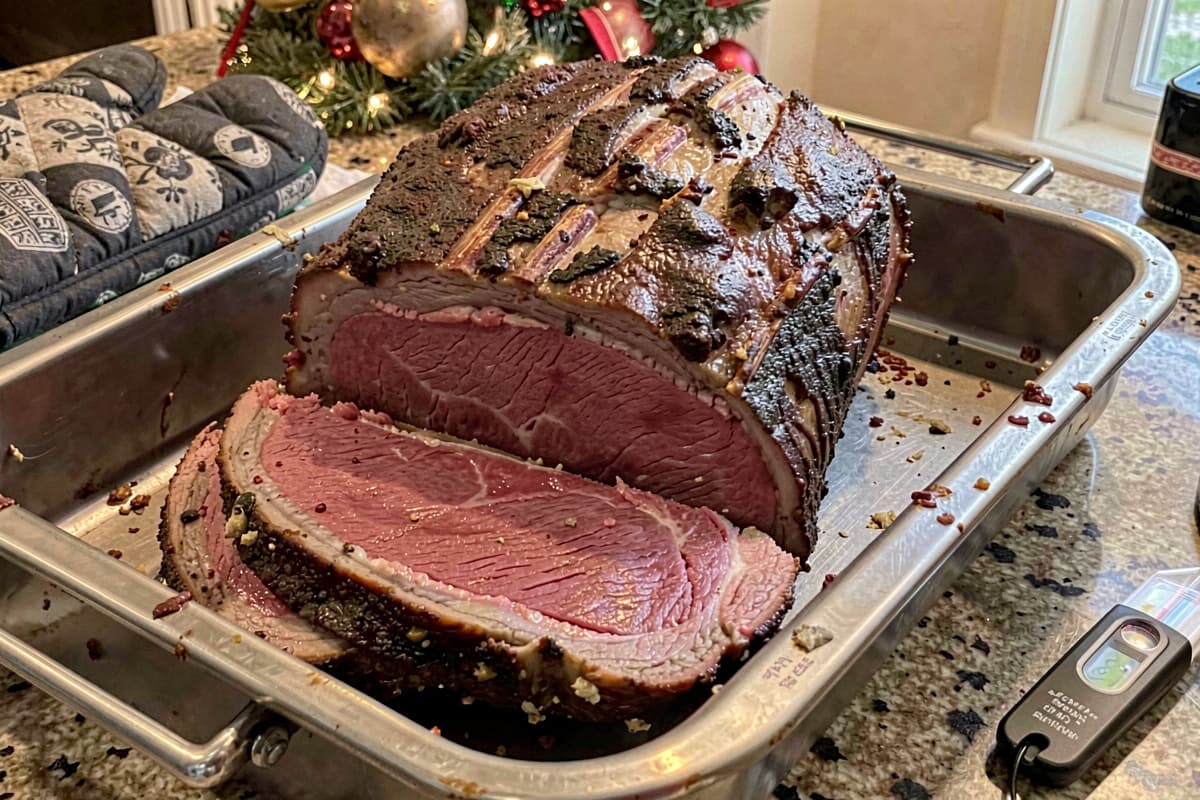
Reverse-Sear Prime Rib (Holiday Dinner)
Reverse sear: 250°F oven to 115°F internal, then 500°F sear 8 minutes. Edge-to-edge medium-rare for an 8-12 lb prime rib roast. 24g protein per 100g.
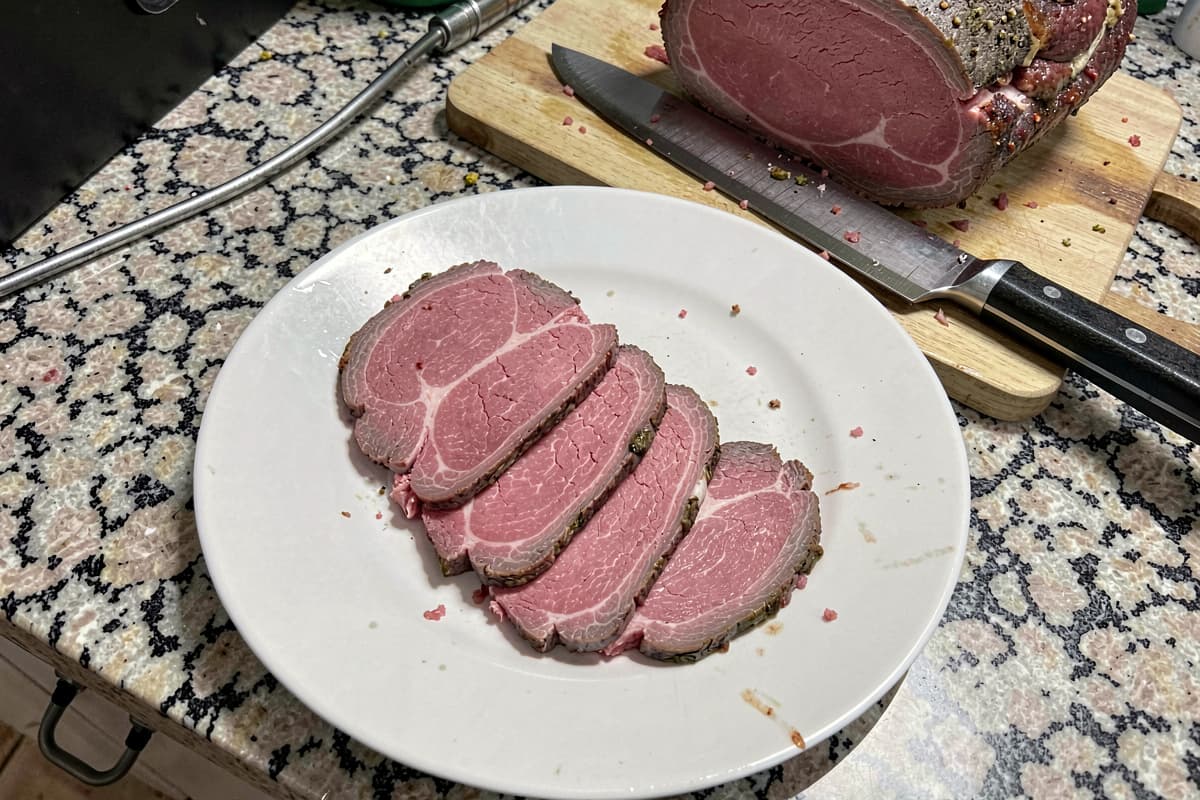
Bottom Round Roast (Lean Budget Slow-Roast)
Bottom round is a 3-4 lb lean roast at $5-7/lb. Slow-roast at 200°F for 90 minutes to 130°F internal, then sear. 28g protein, 5g fat per 100g cooked.
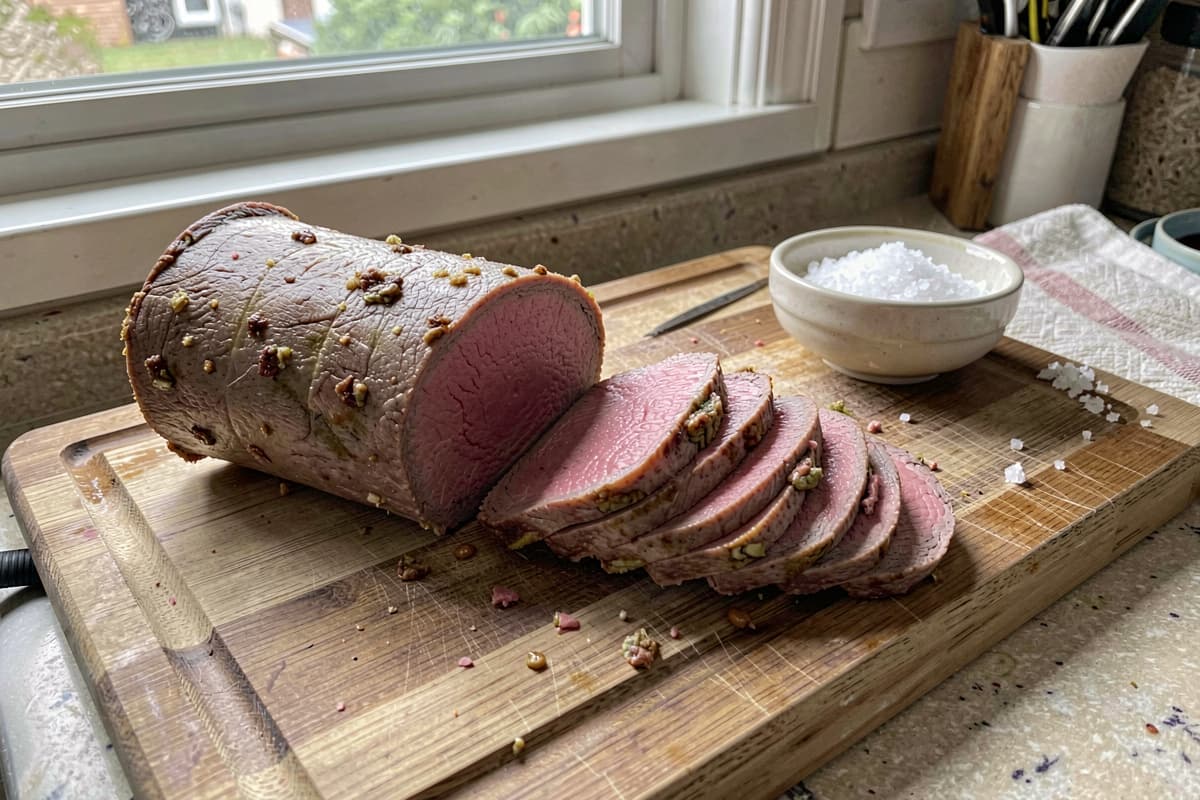
Eye of Round Roast (Cheapest Sliceable Beef)
Eye of round at $4-6/lb is the cheapest sliceable beef roast. Slow-roast at 200°F to 130°F internal, sear briefly. 29g protein, 5g fat per 100g cooked.
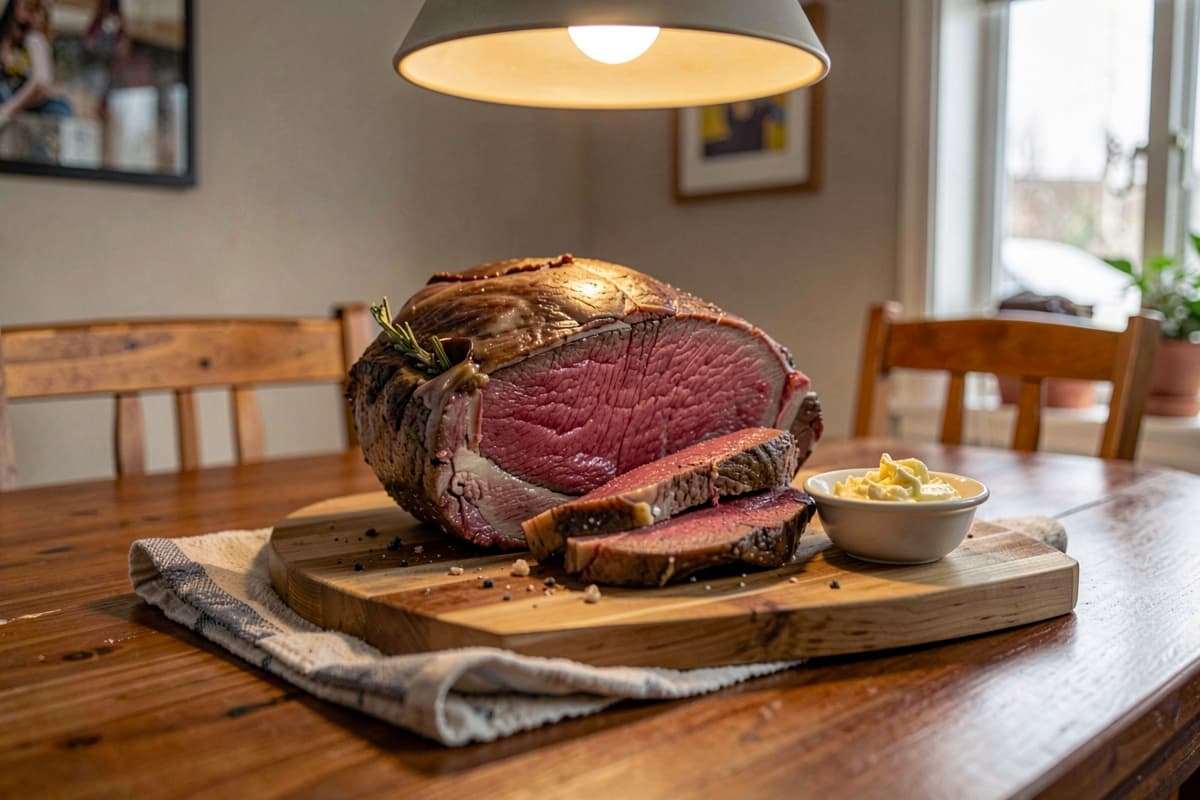
Top Round Roast (Lean Holiday Beef)
Top round is a 4-5 lb lean roast, $6-8/lb. Slow-roast at 200°F for ~2 hrs to 130°F, sear briefly. 28g protein, 6g fat per 100g cooked. Feeds 8.
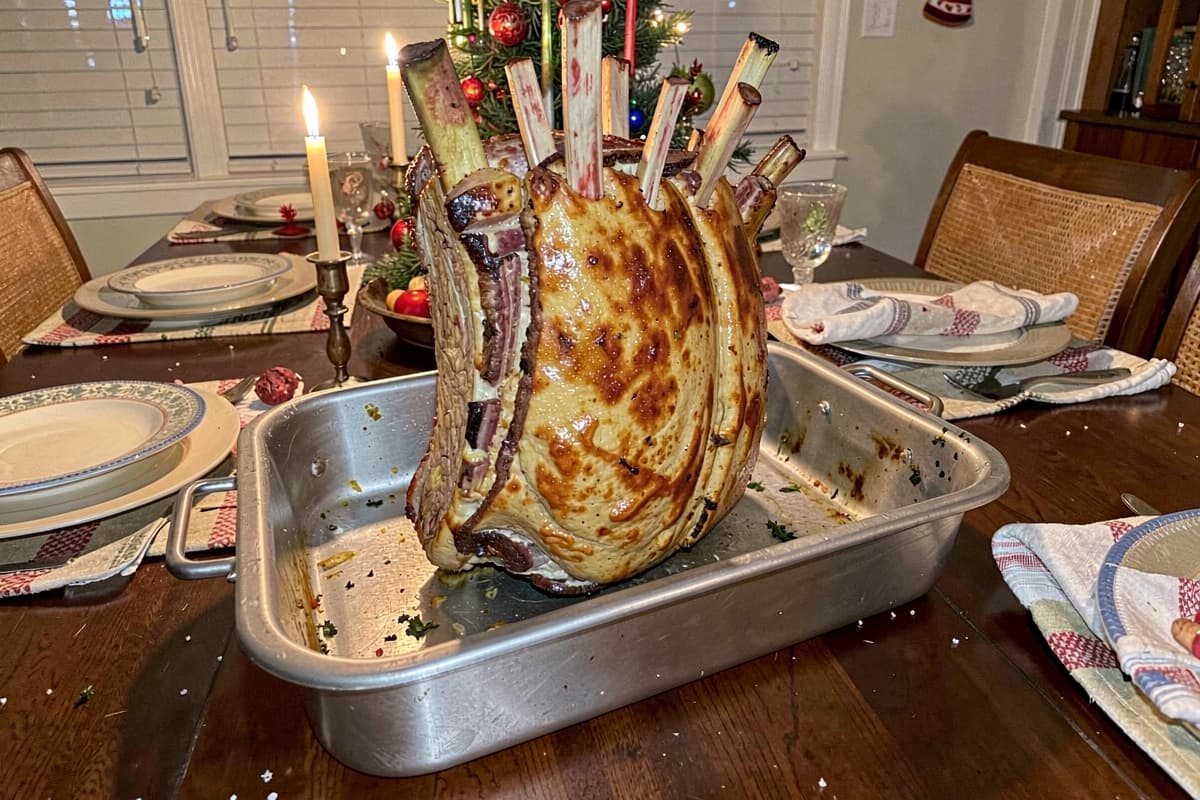
Standing Rib Roast (Bone-In, Salt-Crusted)
Bone-in prime rib — 4-rib roast (8-10 lb) at 250°F oven to 115°F, sear at 500°F. Salt only. 24g protein, 18g fat per 100g. Feeds 8-10.
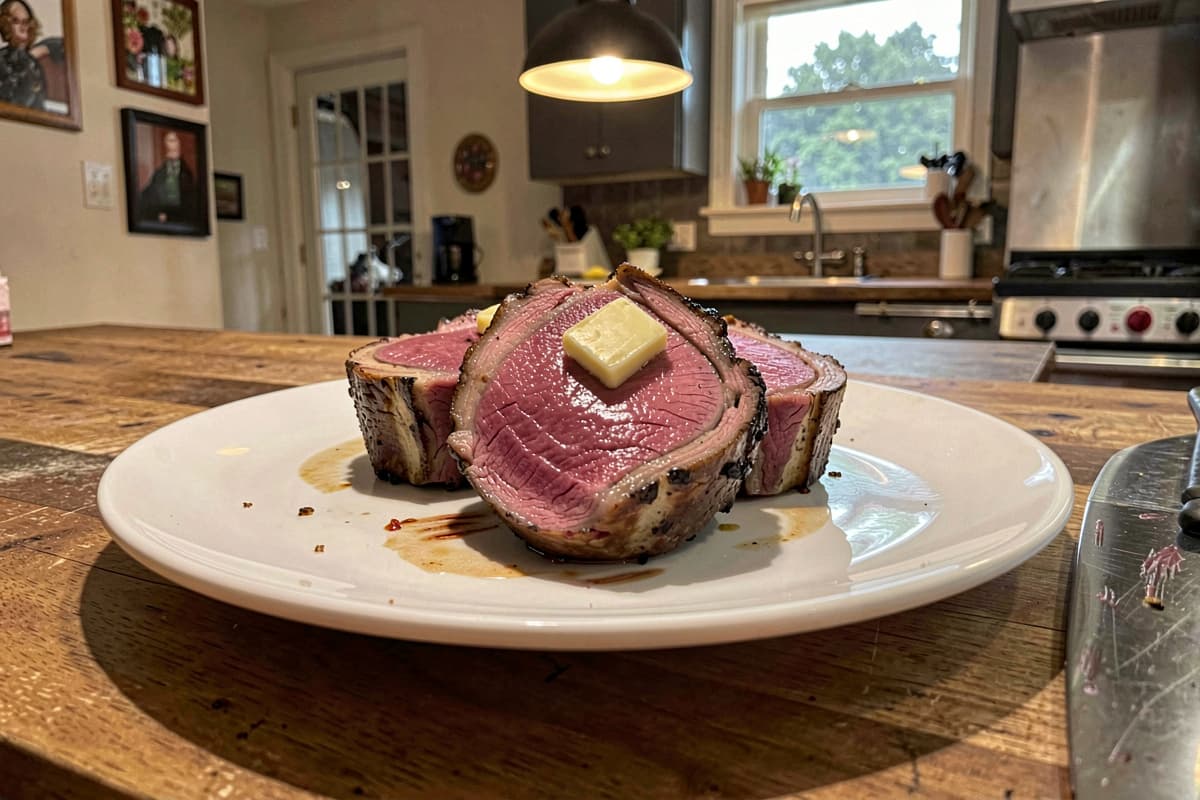
Chateaubriand (Center-Cut Tenderloin Roast)
Chateaubriand is the center-cut tenderloin, 1.5-2 lb roast. Reverse sear at 250°F to 120°F, finish with butter baste. 27g protein, 9g fat per 100g cooked.
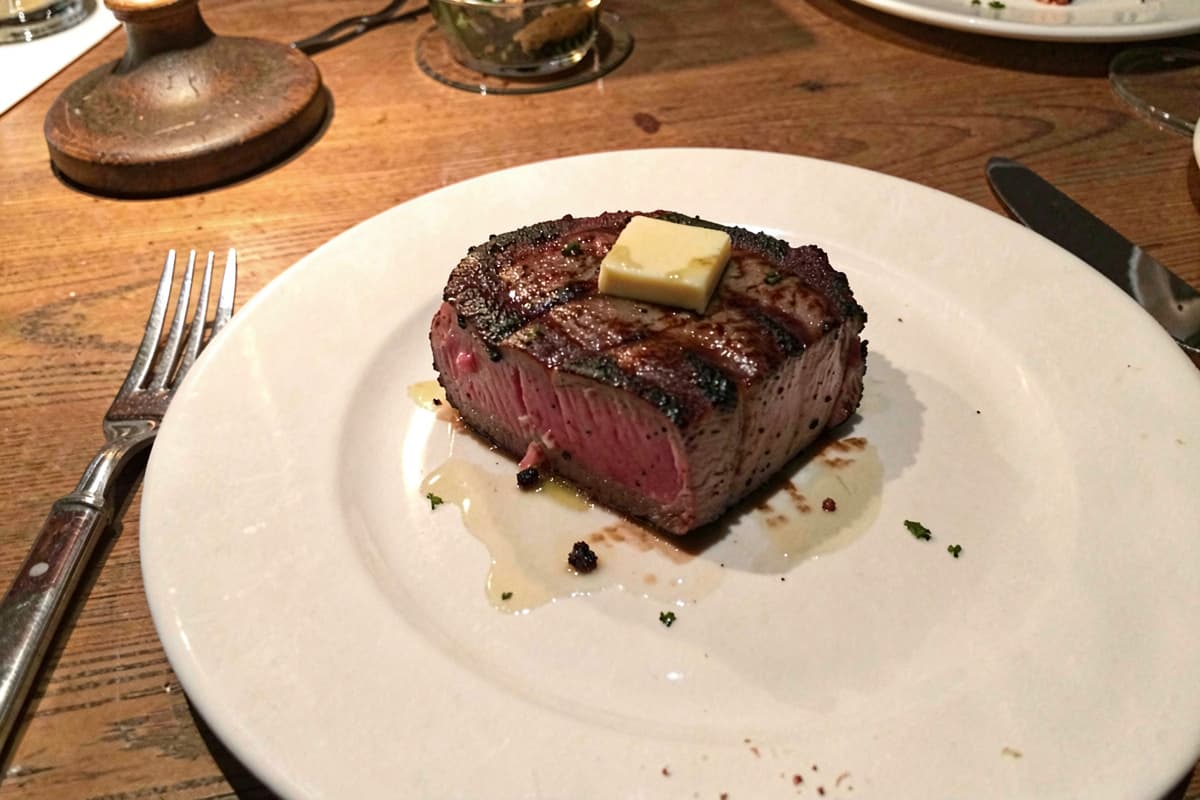
Pan-Seared Filet Mignon (Cast Iron, 8 Minutes)
Filet mignon is a 6-8 oz tenderloin steak. Pan-sear in butter 3-4 min/side, baste, rest. 27g protein, 9g fat per 100g cooked. The most tender steak available.
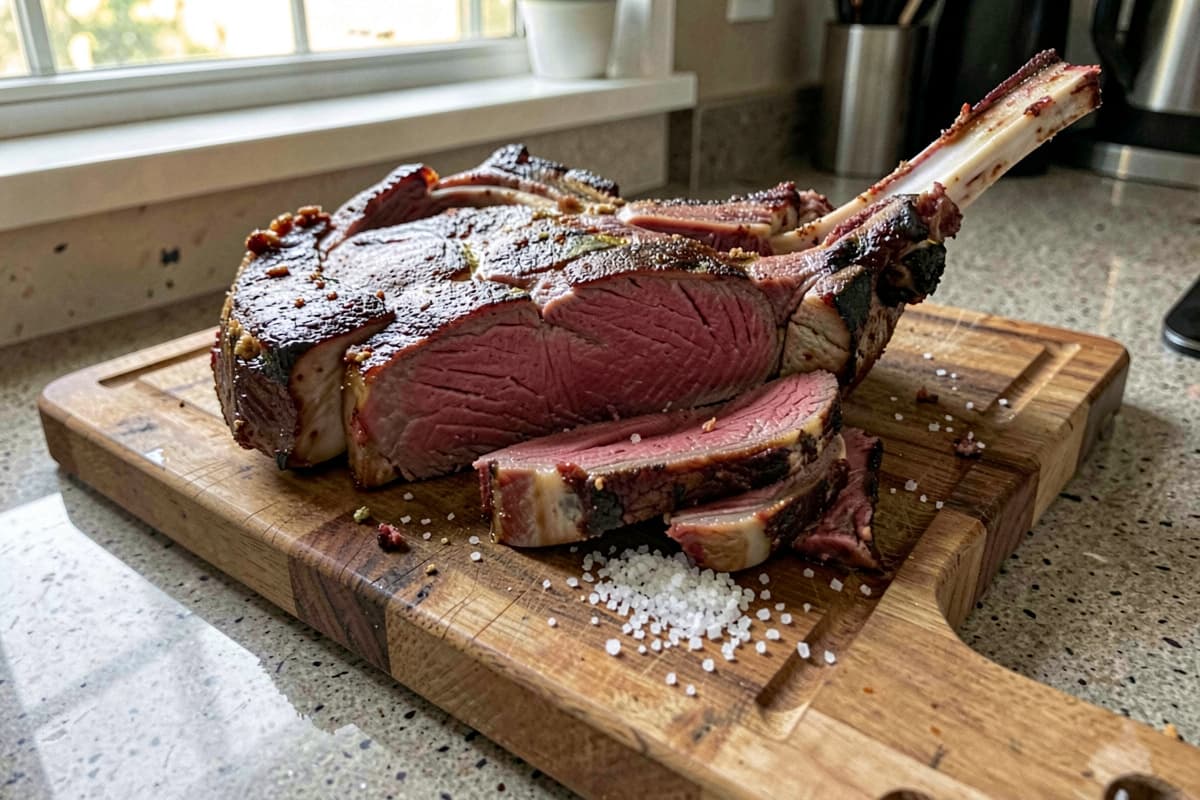
Kansas City Strip Steak (Bone-In, Cast Iron)
KC strip is a bone-in strip steak from the short loin. Pan-sear 4 min/side in butter. 27g protein, 14g fat per 100g cooked. $14-18/lb at most butchers.
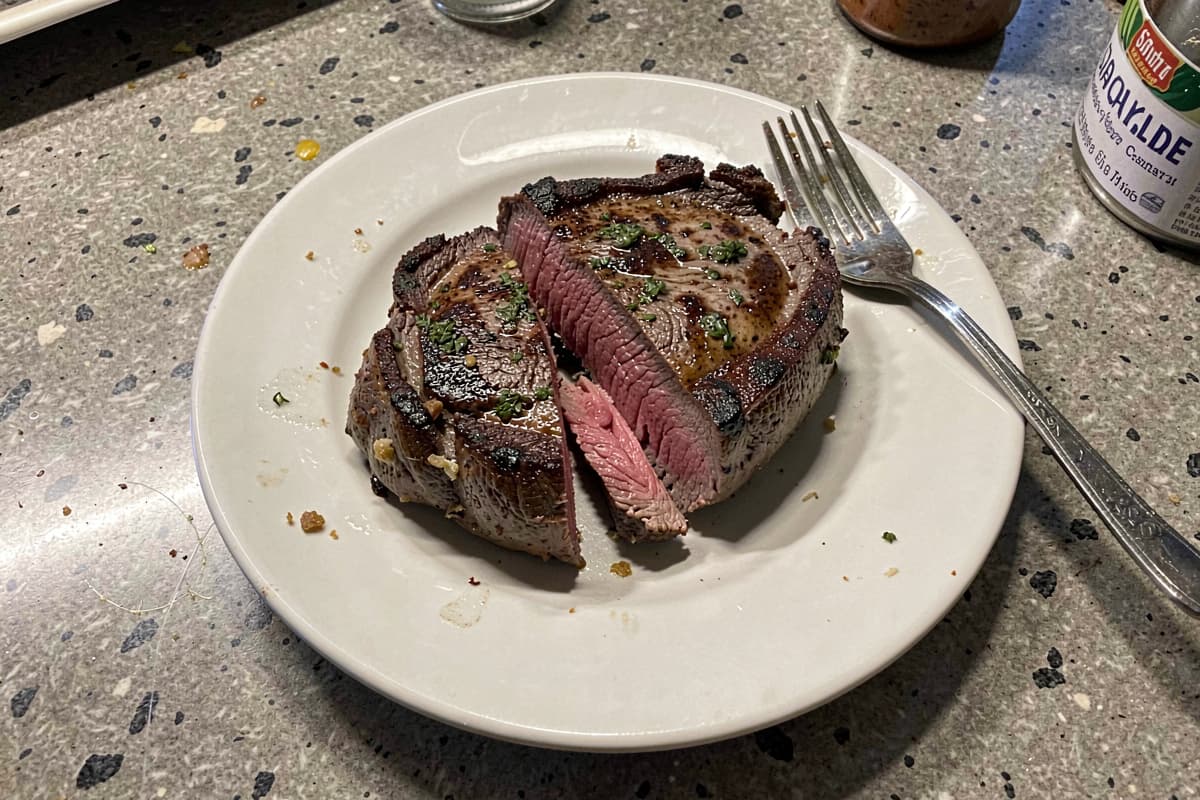
Ranch Steak (Lean Chuck Cut, $8/lb)
Ranch steak is a lean chuck shoulder cut at $7-9/lb. Pan-sear quick and hot, finish with butter. 27g protein per 100g. Pull at 130°F medium-rare.
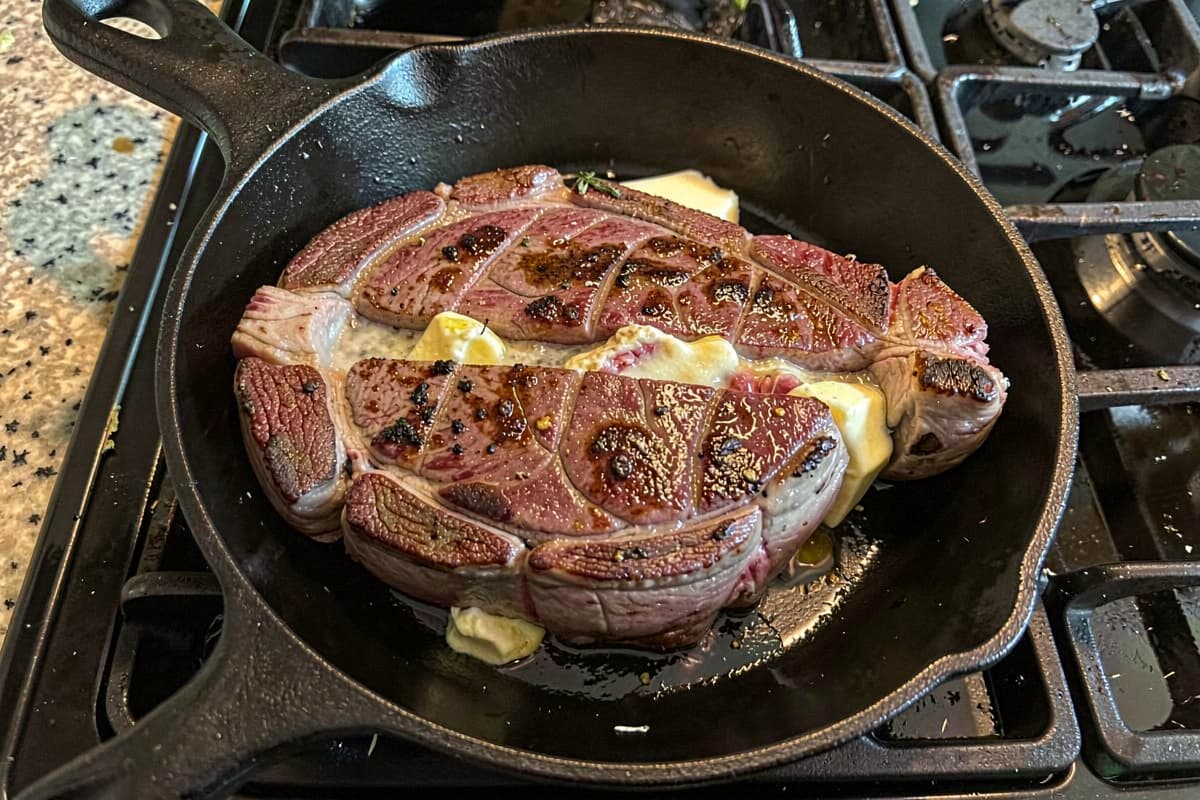
Top Blade Steak (Sliced Around the Sinew)
Top blade is a chuck cut with a single connective band. Pan-sear, slice the band out, eat the two muscles separately. 26g protein per 100g.
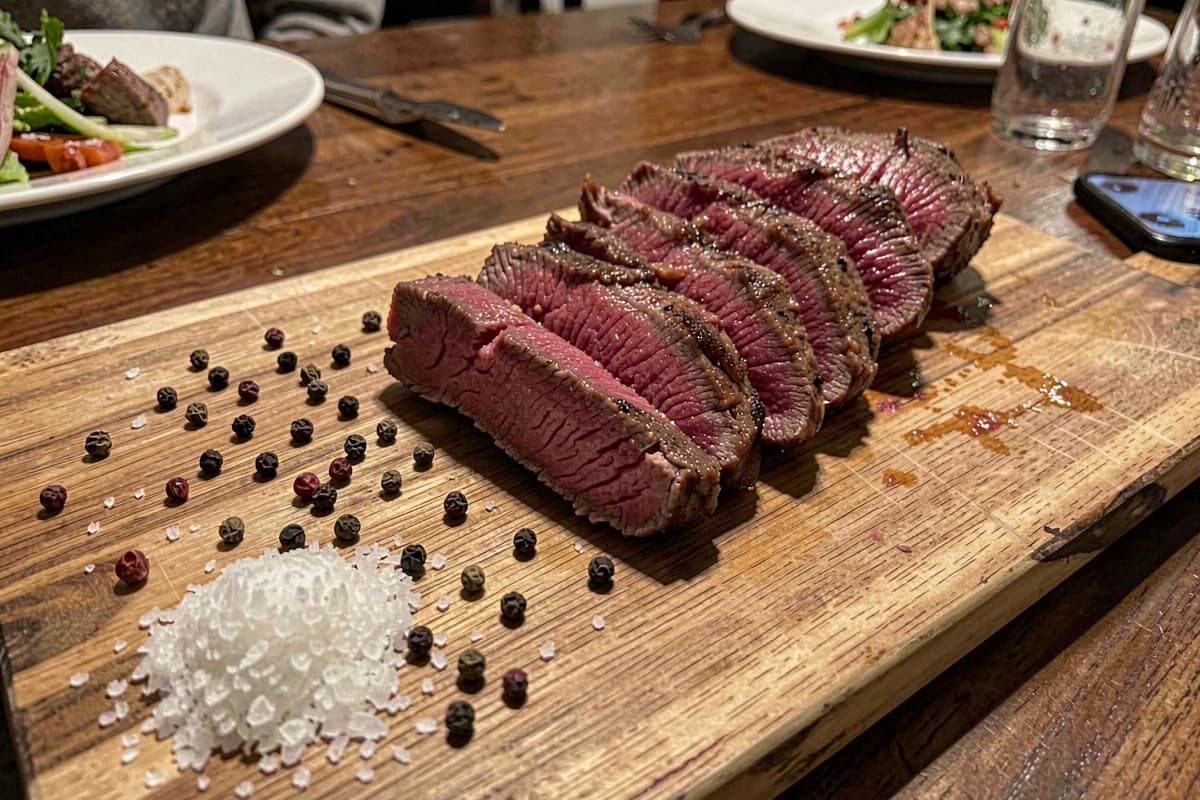
Hanger Steak (Butcher's Cut, Pan-Seared)
Hanger steak is a 1-1.5 lb tender cut historically kept by butchers. Pan-sear 3 min/side, slice across grain. 25g protein, 14g fat per 100g cooked.
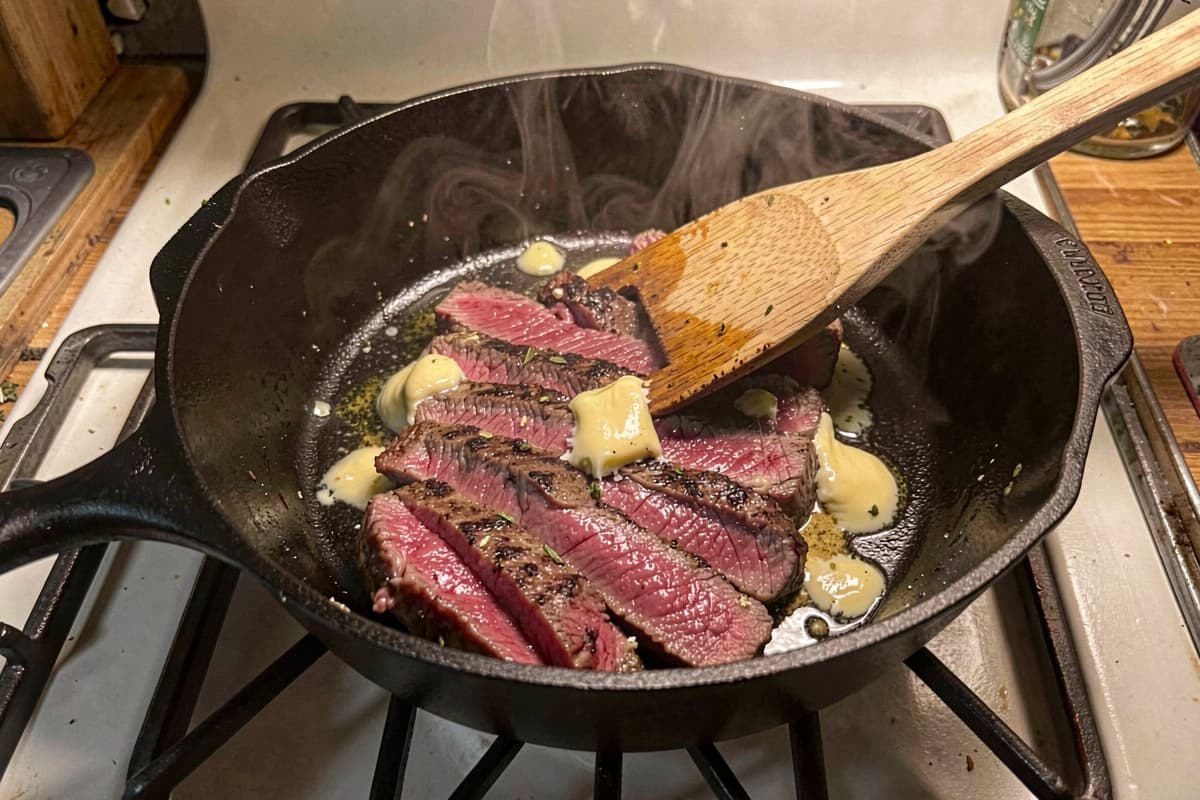
Skirt Steak (Hot-Sear, Sliced Thin)
Skirt steak is a 1.5-2 lb diaphragm cut. Sear 2-3 min/side over very high heat, slice paper-thin across the grain. 24g protein, 18g fat per 100g cooked.
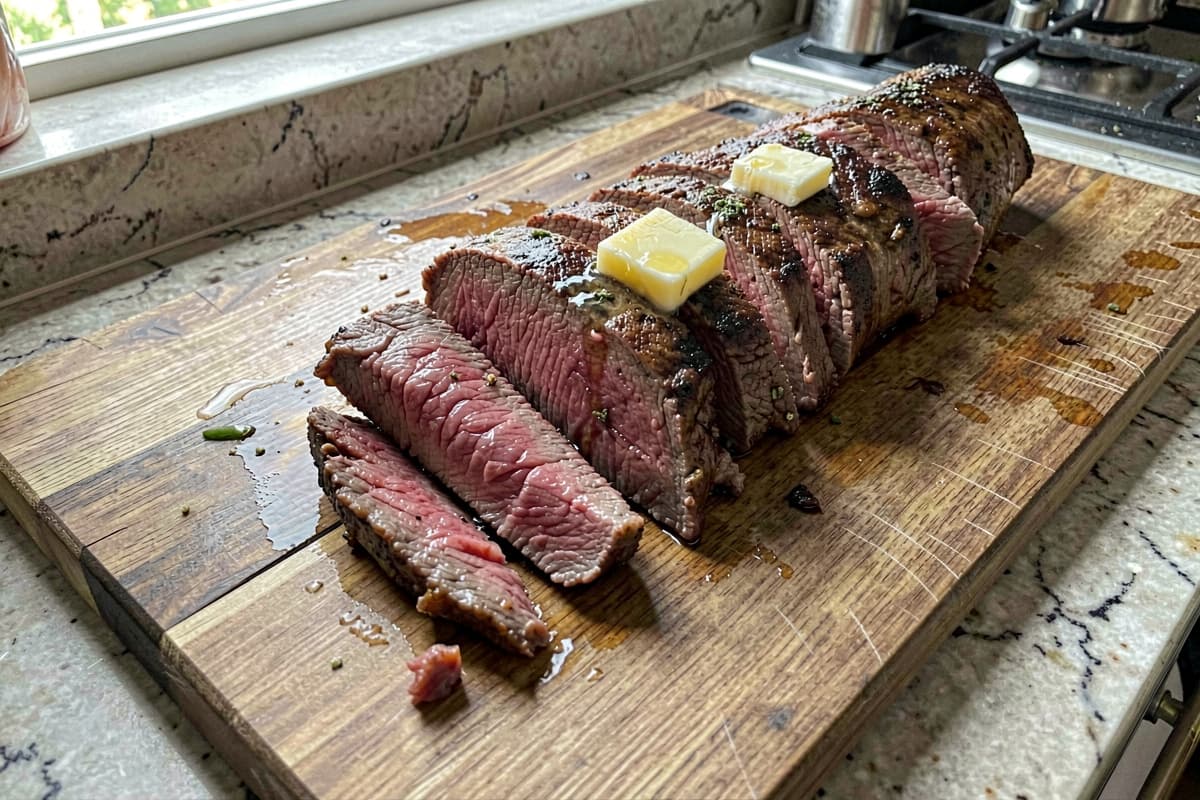
Flank Steak (Pan-Seared, Salt-Only)
Flank is a lean 1.5-2 lb cut from the abdomen. Sear 3-4 min/side, slice thin across the grain. 24g protein, 5g fat per 100g cooked. Cheap and lean.
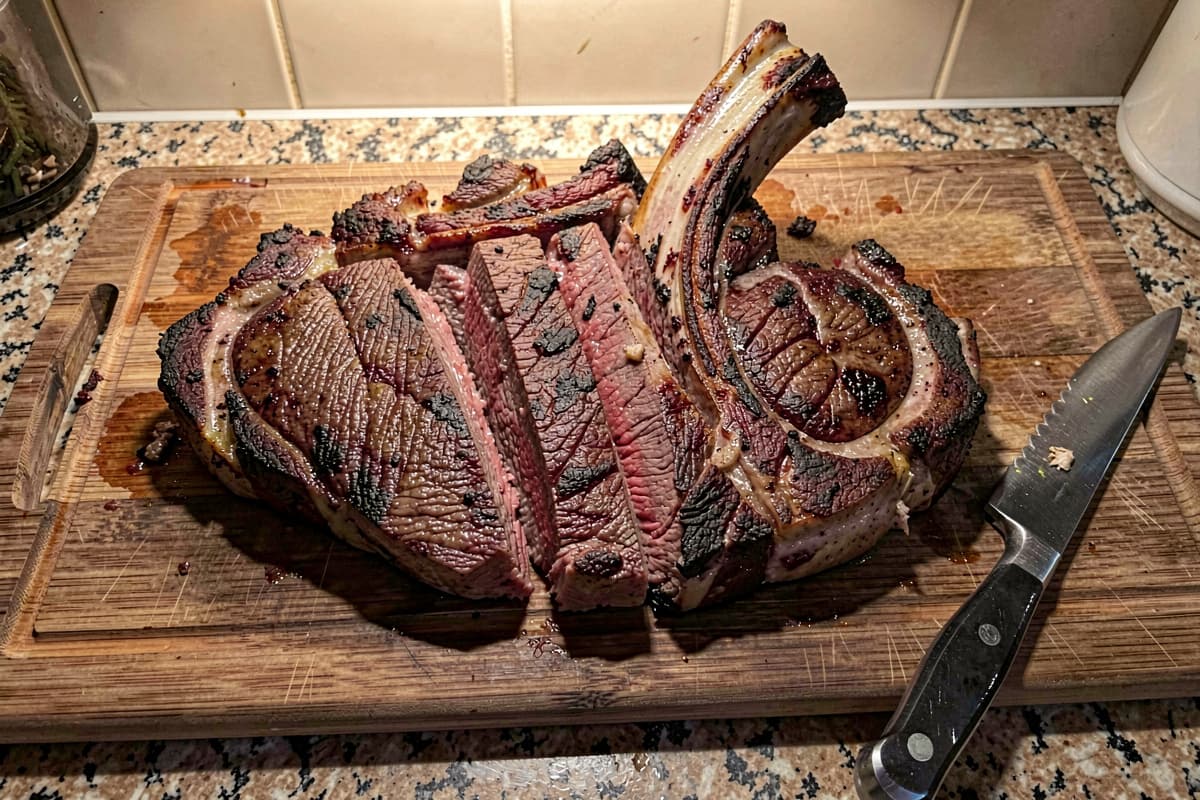
Porterhouse Steak (T-Bone with Filet Side)
Porterhouse is a thick T-bone with at least 1.25 inches of filet on one side. Pan-sear 4-5 min/side, slice from bone, share. 24g protein, 16g fat per 100g.
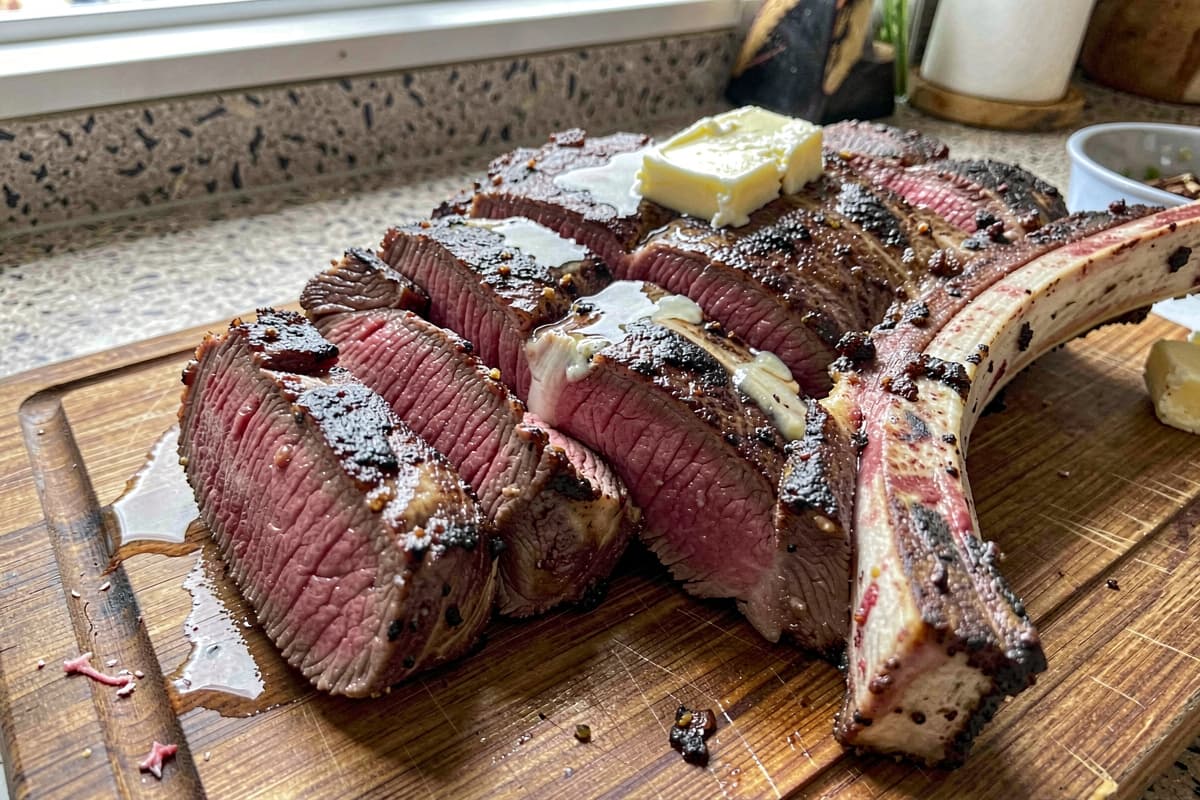
Bone-In Ribeye Reverse Sear
Reverse sear: 250°F oven to 115°F internal, then 60-second blast in butter. Edge-to-edge medium-rare for thick bone-in ribeye. 24g protein, 18g fat per 100g.
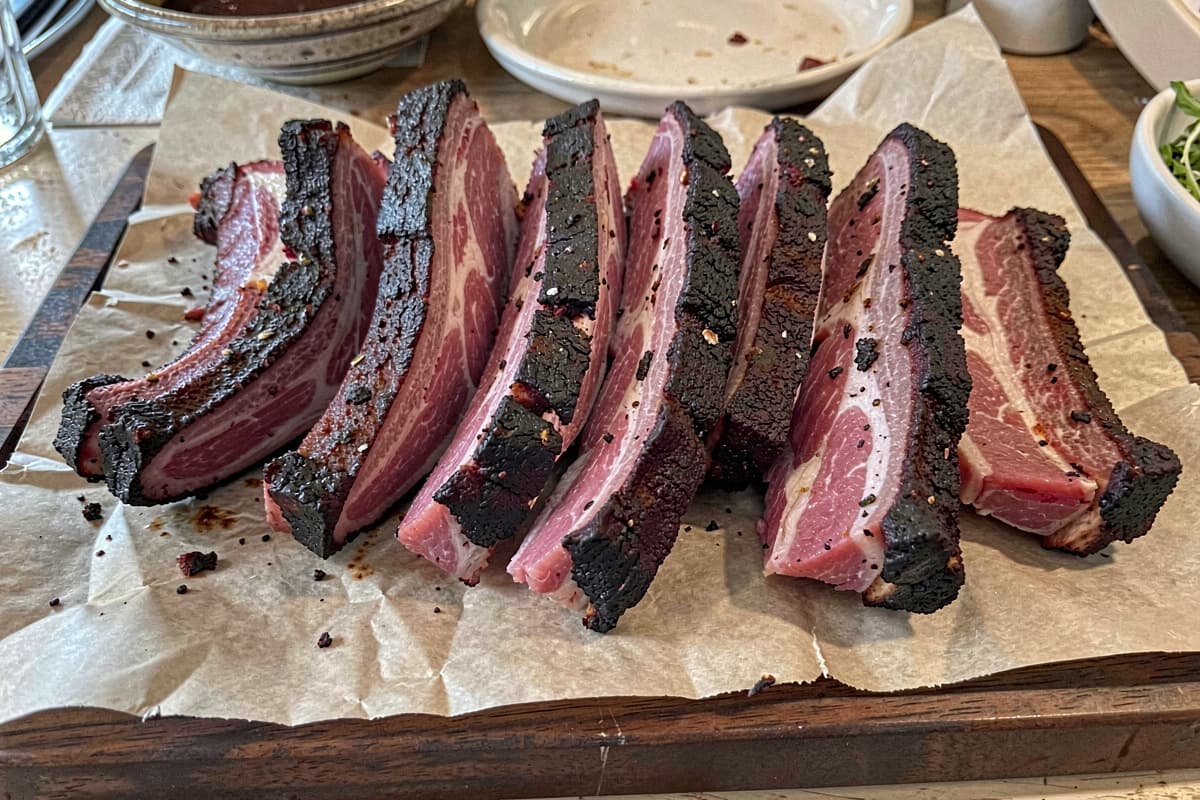
3-2-1 Ribs (Carnivore, Salt-Only)
Baby back ribs done the 3-2-1 way — 3 hours smoke, 2 hours wrapped with butter, 1 hour unwrapped to firm. Salt only, no sugar rub. 6 hours total at 225°F.
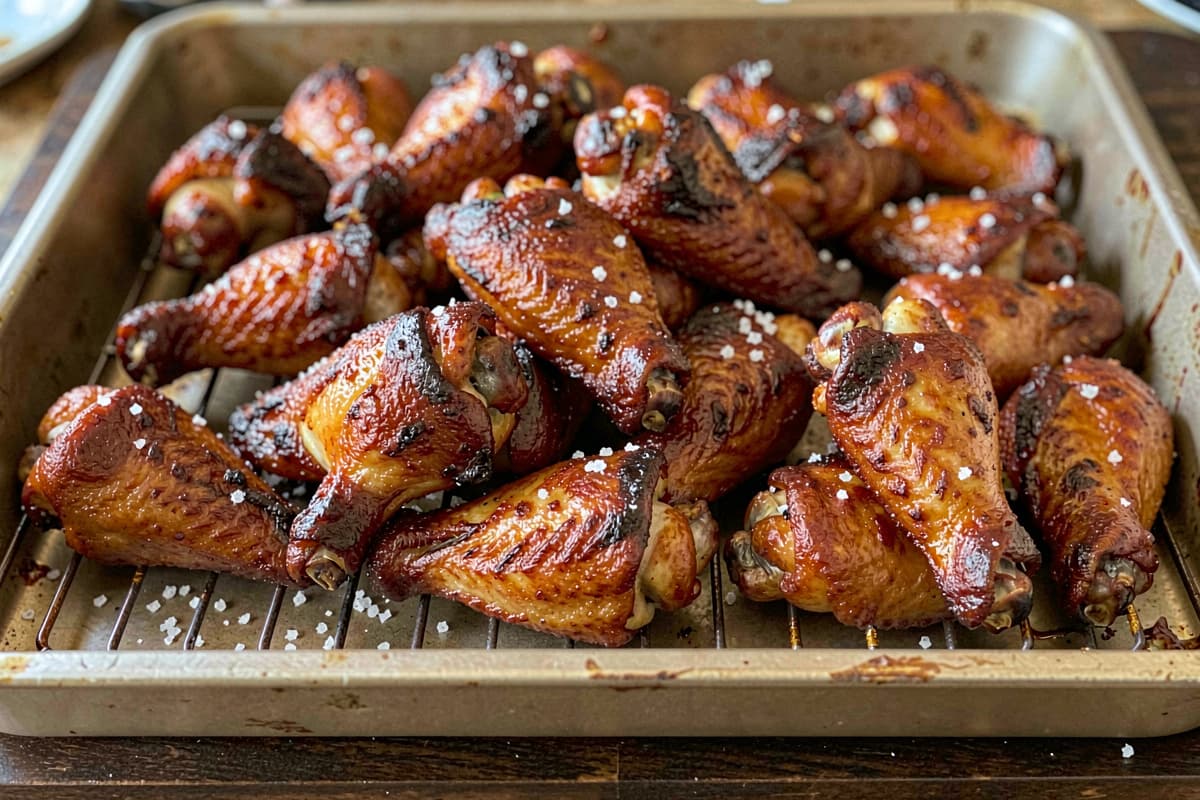
Smoked Chicken Wings (Crispy Skin, Salt Only)
Smoke whole wings at 250°F for 90 minutes, then crisp at 425°F for 10 minutes. Salt only, no sauce. 12 wings in under 2 hours. $1 per wing.
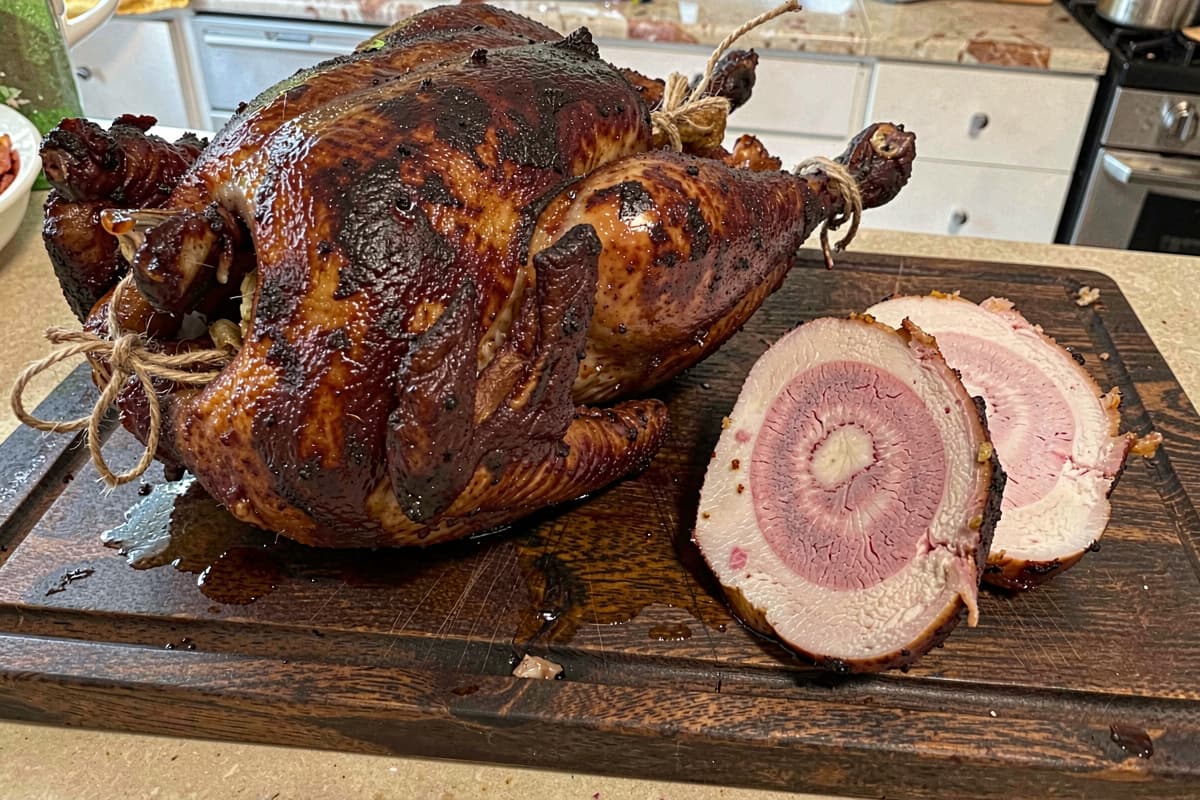
Smoked Whole Turkey (Carnivore, 12-14 lb)
Whole turkey dry-brined 24 hours, butter under the skin, smoked at 225°F for 6-7 hours to 165°F. Salt only, no rub. Feeds 10-12 at $2 per serving.
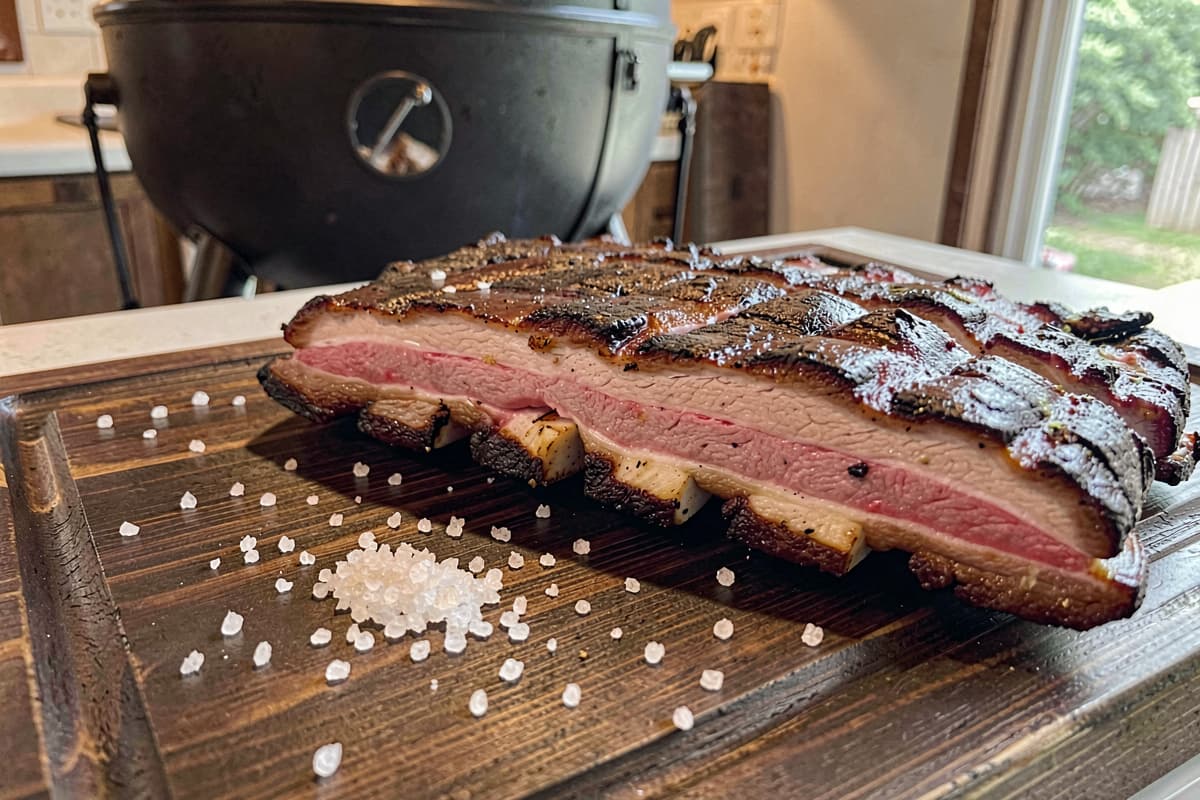
Smoked St. Louis Spare Ribs (Salt-Only)
St. Louis-cut spare ribs smoked at 225°F for 5-6 hours, salt only. Fattier and meatier than baby backs at half the price. $3-4 per serving.
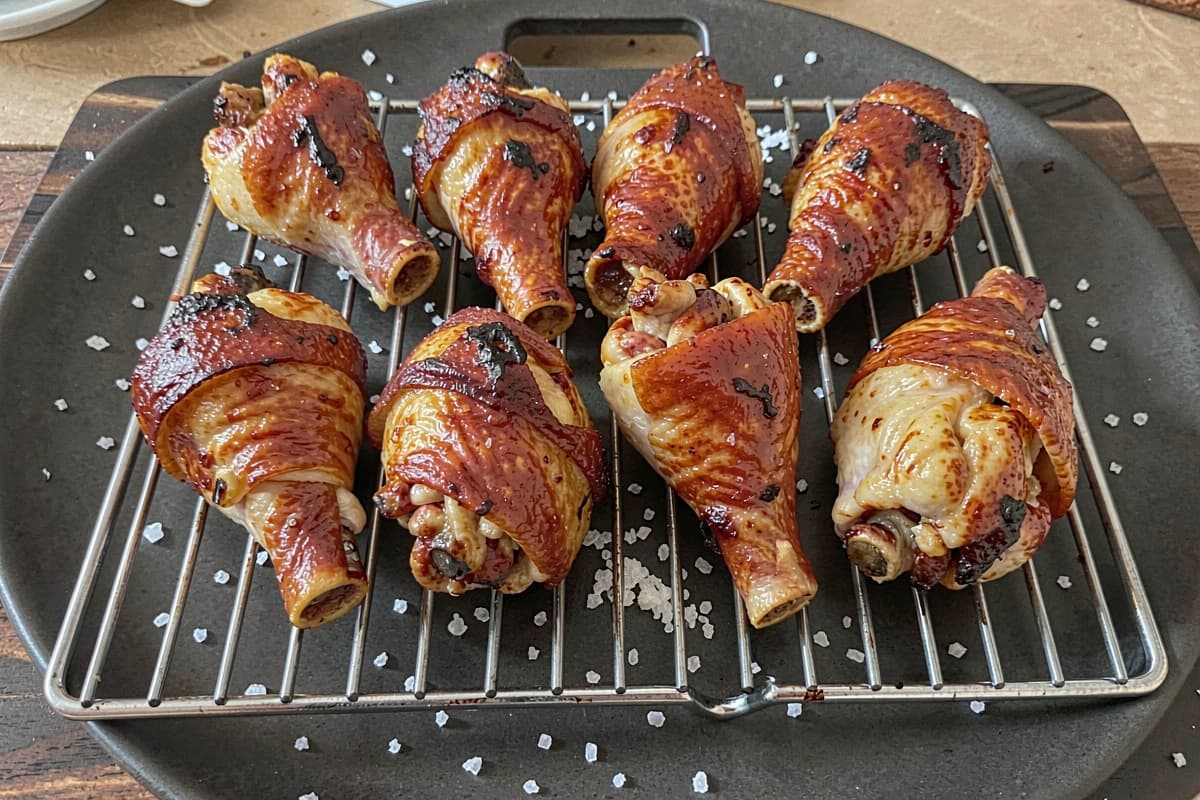
Smoked Bone-In Chicken Thighs
Bone-in skin-on chicken thighs smoked at 250°F for 90 minutes, then crisped at 425°F for 5 minutes. Salt only. The cheapest poultry per gram of protein.
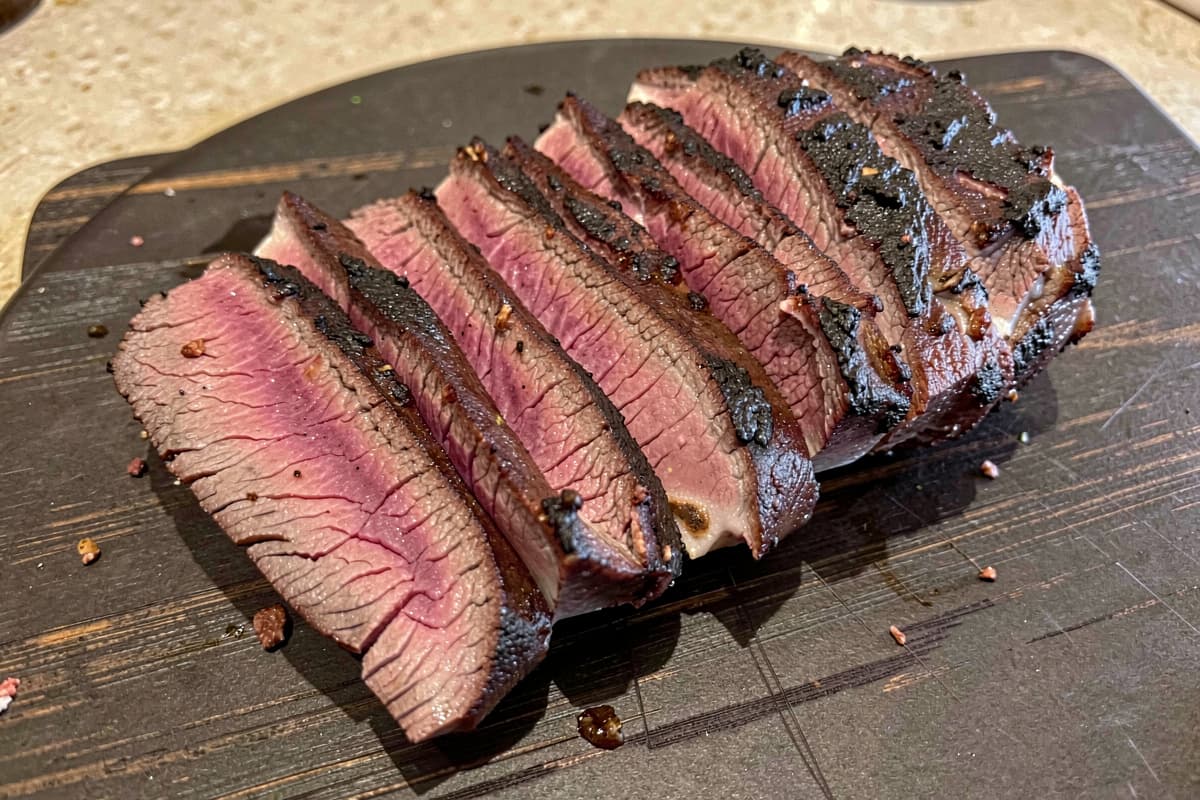
Smoked Tri-Tip (Reverse Sear, Salt Only)
Tri-tip smoked at 225°F to 110°F internal, then seared at 500°F for 90 seconds per side. Reverse-sear gives smoke flavor + crust. 2-hour cook.
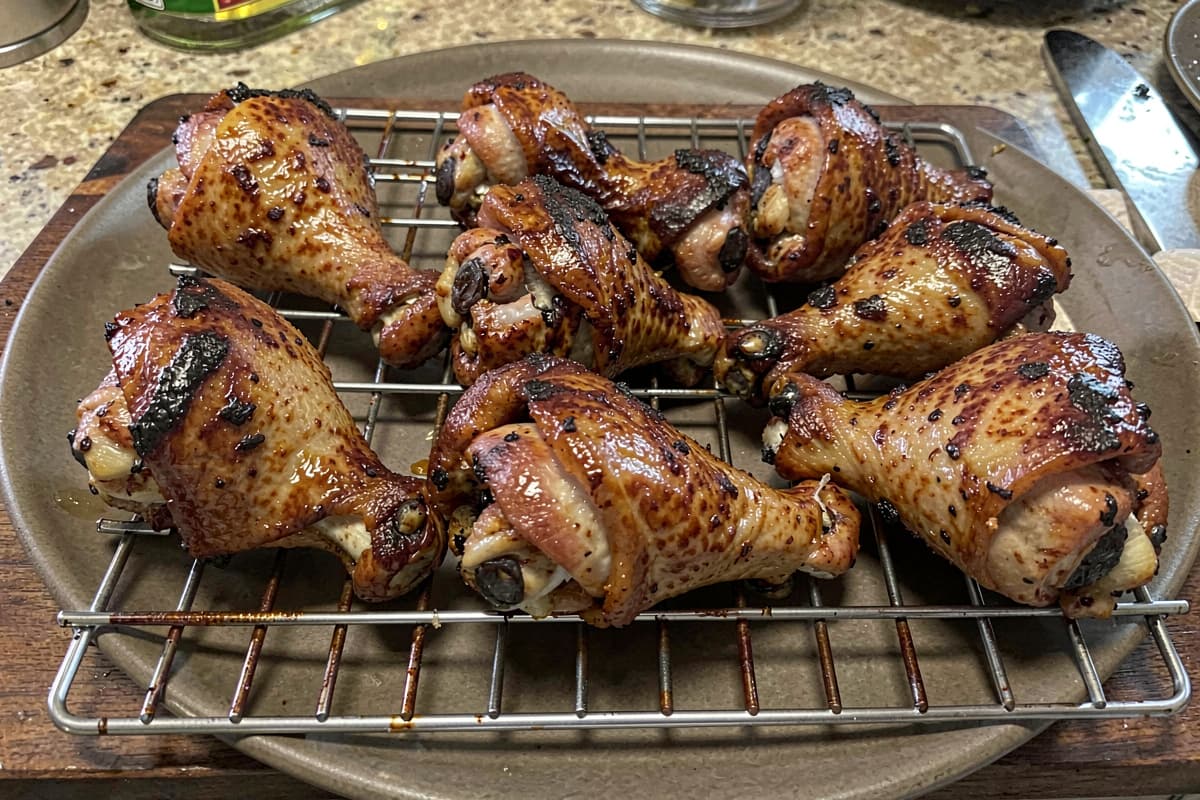
Smoked Chicken Drumsticks (Crispy Skin)
Drumsticks smoked at 250°F for 90 minutes, then 425°F for 5 minutes to crisp. Salt only. 8 drumsticks for $5 — among the cheapest meals on the site.
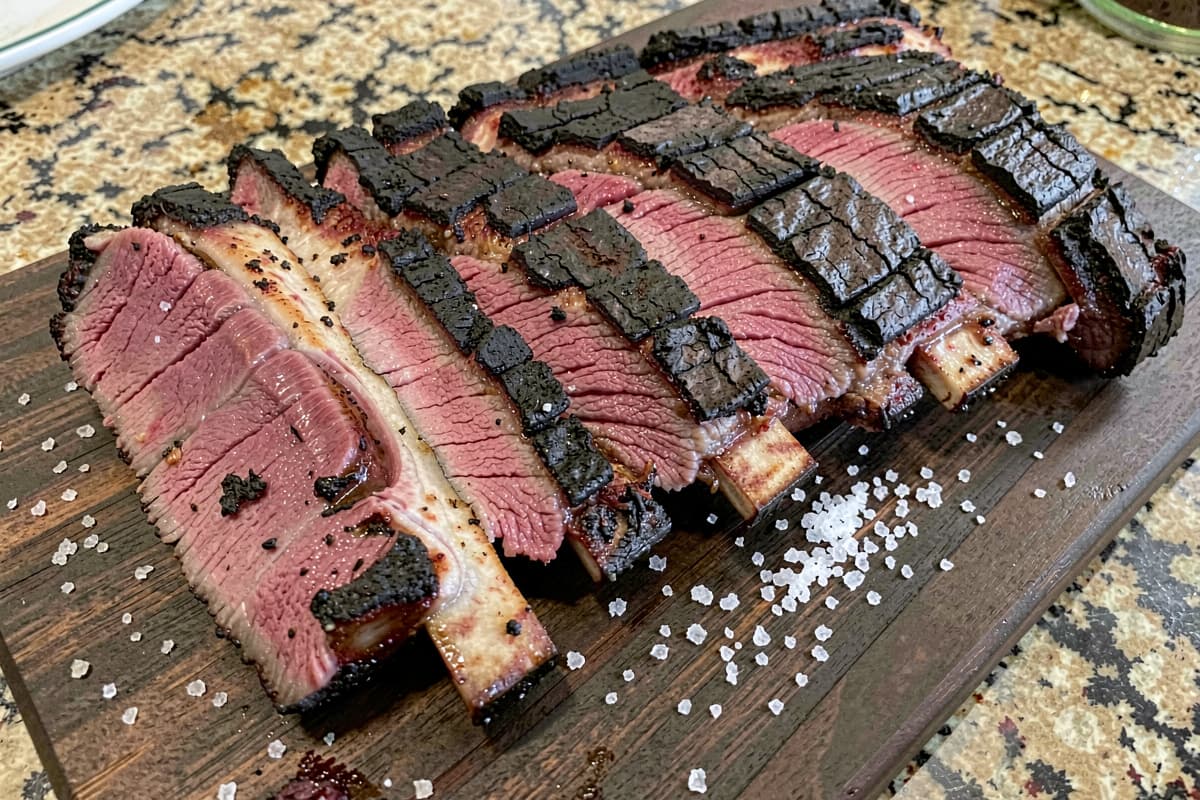
Smoked Baby Back Ribs (No-Wrap, Naked Bark)
Baby back ribs smoked at 225°F for 5 hours, no foil, no wrap. Salt only. The naked-bark method gives darker bark than 3-2-1. 32g protein per 6 oz.
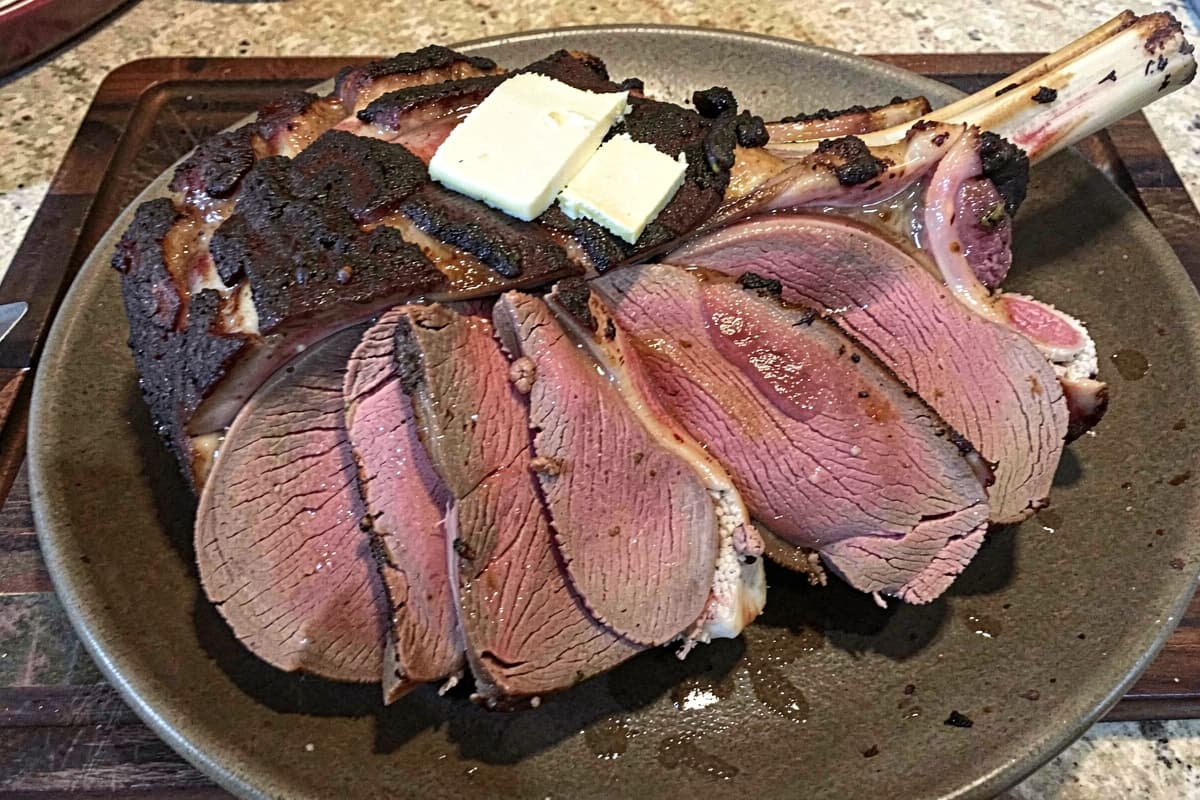
Smoked Bone-In Leg of Lamb
6-pound bone-in leg of lamb smoked at 250°F for 4 hours to 135°F internal. Salt and butter only, no garlic or rosemary. Feeds 8 at $5 per serving.
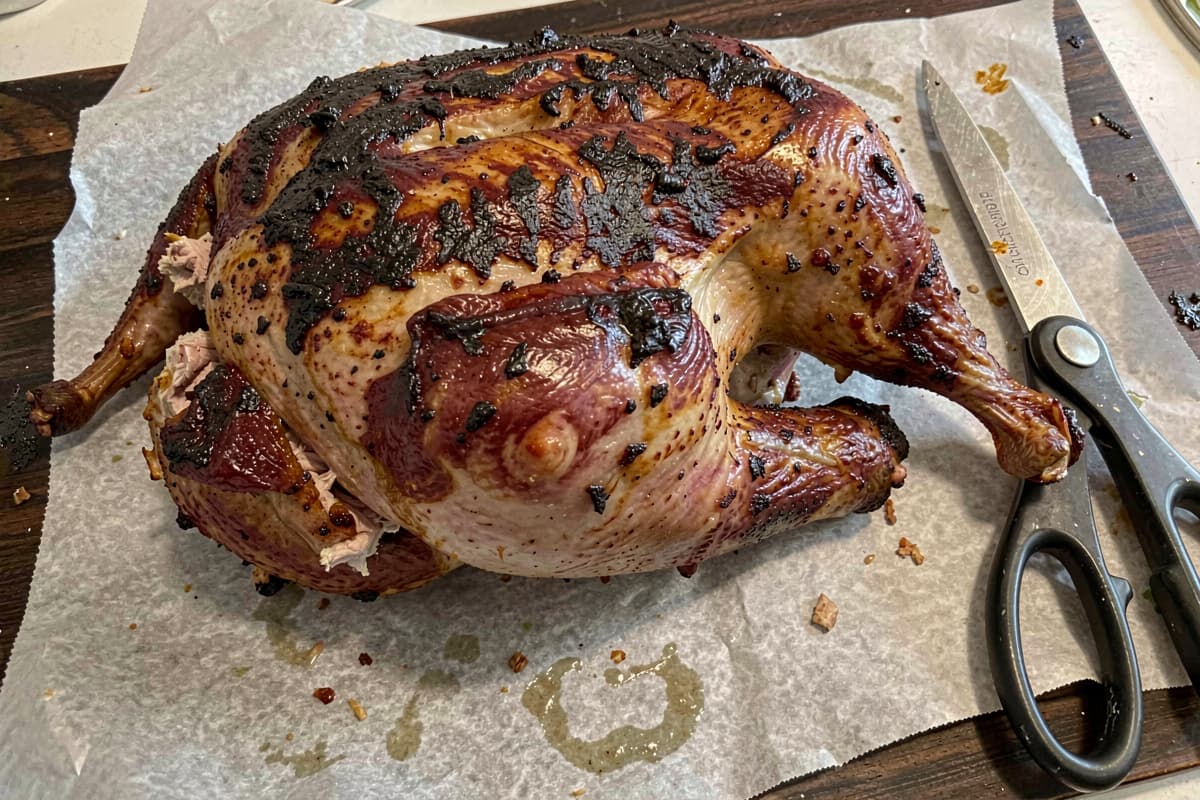
Smoked Spatchcock Turkey (Faster Method)
Spatchcocked turkey smoked at 275°F for 2.5 hours — half the time of whole-bird methods. Backbone removed, flattened, salt only. 35g protein per 5 oz.
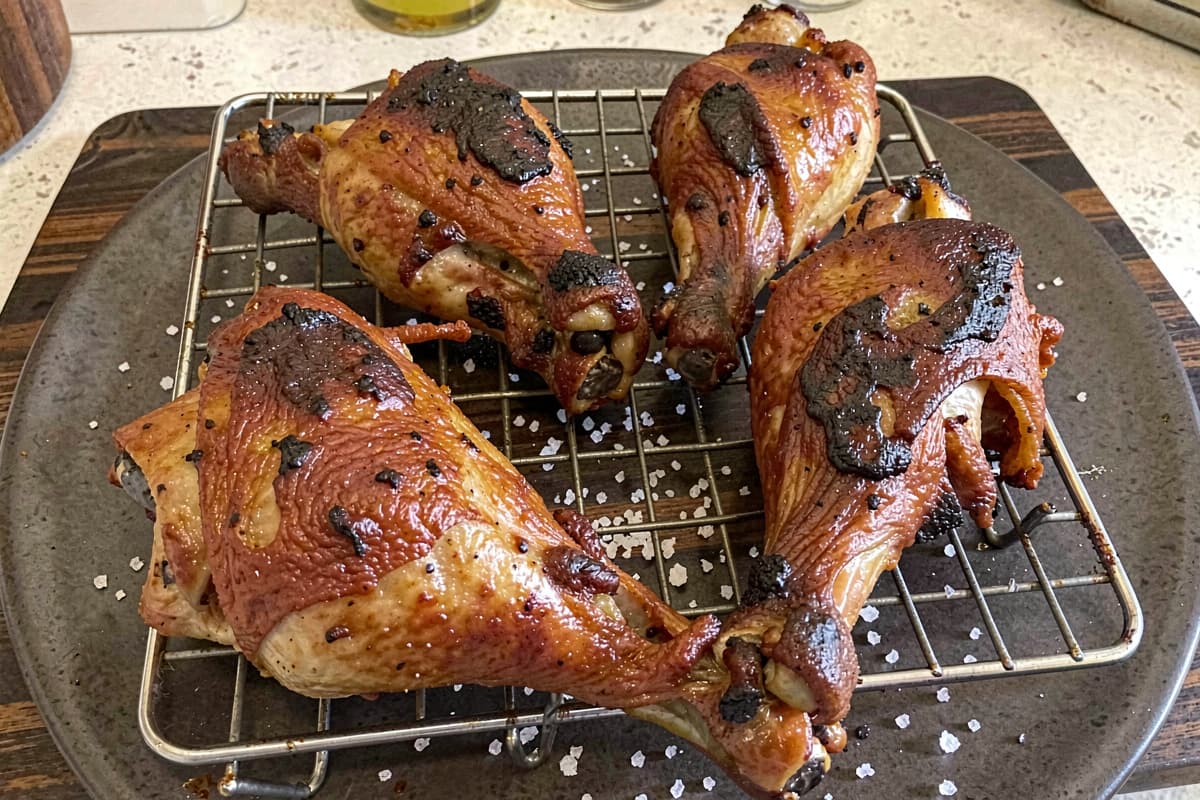
Smoked Chicken Leg Quarters
Whole leg quarters (drum + thigh attached) smoked at 250°F for 90 min, then 425°F for 5 min. Salt only. 38g protein per quarter at $1 per serving.
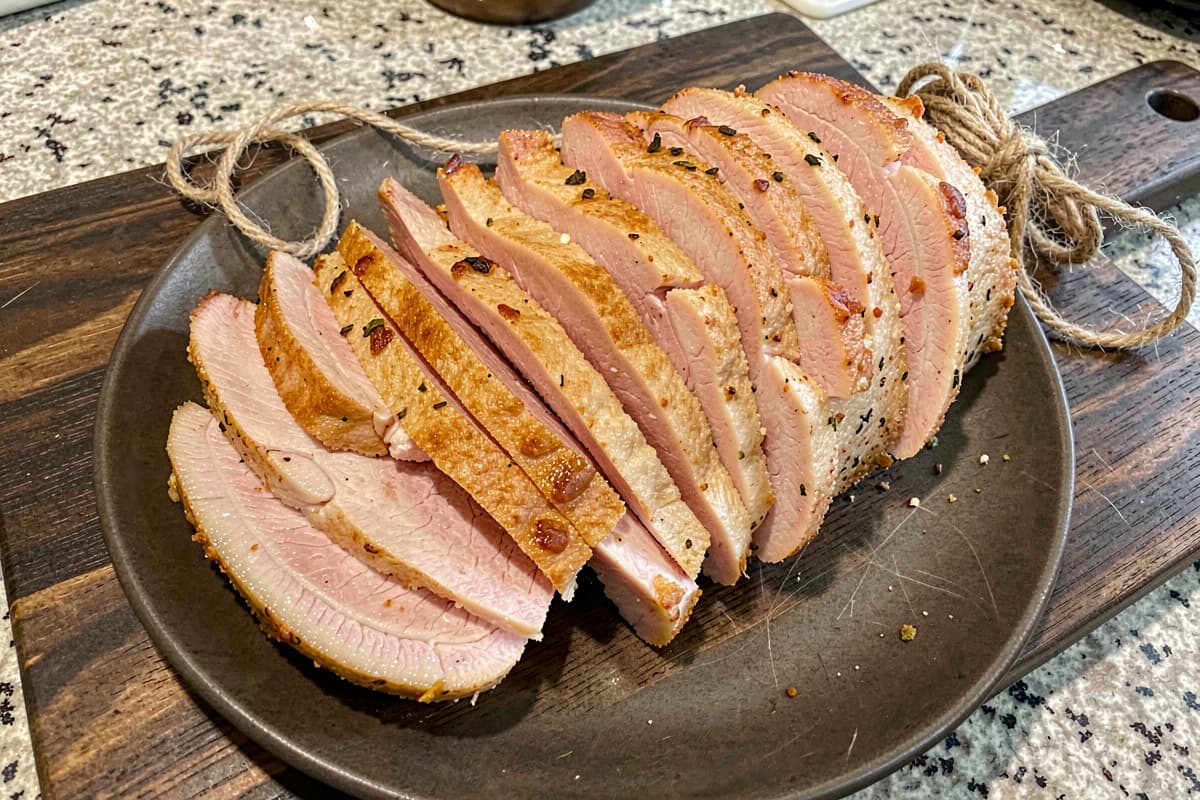
Smoked Boneless Pork Loin Roast
4 lb boneless pork loin smoked at 225°F for 2.5 hours to 145°F. Dry-brine 24 hours, salt only. The lean cousin of pulled pork. 32g protein per 5 oz.
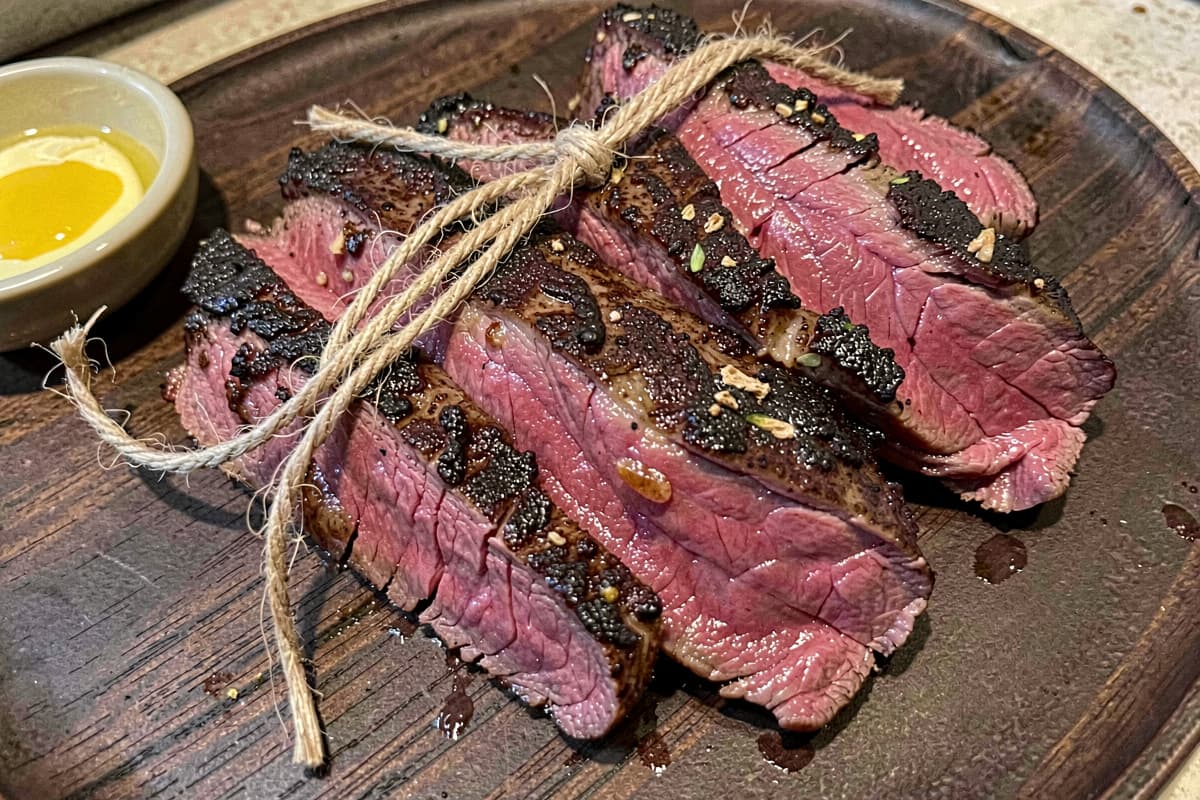
Smoked Beef Tenderloin (Reverse Sear)
4-pound trimmed tenderloin smoked at 225°F to 110°F, then seared at 500°F for 90 seconds per side. Most tender beef cut + smoke flavor. $20-25/lb.
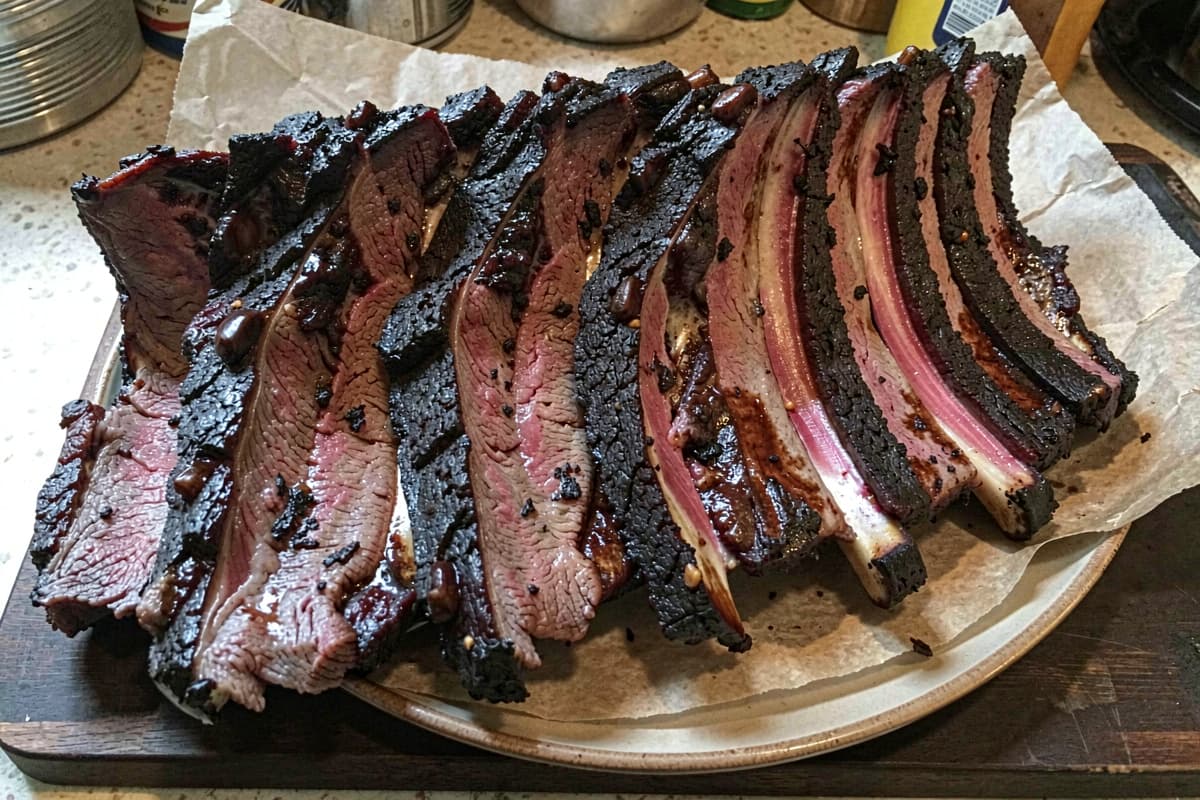
Smoked Beef Back Ribs (The Dino Bones)
Beef back ribs from a prime rib roast smoked at 225°F for 5-6 hours to 203°F. Cheap, fatty, easy. Salt only. 26g protein per 6 oz at $3-5 per pound.
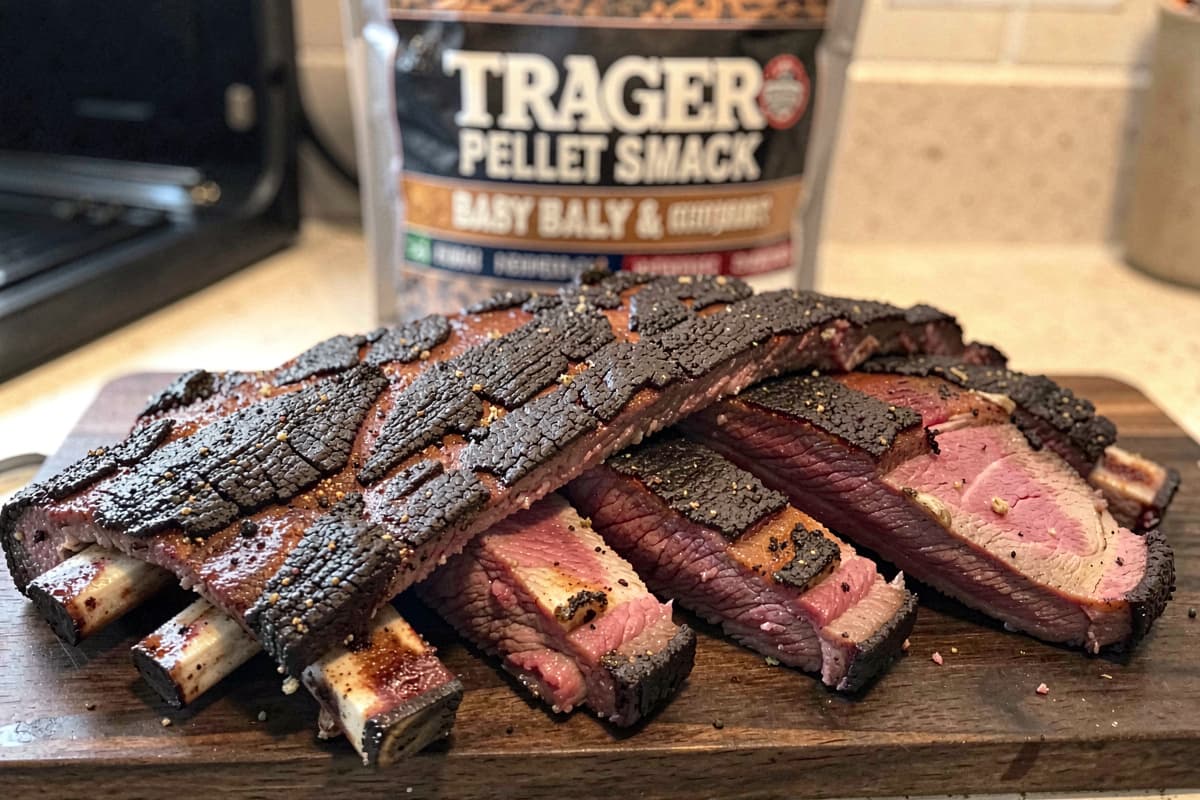
Traeger Ribs (Salt-Only, No-Sugar Adaptation)
Standard Traeger pellet smoker baby back ribs without the sugar rub. 225°F super smoke for 3 hours, wrap with butter for 2, finish 1. Carnivore-strict.
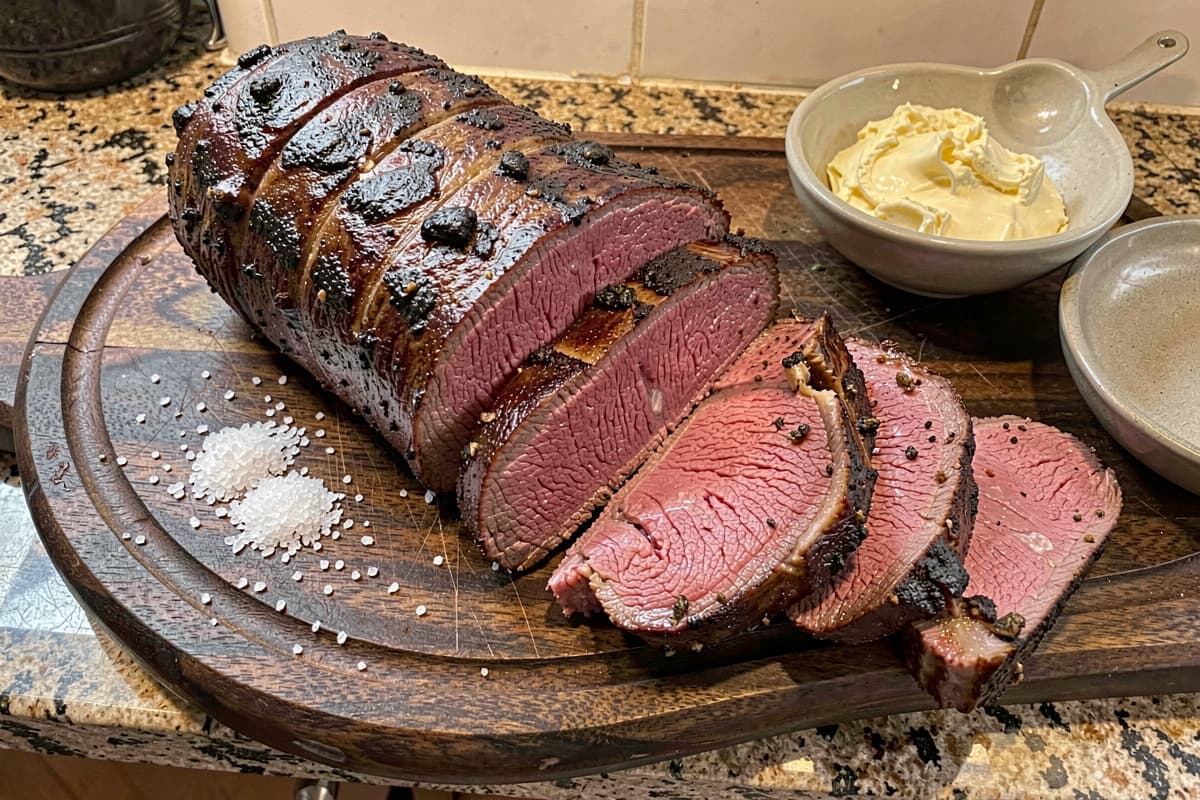
Roasted Whole Beef Tenderloin
4-5 lb trimmed tenderloin roasted at 425°F for 35-45 minutes to 130°F internal. Salt and butter only. The cleanest centerpiece roast for 8 people.
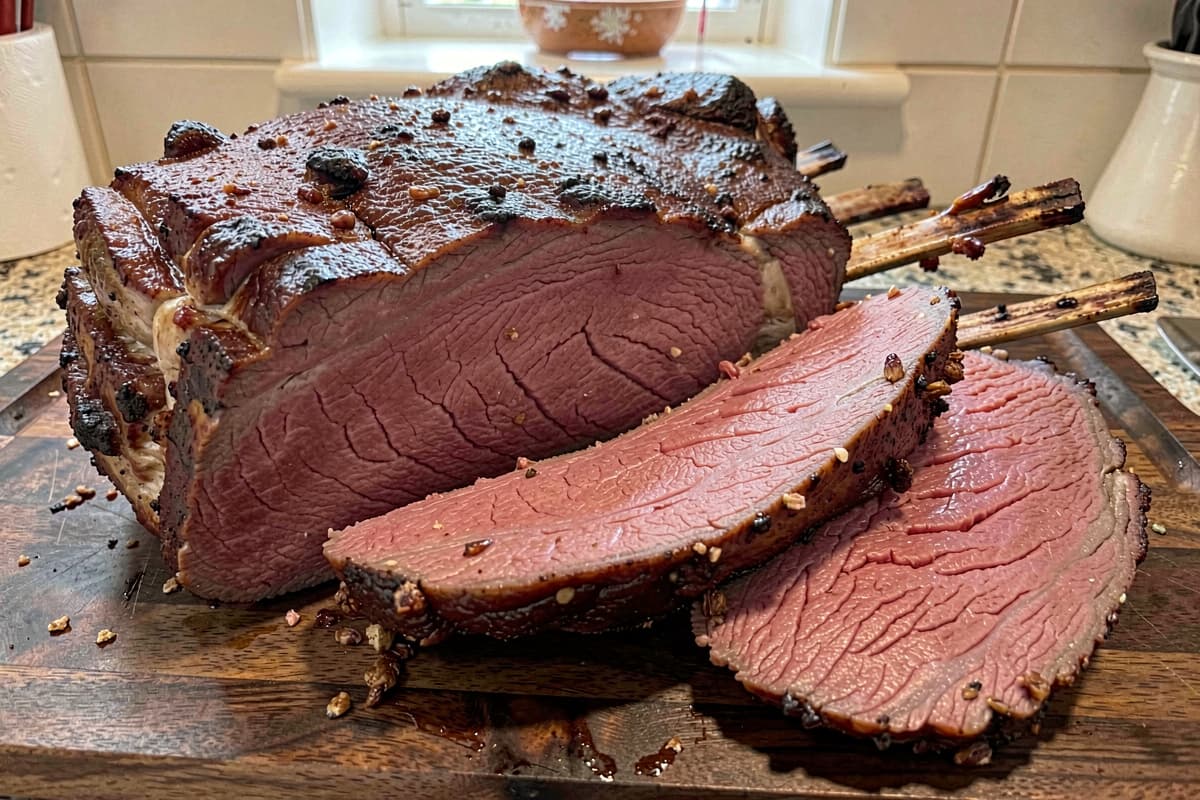
Reverse-Sear Standing Rib Roast (Carnivore)
5-7 lb 3-bone standing rib roast cooked low at 250°F to 115°F internal, then seared at 500°F. Salt only. The carnivore Sunday-dinner centerpiece.
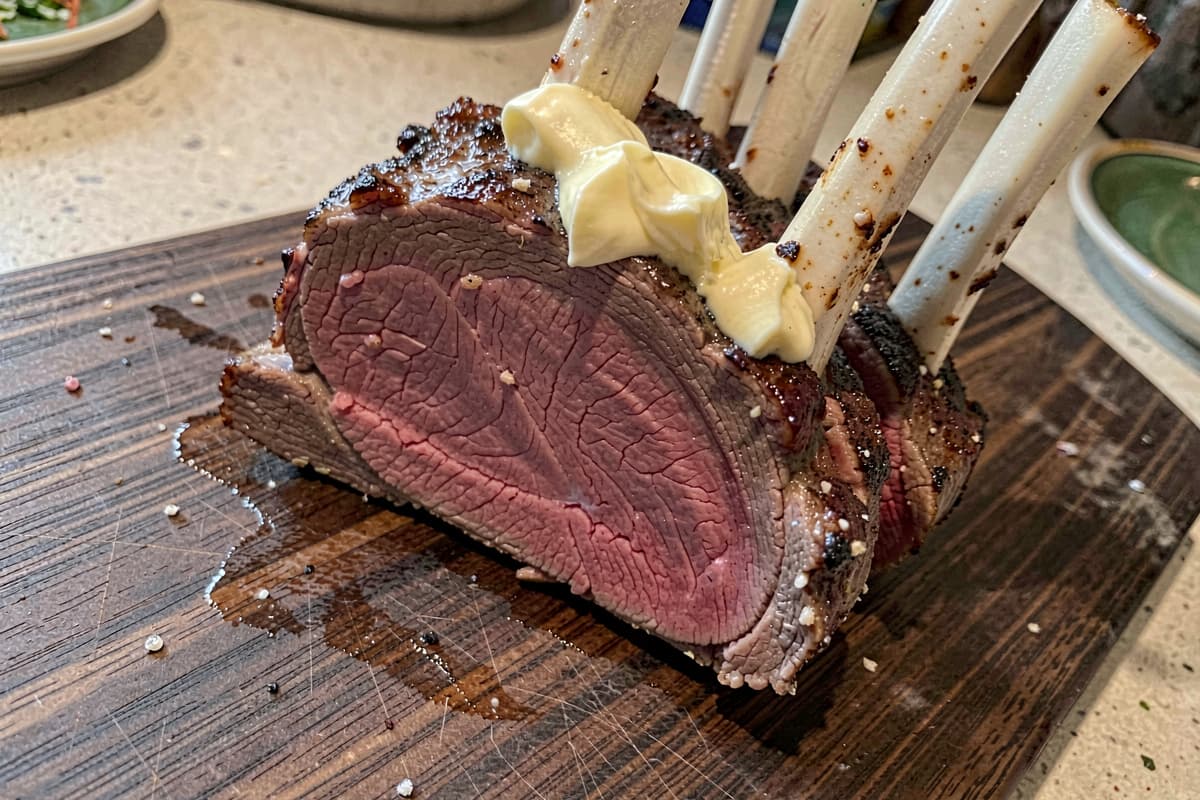
Rack of Lamb (Carnivore, Salt + Butter)
Frenched rack of lamb seared 4 minutes per side, finished in a 425°F oven to 130°F internal. 25 minutes total. Salt and butter only.
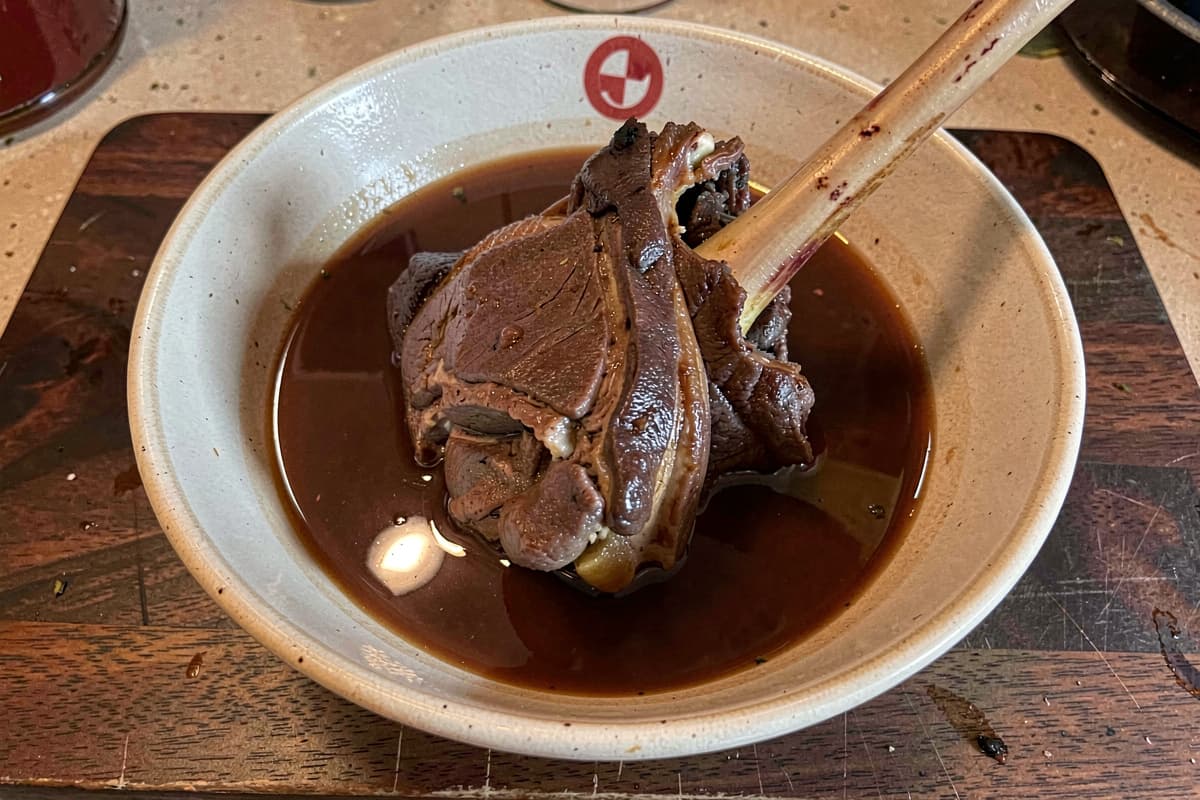
Braised Lamb Shanks (Carnivore, 3 Hours)
4 lamb shanks braised in beef broth at 325°F for 3 hours until fall-off-the-bone tender. Salt only, no wine, no veggies. Yields 4 hearty servings.
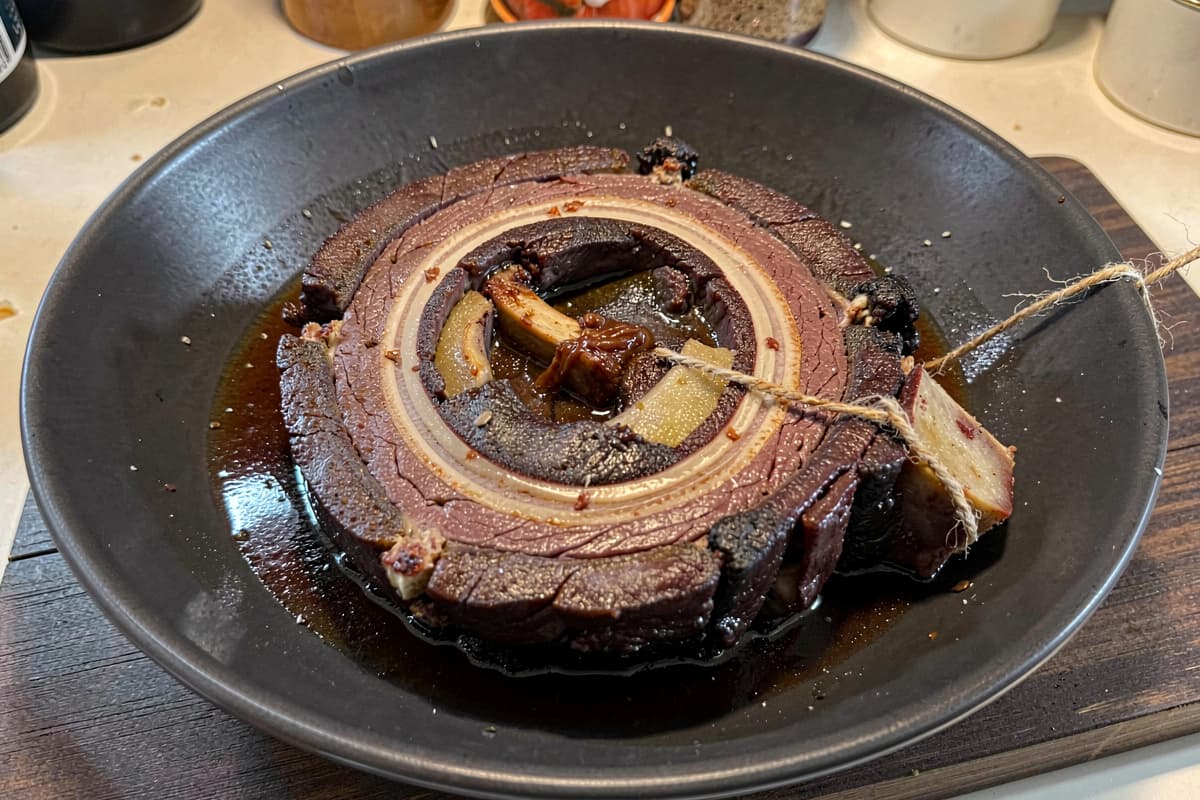
Beef Osso Buco (Carnivore Adaptation)
Cross-cut beef shanks braised in beef broth at 325°F for 3 hours. Salt only — no wine, no soffritto, no gremolata. Italian technique, carnivore framing.
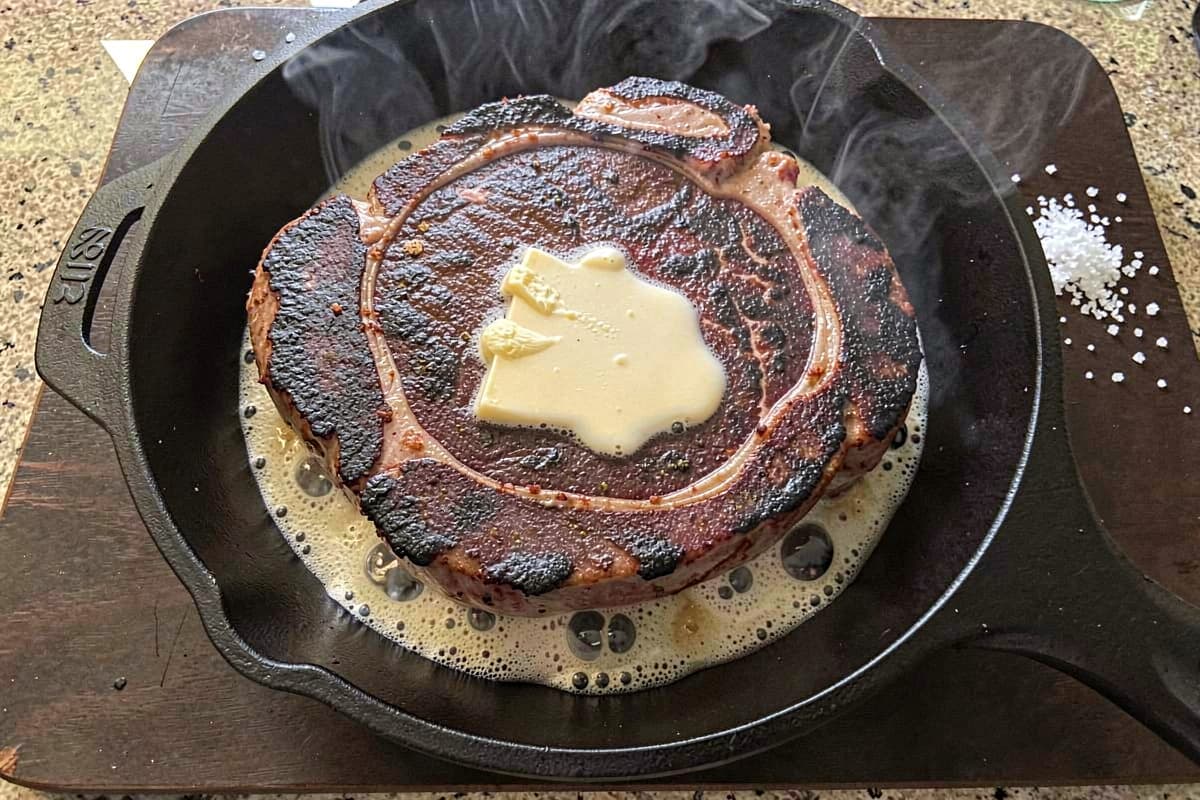
Cast Iron Skillet Steak (4-Minute Method)
Ribeye or strip steak in a 500°F+ cast iron skillet for 4 minutes per side, butter-basted last 60 seconds. The everyday 8-minute carnivore dinner.
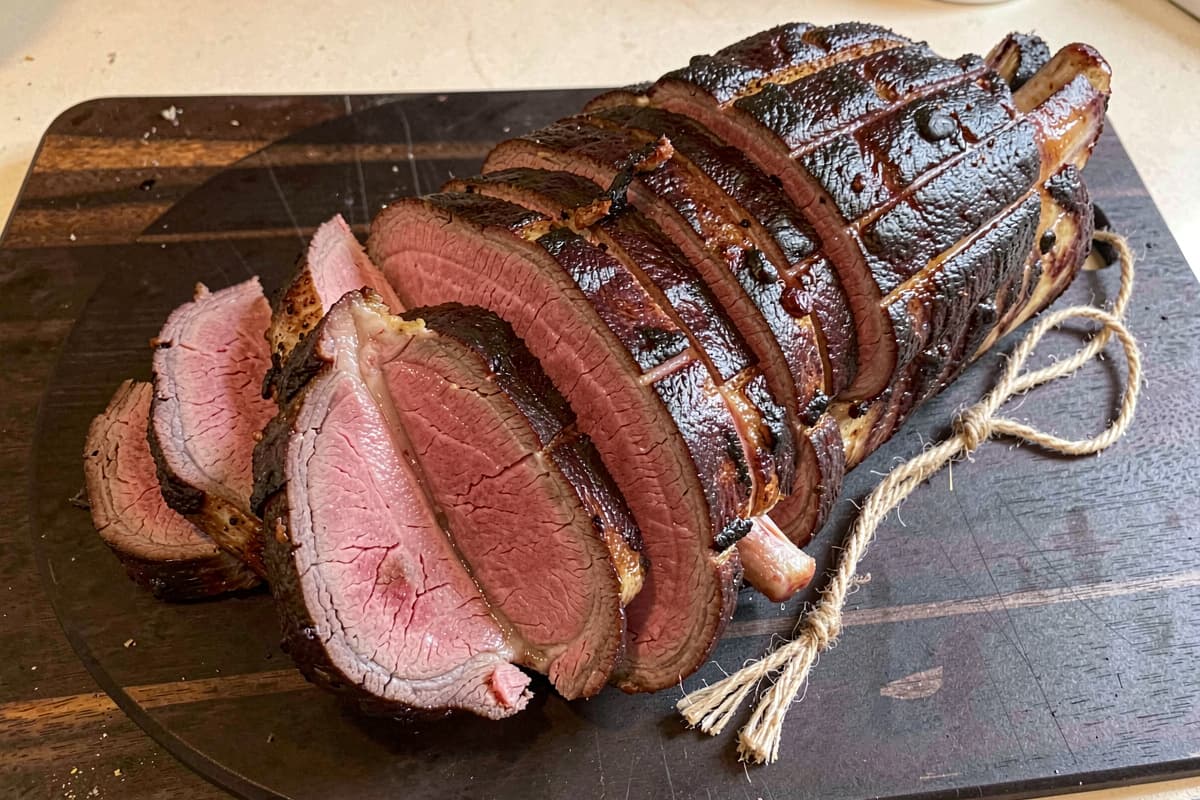
Boneless Leg of Lamb (Roasted)
5 lb boneless leg of lamb roasted at 350°F for 75-90 minutes to 130°F internal. Salt only, no garlic. Easier carving than bone-in, same lamb flavor.
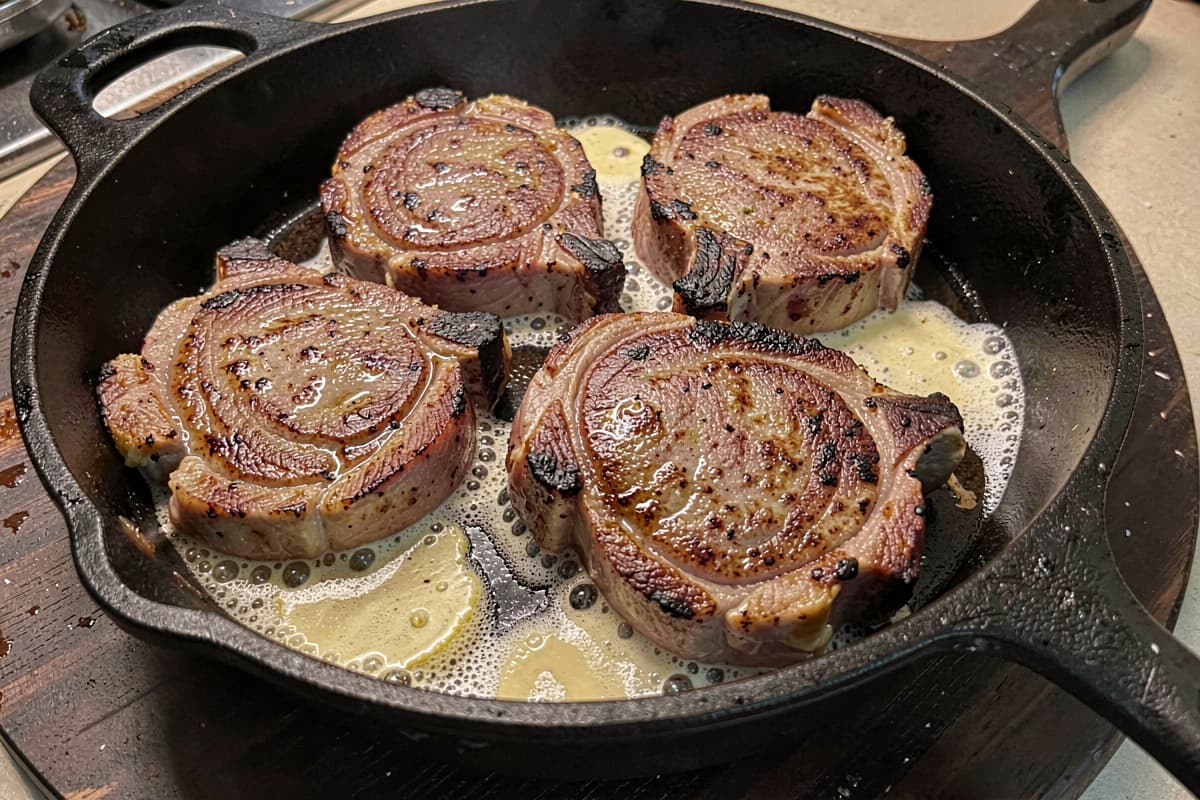
Oven-Baked Bone-In Pork Chops
Thick-cut bone-in pork chops in a 425°F oven for 14-18 minutes to 145°F internal. Salt and butter only. The 20-minute carnivore weeknight dinner.
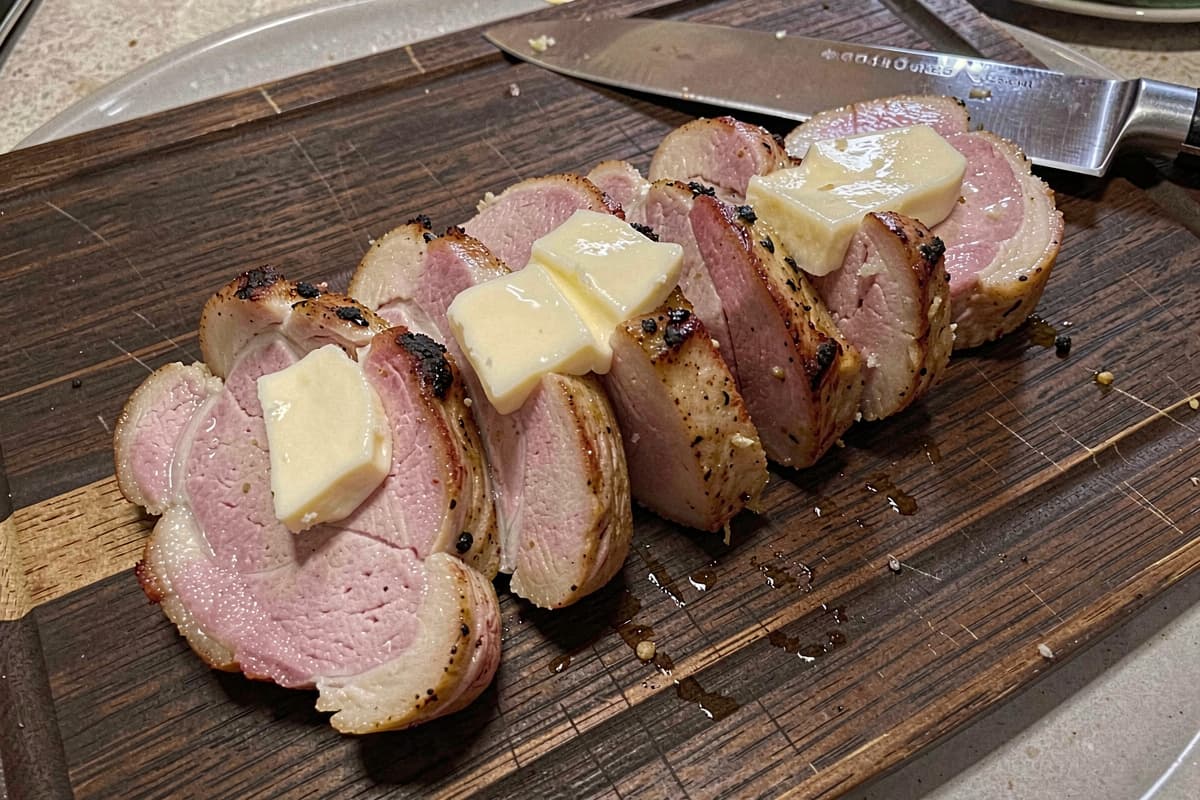
Oven-Roasted Pork Tenderloin
1-1.5 lb pork tenderloin seared then roasted at 425°F for 15-20 min to 145°F. Salt only. 32g protein, 5g fat, 180 calories per 5 oz. $5 per serving.
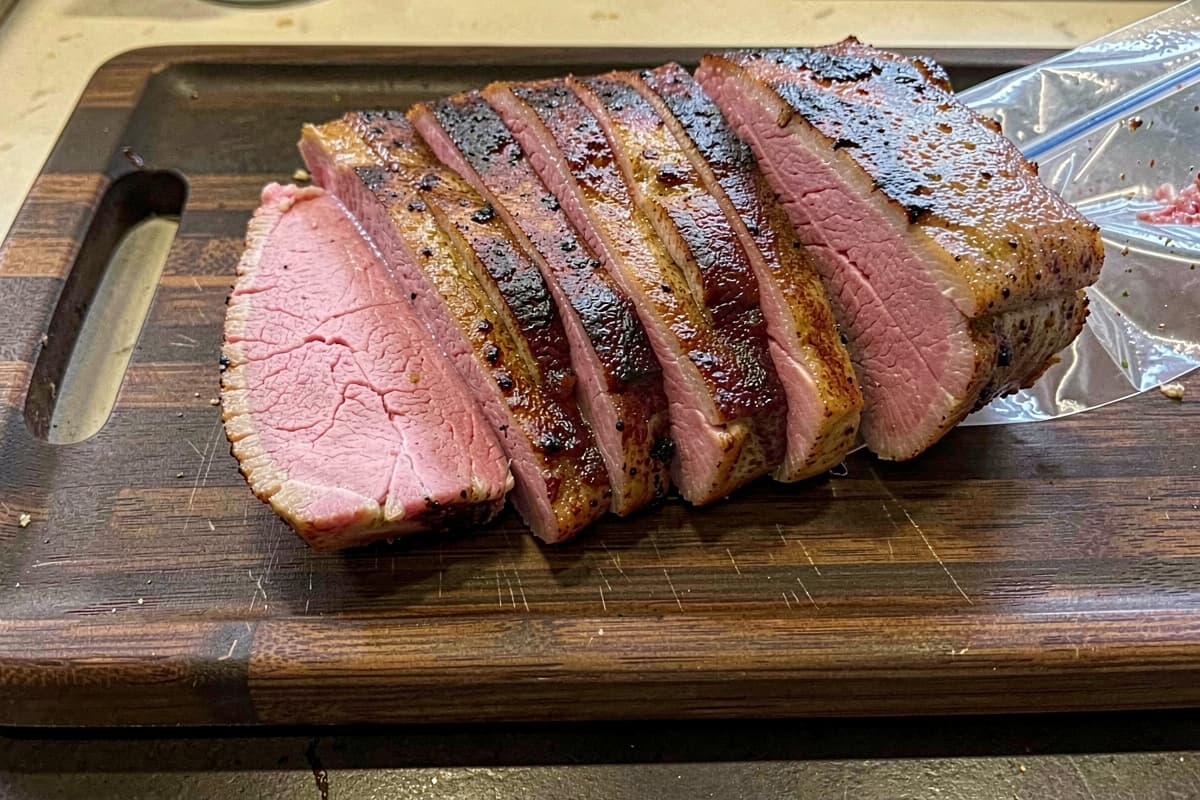
Sous Vide Pork Loin (140°F for 4 Hours)
3-lb pork loin sous vide at 140°F for 4 hours, then seared in cast iron. Salt only. Edge-to-edge pink, USDA-safe, juicier than oven-roast.
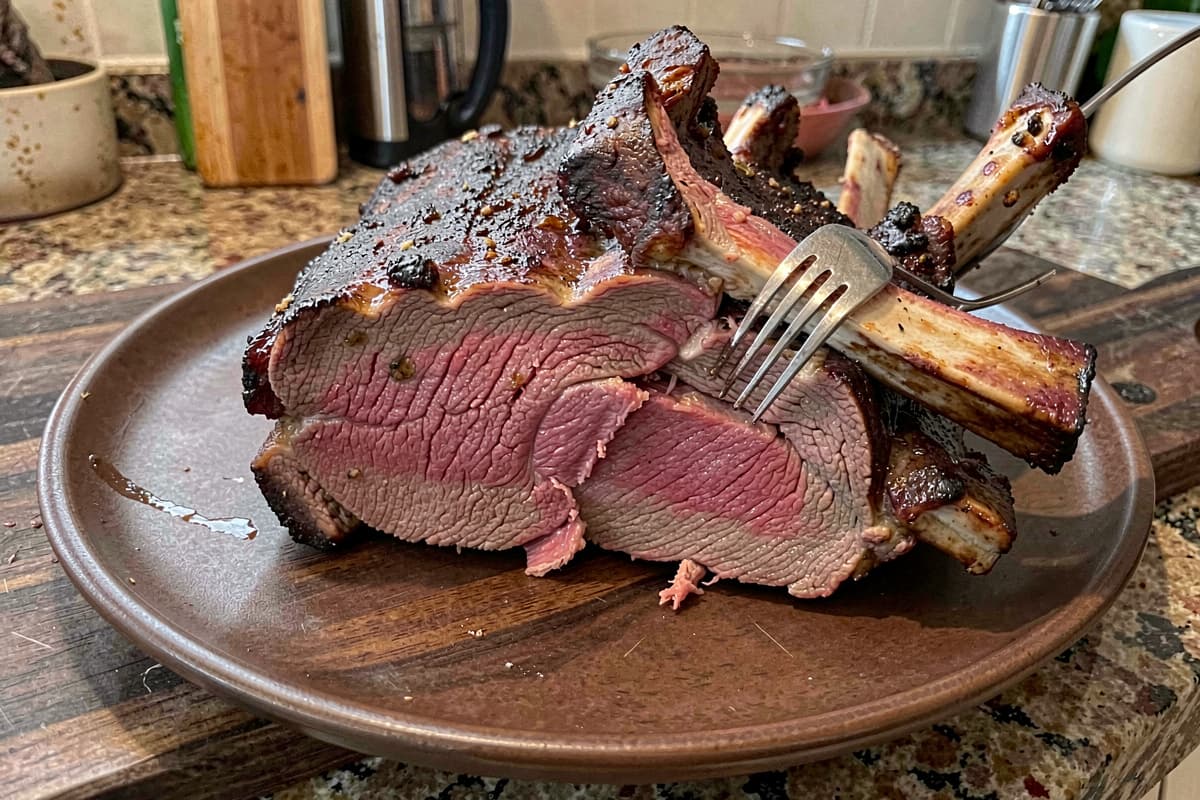
Sous Vide Short Ribs (72 Hours at 135°F)
Beef short ribs sous vide at 135°F for 72 hours — converts tough connective tissue while keeping the meat at medium-rare. Salt only. The wow-the-guests dish.
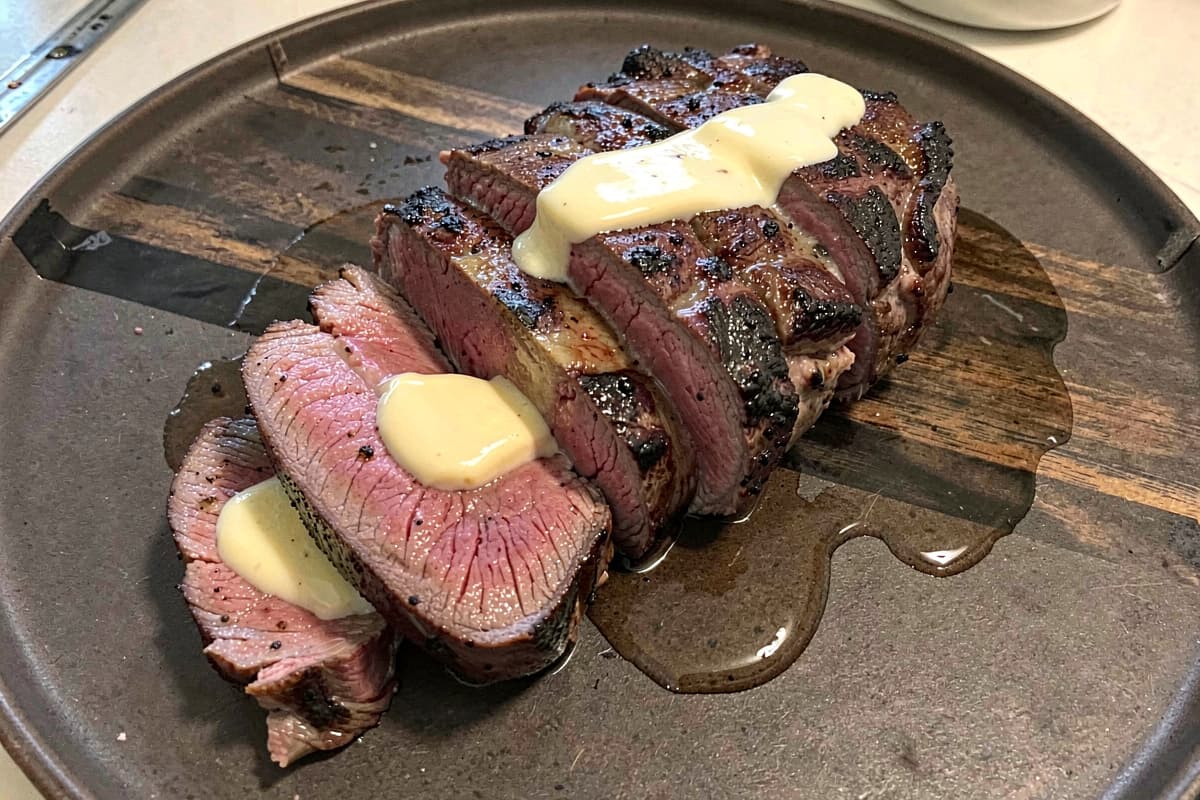
Sous Vide Filet Mignon (130°F for 90 Minutes)
8-oz filet mignon sous vide at 130°F for 90 minutes, then seared 60 seconds per side. Edge-to-edge medium-rare. Salt and butter only.
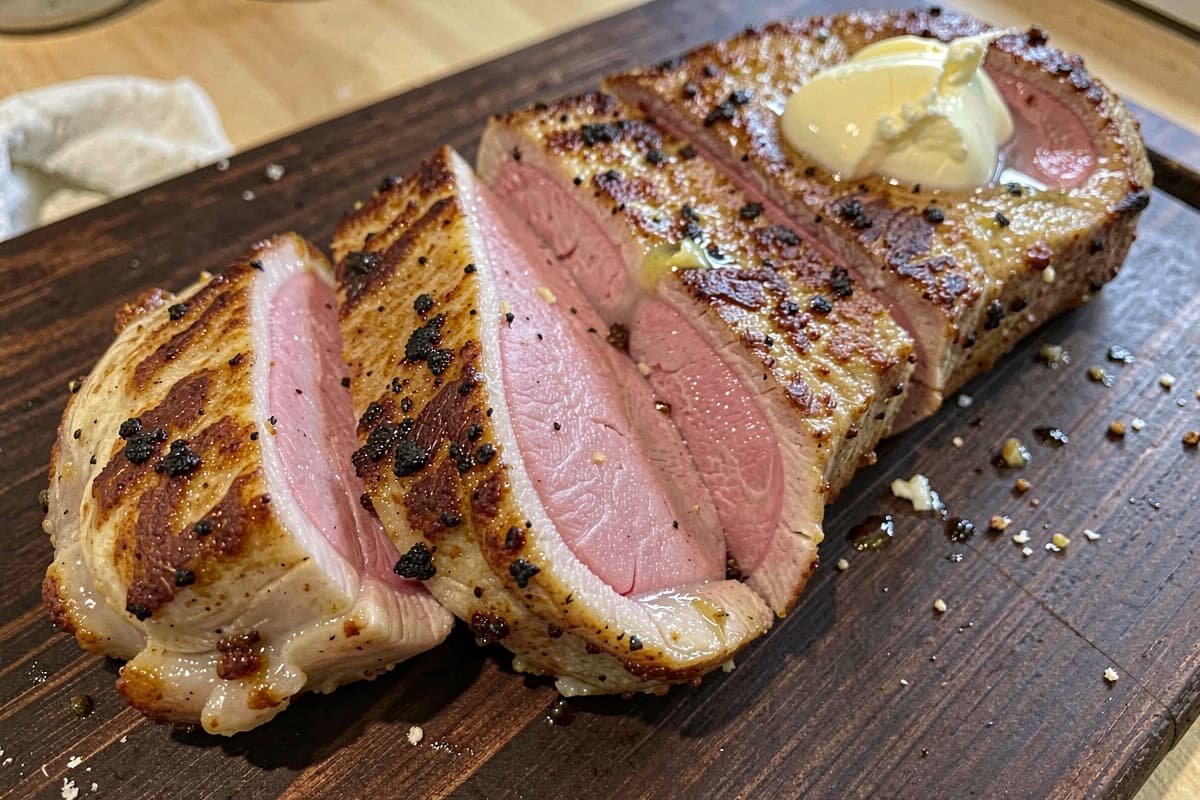
Sous Vide Pork Tenderloin (140°F for 90 Minutes)
1-1.5 lb pork tenderloin sous vide at 140°F for 90 minutes, then seared. Salt only. The leanest pork cut, cooked perfectly without drying.
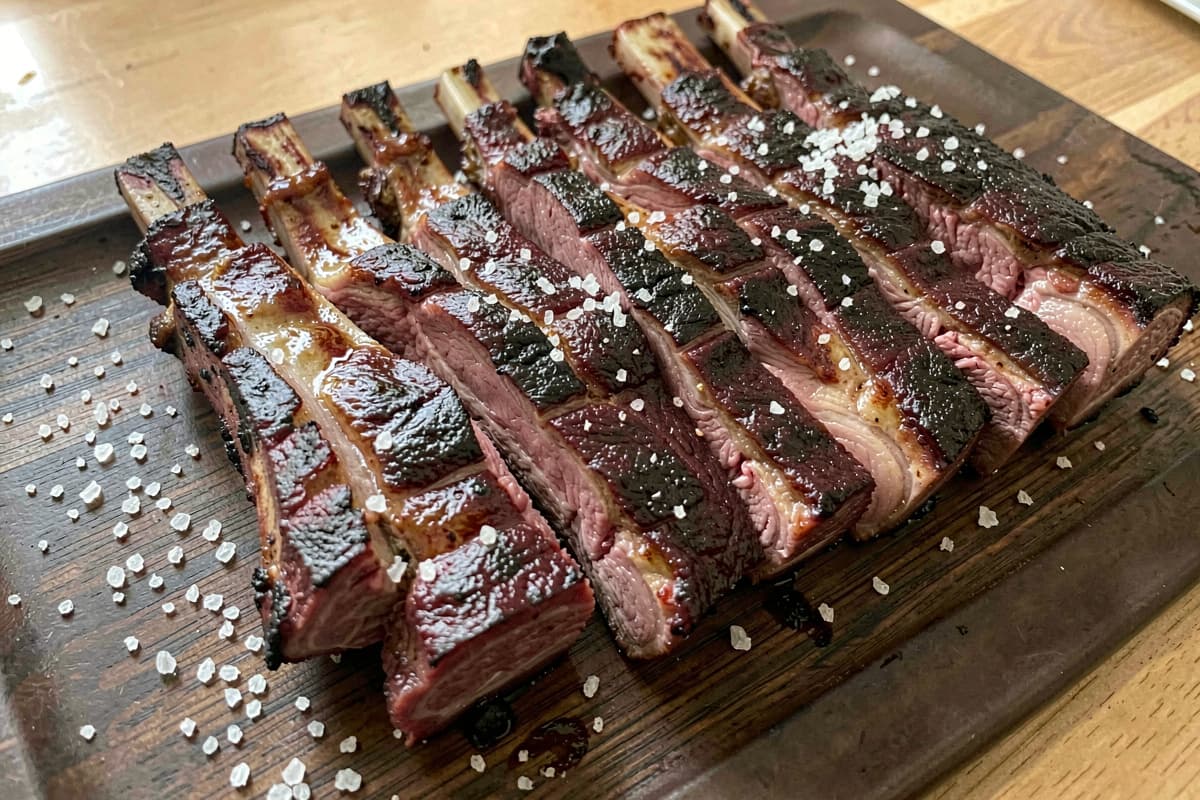
Roasted Lamb Ribs (Salt-Only)
Lamb breast ribs roasted at 300°F for 2 hours, then crisped at 425°F. Salt only. The cheapest lamb cut at $5-7 per pound. 28g protein per 6 oz cooked.
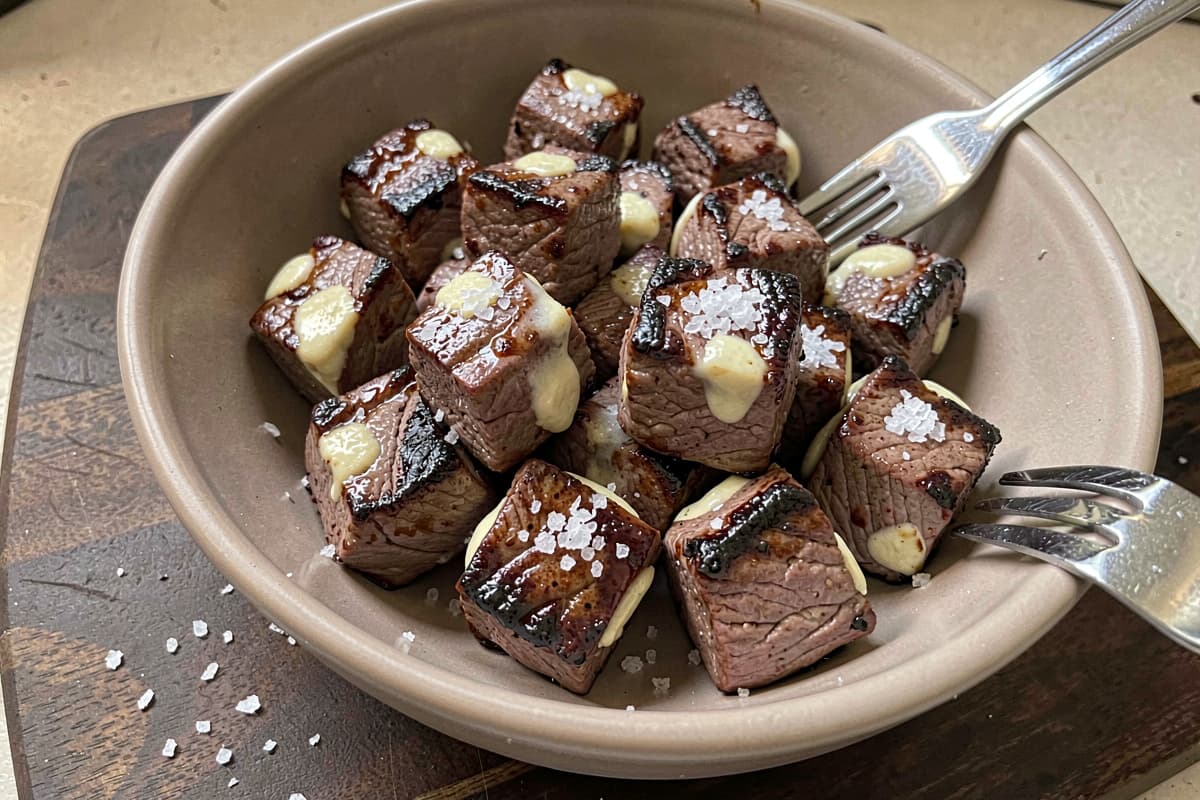
Air Fryer Steak Bites (10 Minutes)
1.5 lb sirloin cut into bite-sized cubes, air-fried at 400°F for 7-8 minutes. Salt and butter. The fastest carnivore protein in the kitchen.
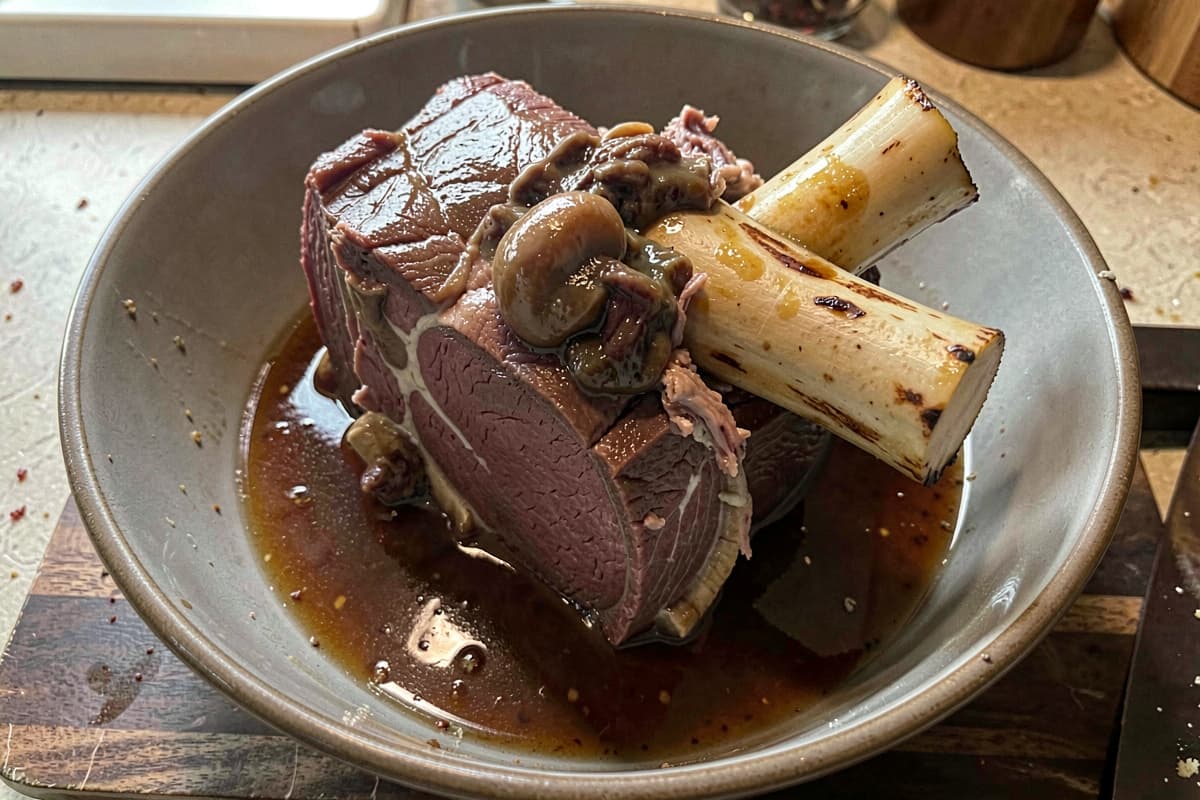
Braised Beef Shank (4-Hour Slow Cook)
Cross-cut beef shanks braised in 4 cups of beef broth at 300°F for 4 hours. Salt only — no wine, no soffritto. The marrow-bone payoff dish.
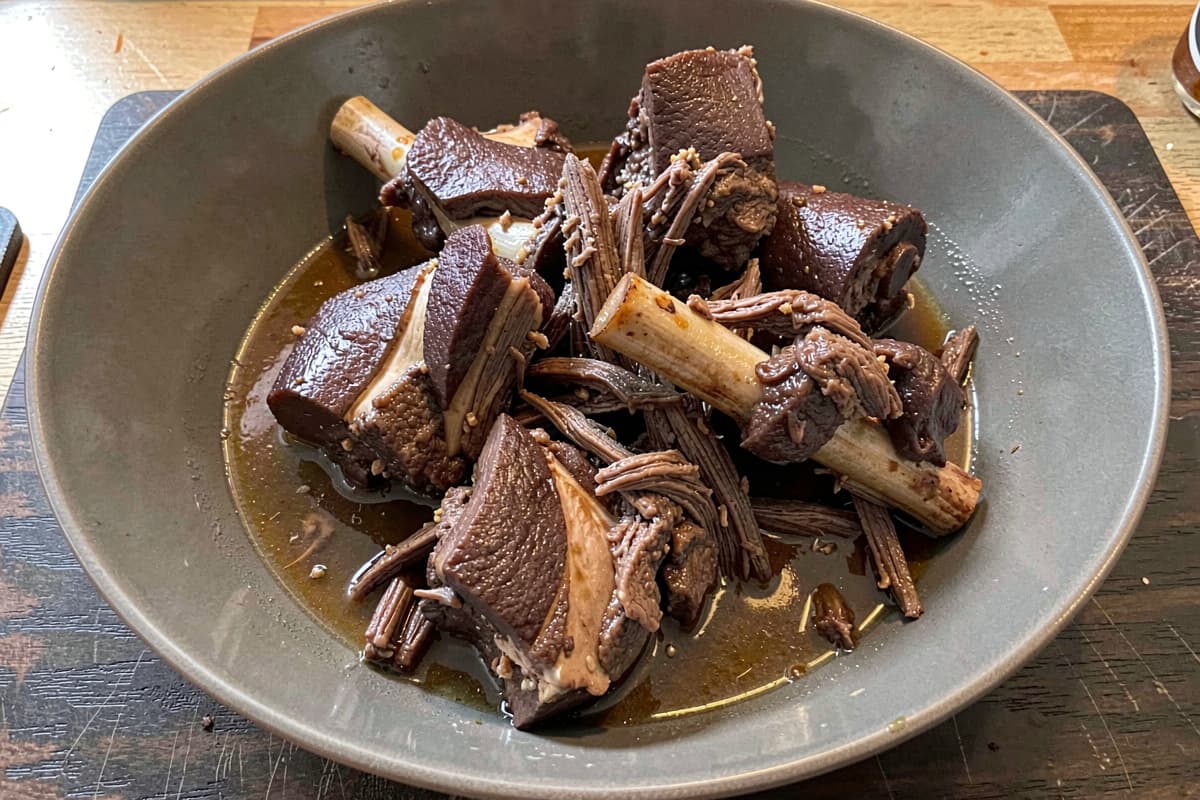
Braised Oxtail (Carnivore, 4 Hours)
3 lb oxtail seared and braised in beef broth at 325°F for 4 hours until fall-apart. Salt only — no soy, no wine. The collagen-richest carnivore dish.
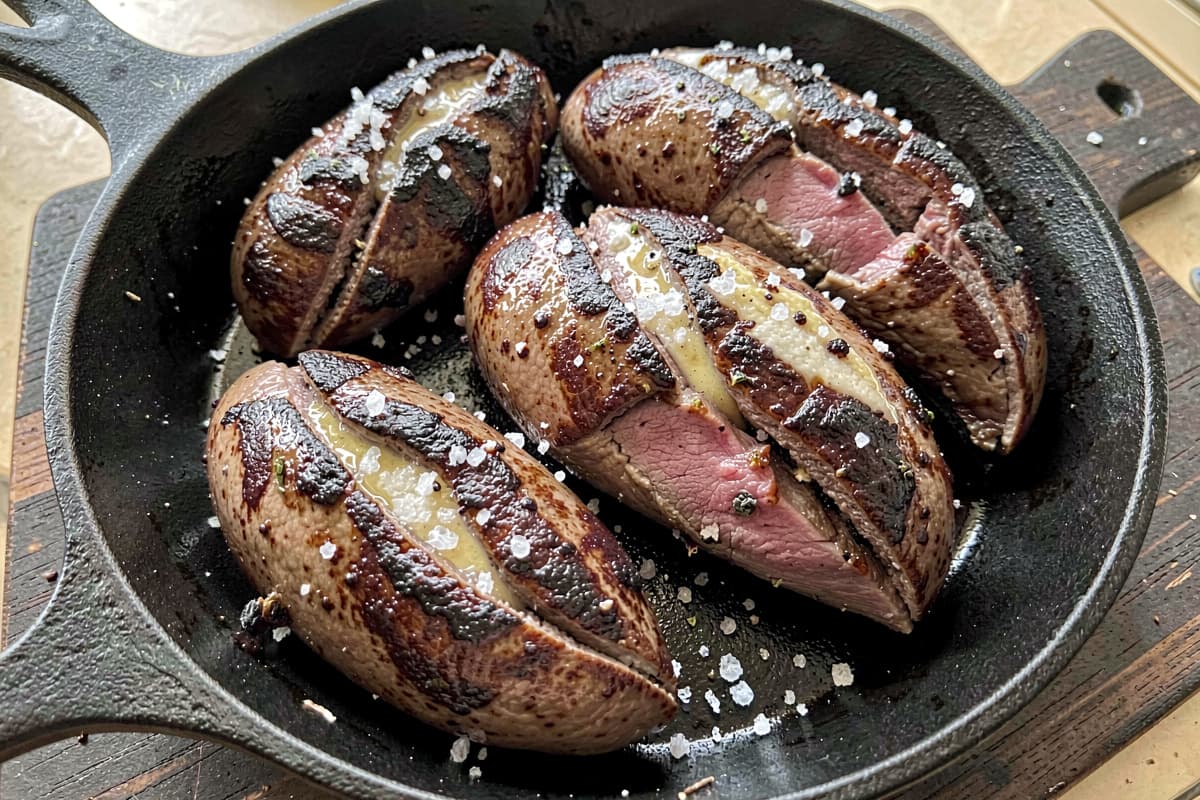
Pan-Seared Lamb Kidneys
Fresh lamb kidneys split, soaked 30 min in salt water, seared in butter for 2 minutes per side. Salt only. Higher in iron than liver, mild lamb flavor.
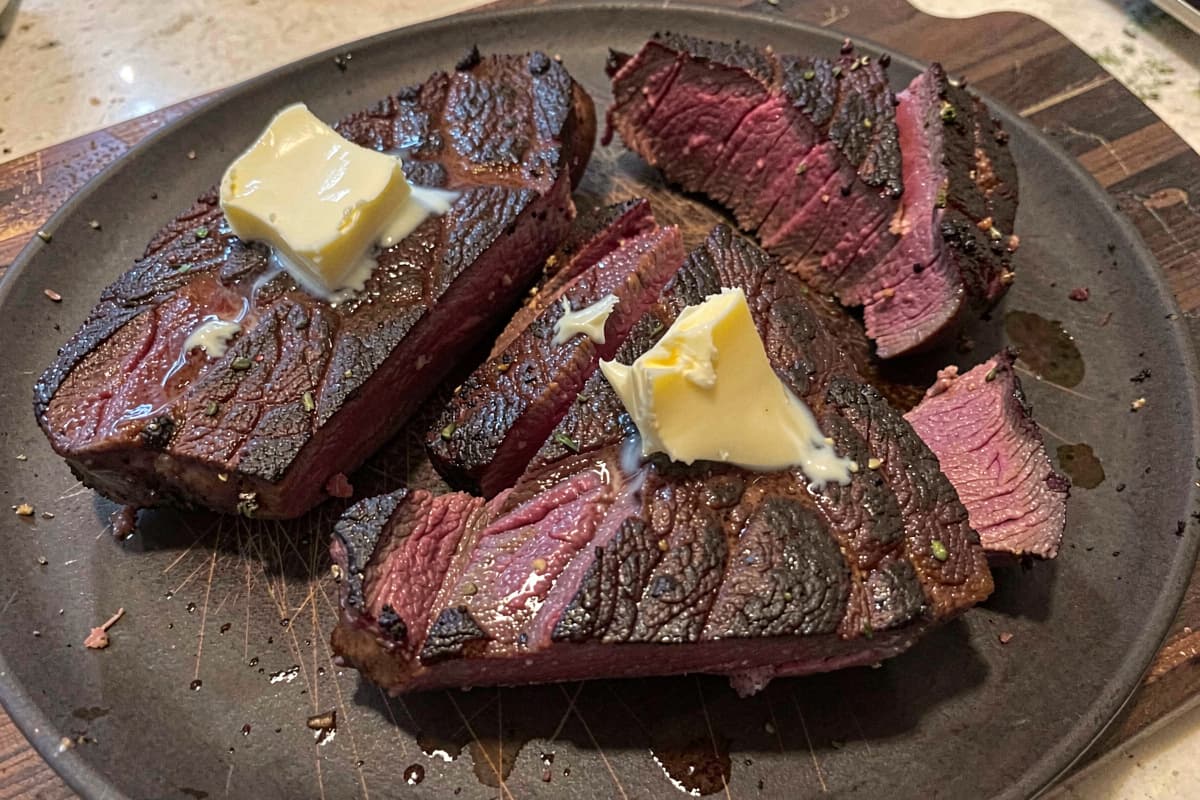
Beef Heart Steaks (Pan-Seared)
Beef heart sliced into ¾-inch steaks, seared 2-3 minutes per side. Salt only. Iron-rich (5mg per 4 oz), $4-6 per pound, lean and clean-tasting.
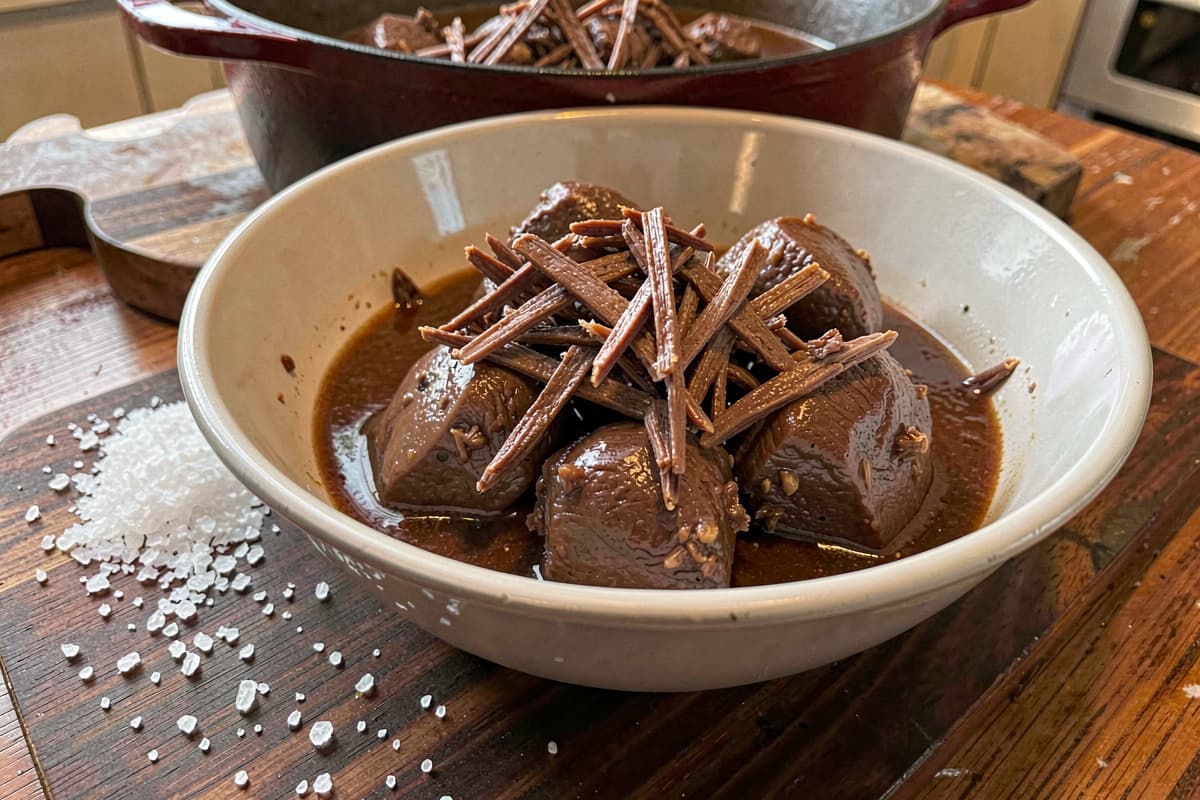
Braised Beef Cheeks (4-Hour Slow Cook)
2 lb beef cheeks seared and braised in beef broth at 300°F for 4 hours until fork-tender. Salt only. The Italian guancia tradition, carnivore-stripped.
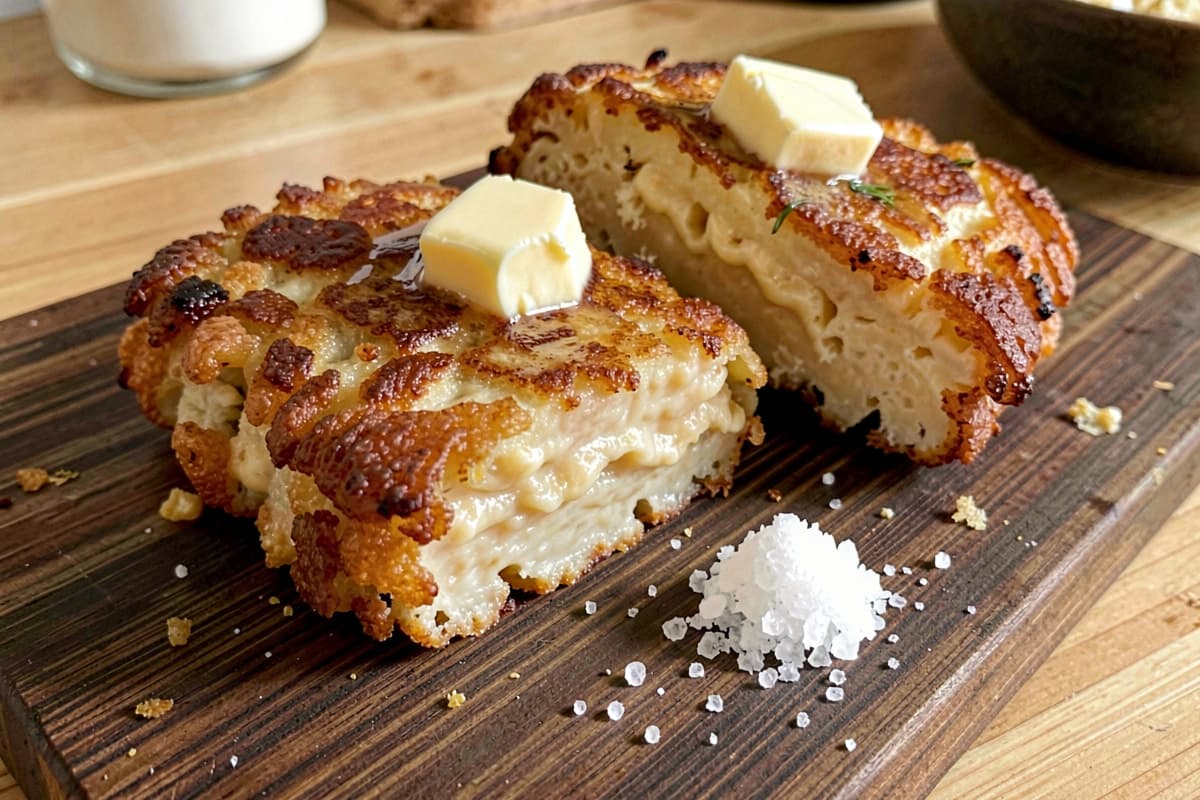
Pan-Fried Sweetbreads (Salt-Only)
Veal or beef sweetbreads soaked, blanched, peeled, seared in butter 2 min per side. Salt only — no flour, no shallots. French ris de veau.
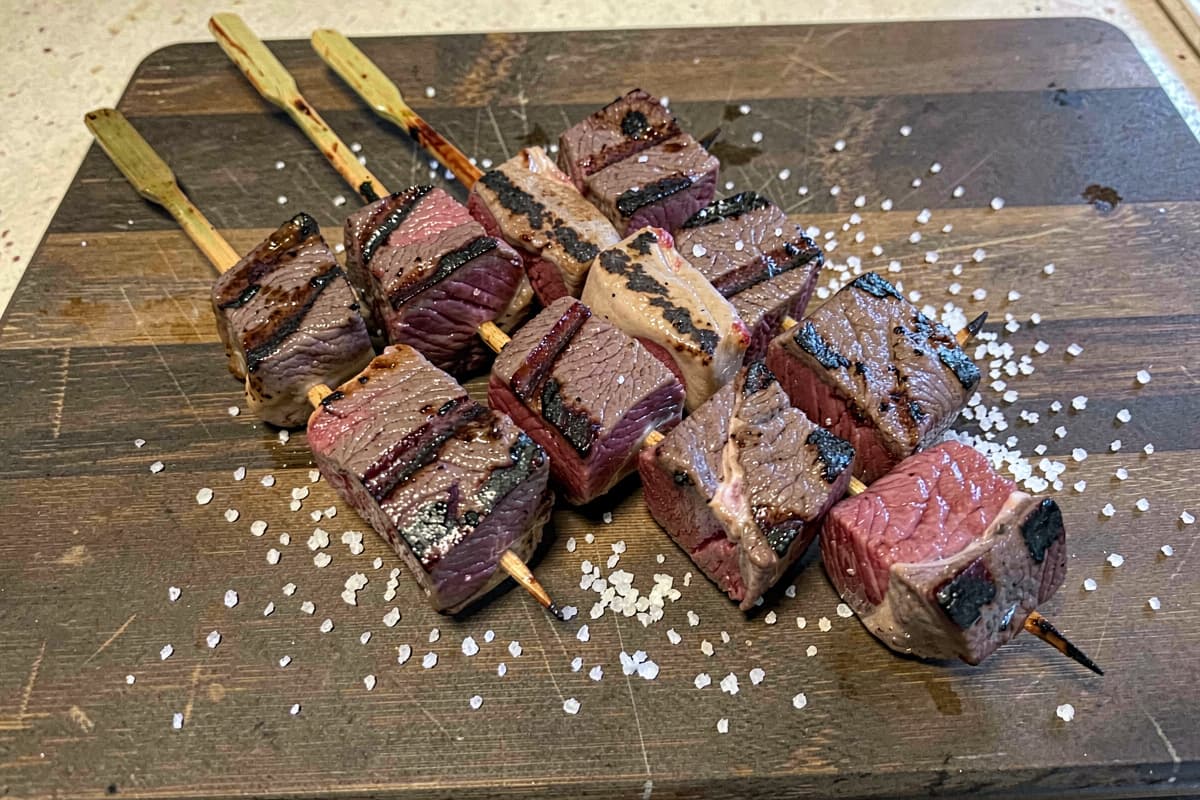
Beef Heart Skewers (Anticucho-Style)
Beef heart cubed, salted, threaded on skewers, grilled 6-8 minutes total. Salt only — no aji panca, no garlic. The Peruvian anticucho stripped to its essence.
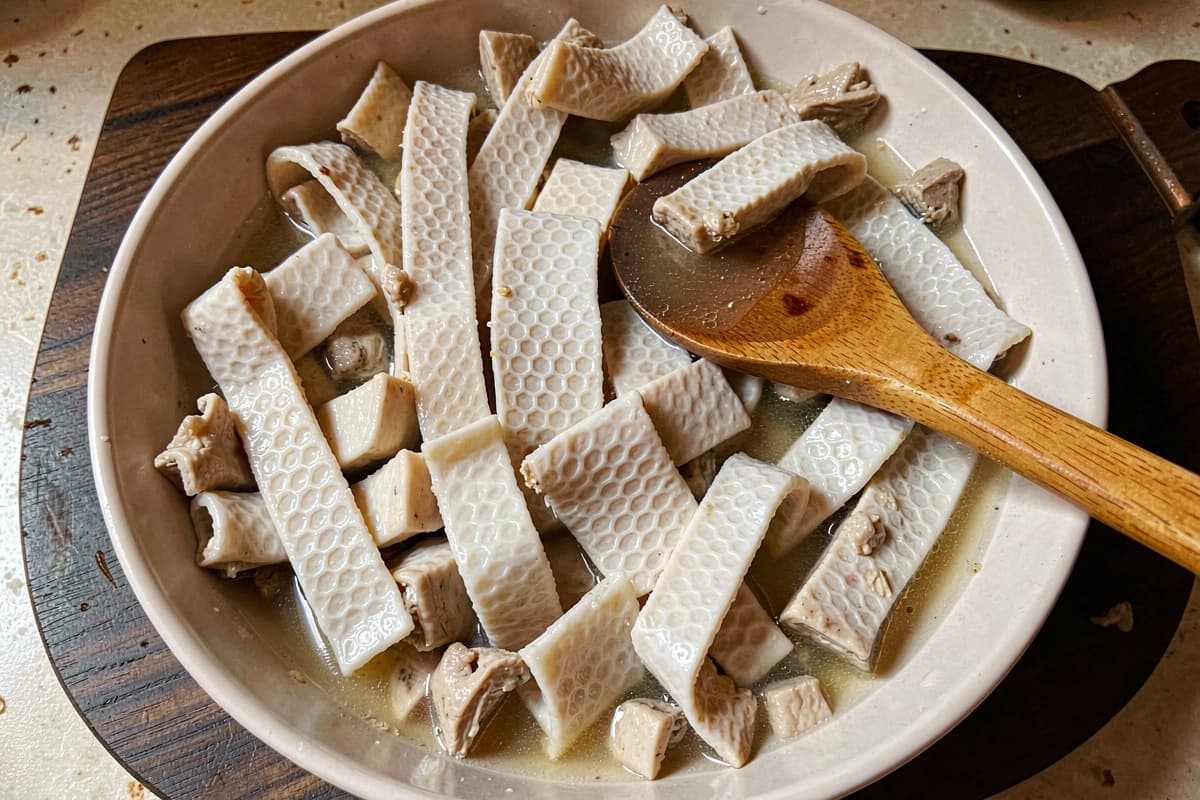
Carnivore Tripe (Slow-Simmered)
1 lb cleaned beef honeycomb tripe simmered in salted water for 3-4 hours until tender. Salt only — no soffritto, no chorizo. The pure offal cut.
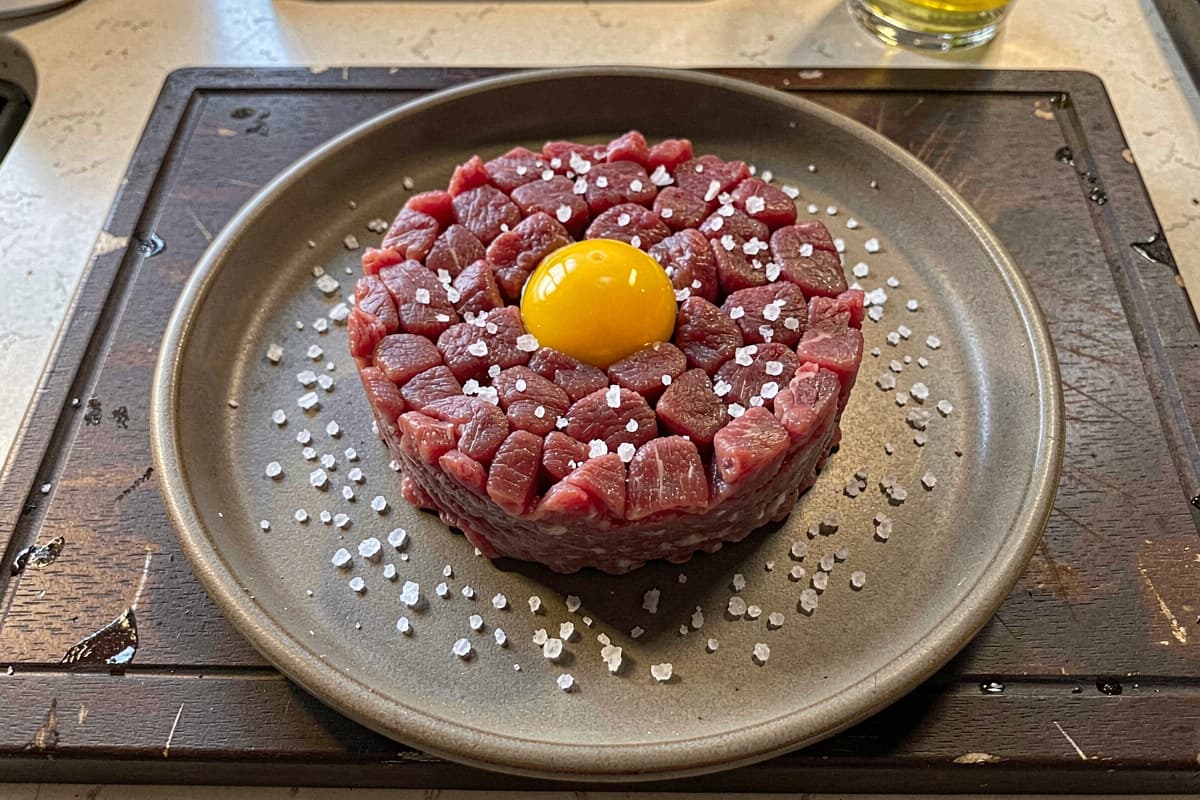
Steak Tartare (Carnivore, 5 Ingredients)
8 oz sushi-grade beef tenderloin hand-chopped, mixed with 1 egg yolk, salt. No capers, no Worcestershire. The strict French classic, carnivore-stripped.
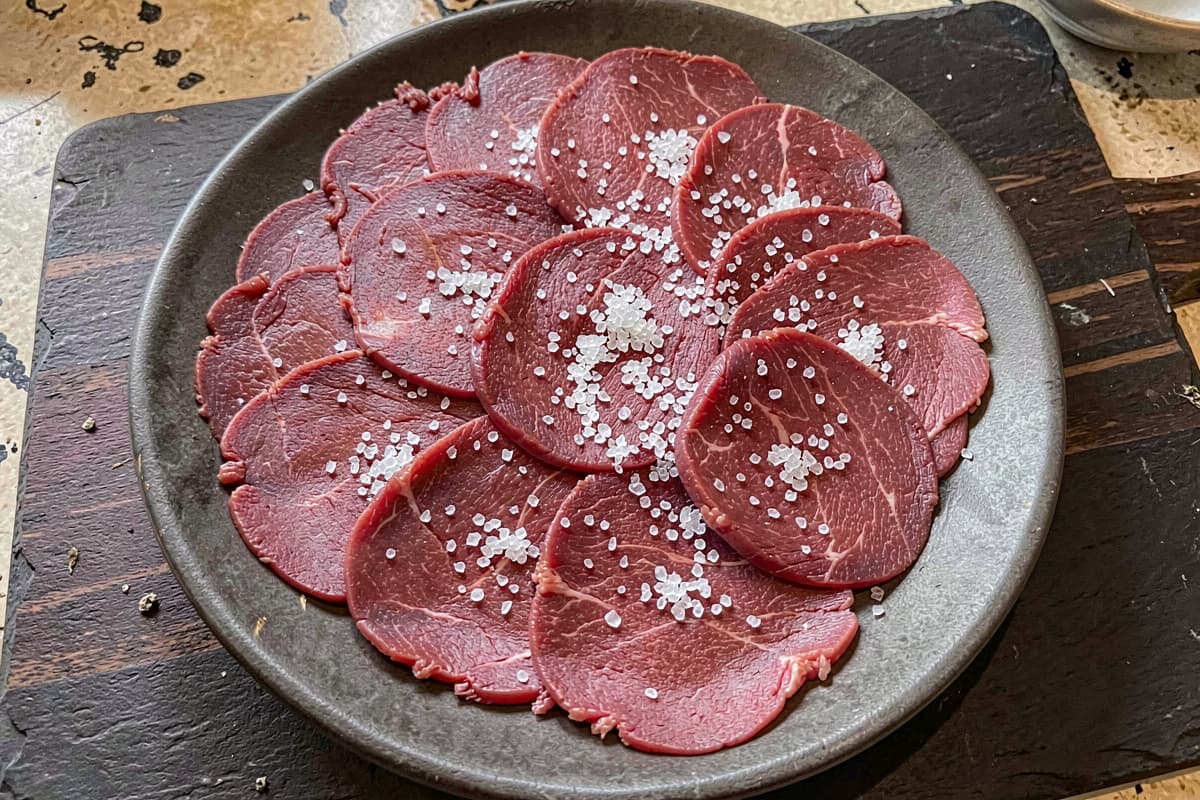
Beef Carpaccio (Carnivore, Salt + Beef Only)
Beef tenderloin frozen, sliced paper-thin, served raw with salt only. No olive oil, no arugula, no parmesan. The Italian classic, carnivore-stripped.
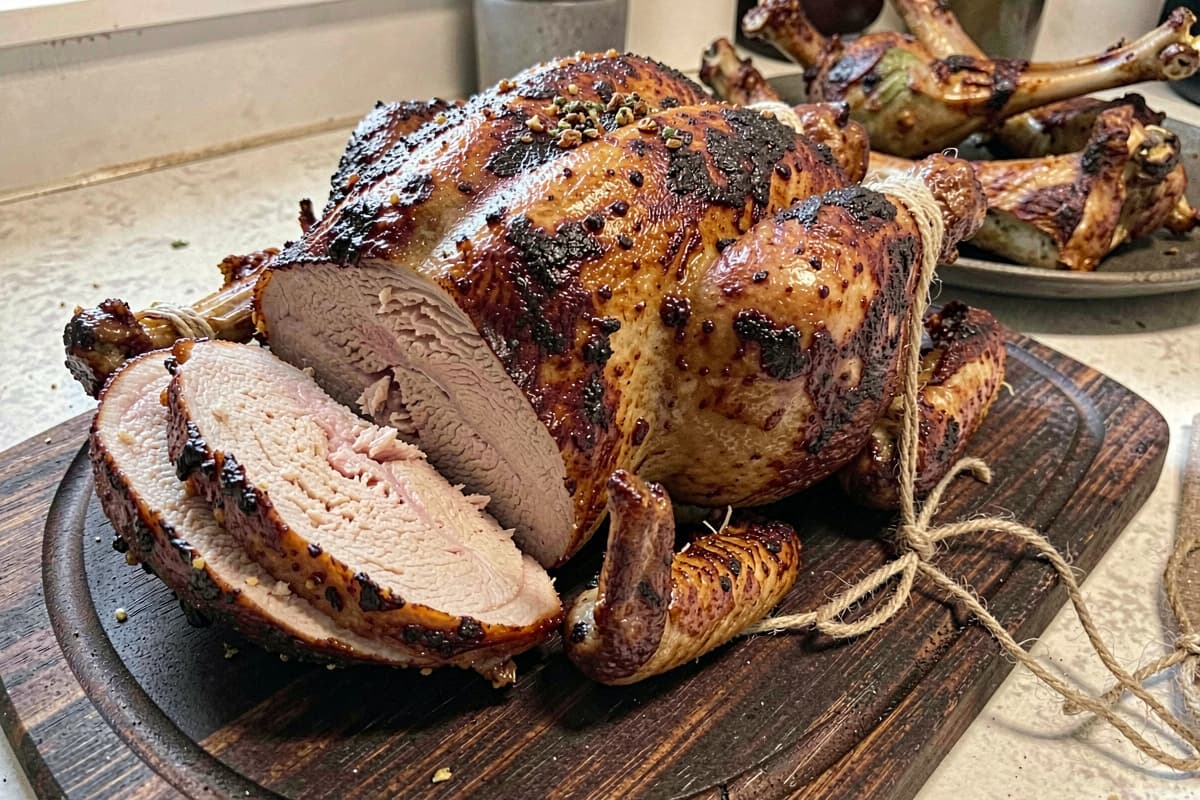
Whole Roast Chicken — Salt-Only Carnivore Recipe
4-5 lb whole chicken dry-brined 24 hours, roasted at 425°F for 65-75 minutes to 165°F internal. Salt only — no garlic or rosemary. Feeds 4-6.
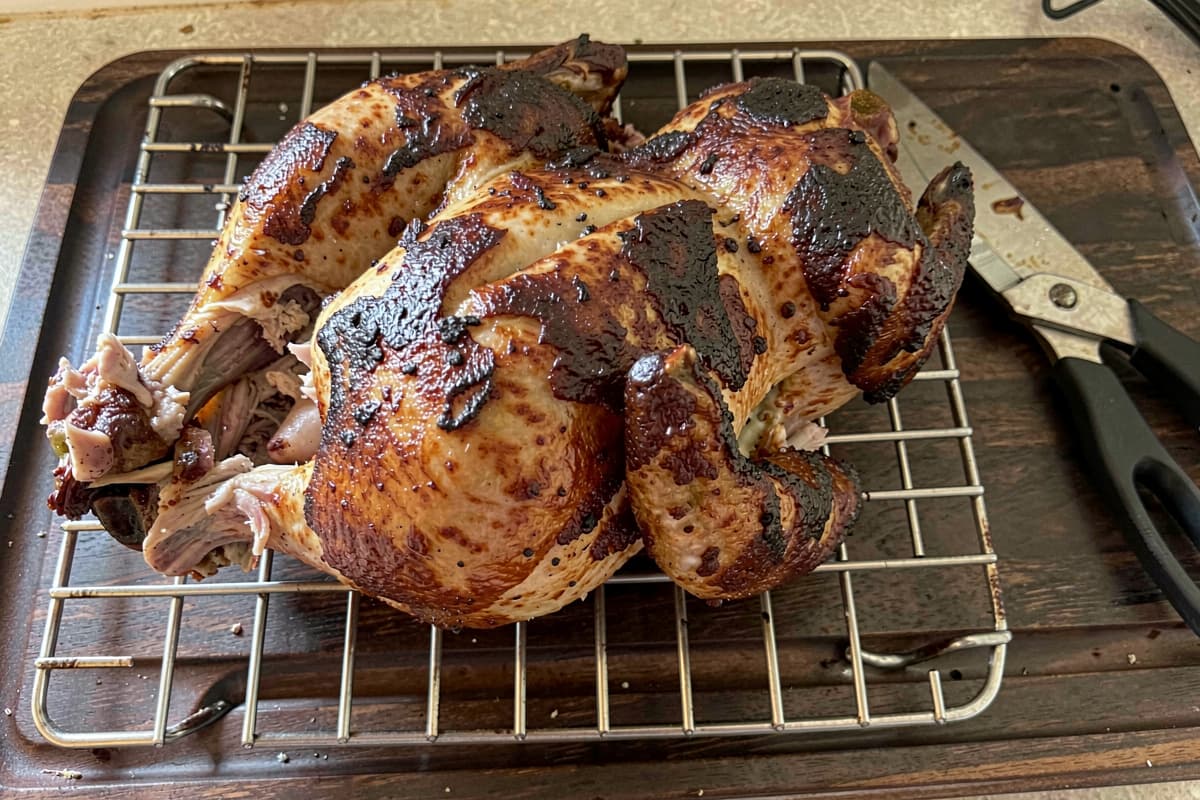
Spatchcock Chicken (Faster + Crispier)
Whole chicken backbone removed, flattened, salted, roasted at 450°F for 40 minutes. Half the time of whole-bird roasting with crispier skin.
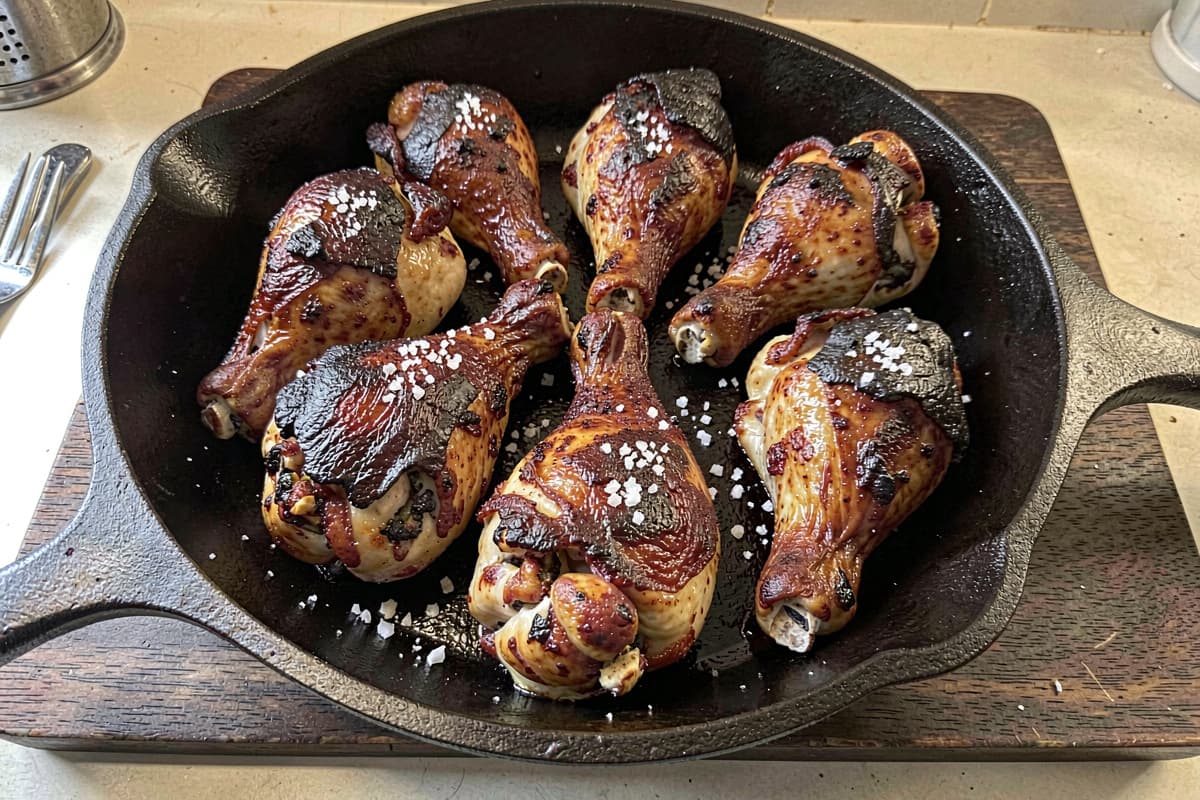
Crispy-Skin Chicken Thighs (Pan-Seared)
Bone-in skin-on chicken thighs seared skin-down in cast iron for 12 minutes, then 5 minutes in the oven. Salt only. Better skin than any other method.
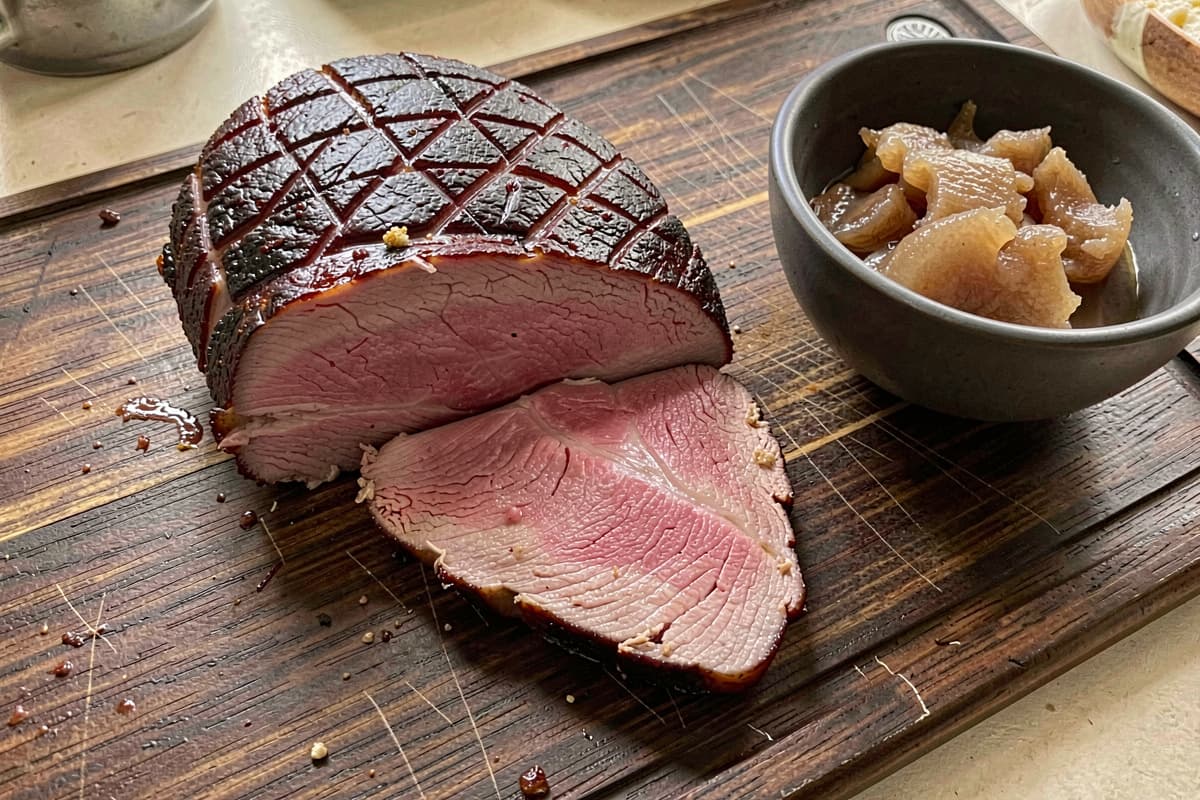
Crispy Duck Breast (Pan-Seared)
Magret duck breasts scored, salted, seared skin-down 8 min in a cold pan, finished 5 min in oven to 130°F. The classic French method, salt-only.
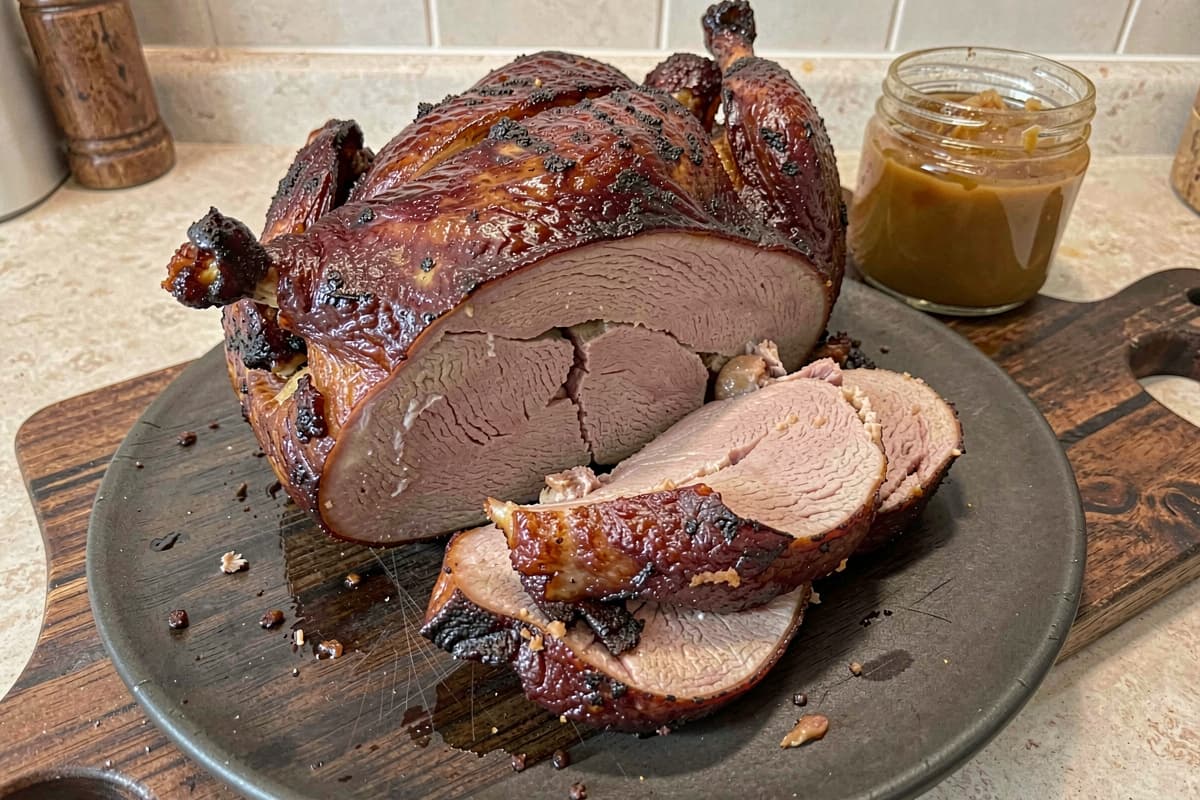
Whole Roast Duck (Pekin, Salt-Only)
5-6 lb Pekin duck dry-brined 24 hours, roasted at 325°F for 90 minutes then 425°F for 15. Salt only. Yields a rich crispy bird and 1+ cups of rendered duck fat.
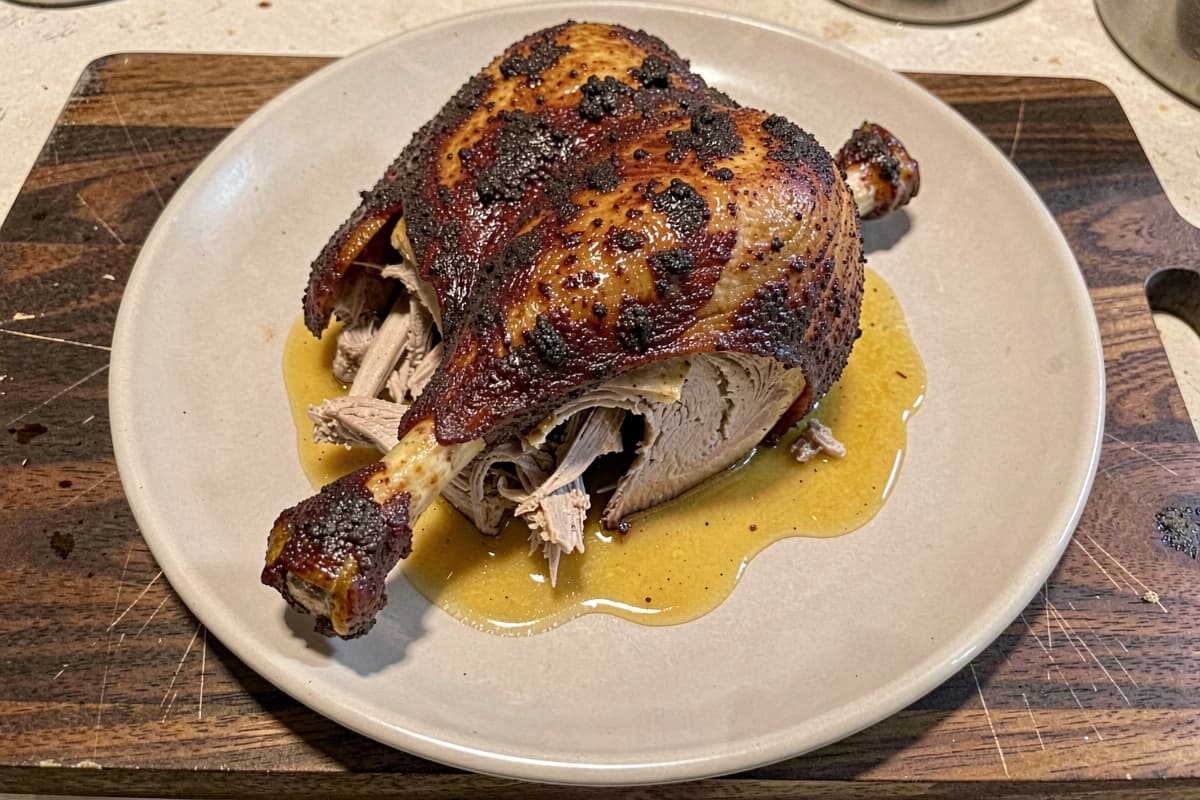
Duck Confit (Carnivore Adaptation)
Duck legs salt-cured 24 hours, then slow-cooked submerged in duck fat at 200°F for 2.5 hours. The French preservation classic, no thyme or bay.
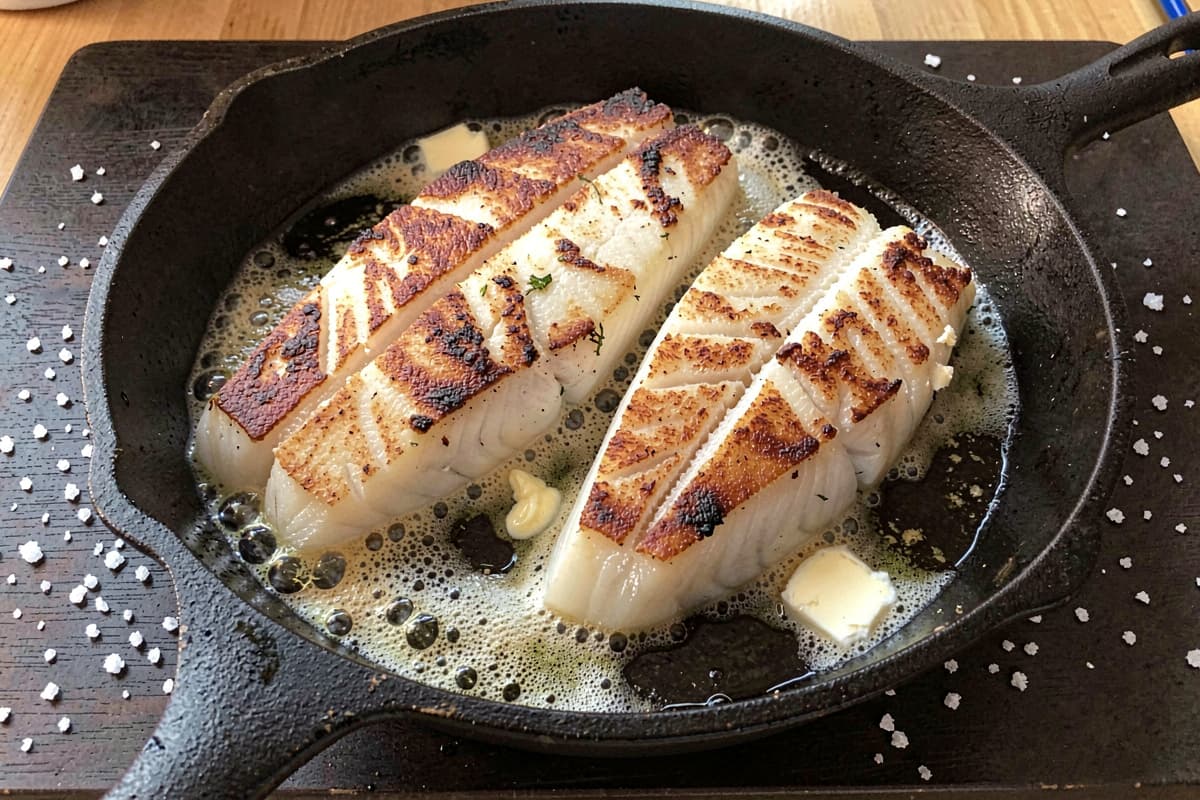
Pan-Fried Cod (Salt + Butter)
1 lb cod fillets seared in butter for 3-4 minutes per side. Salt only — no flour, no lemon. 32g protein, 6g fat per 6 oz. The cleanest fish dinner.
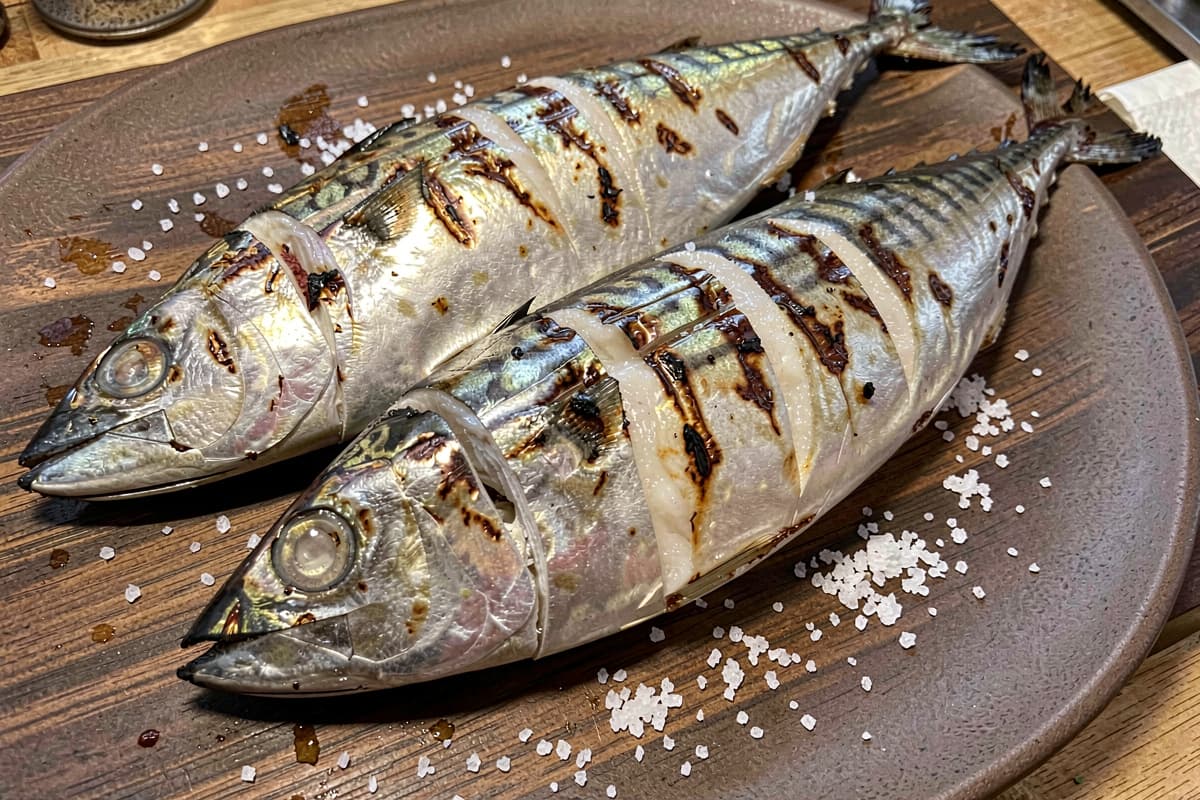
Grilled Whole Mackerel (Salt-Only)
2 whole mackerel scored, salted, grilled over high heat for 4 min per side. Salt only. Highest omega-3 fish at $5-7 per pound. 30g protein per half-fish.
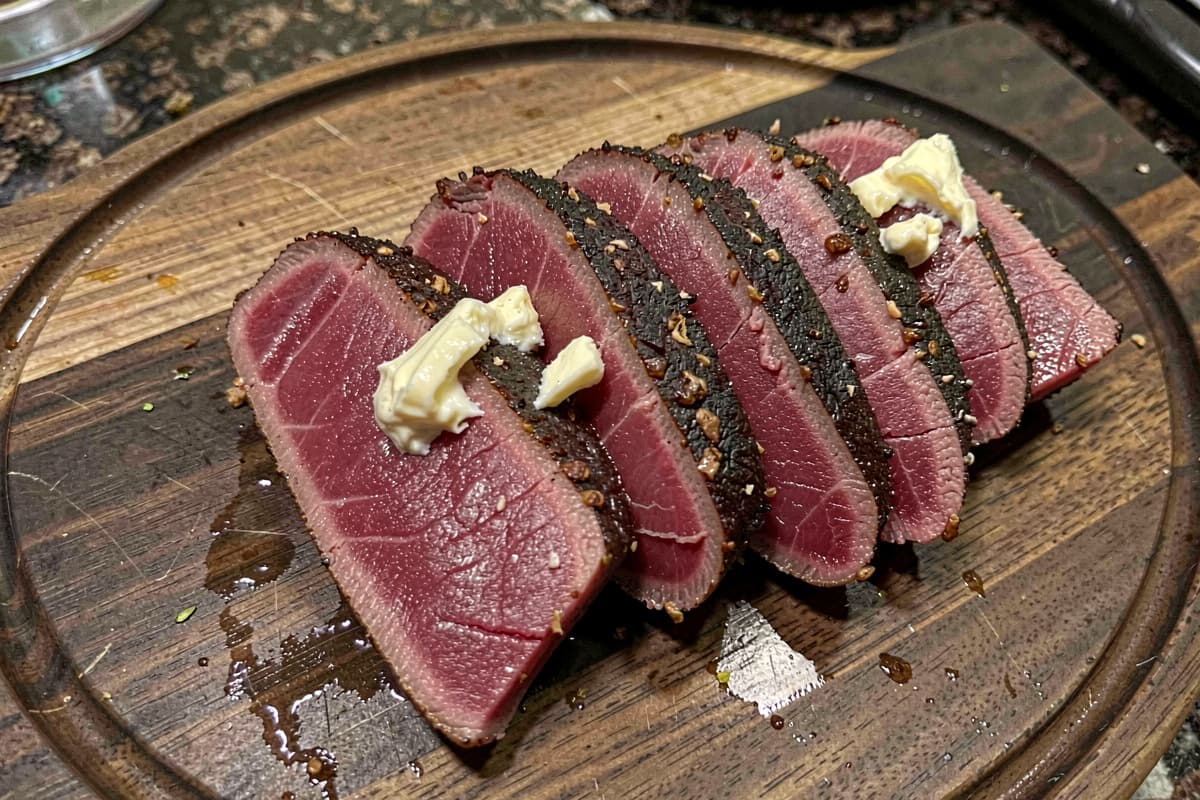
Seared Tuna Steak (Rare-Center, 90 Seconds Per Side)
1-inch thick ahi tuna steak seared 90 seconds per side in butter. Salt only — no soy, no sesame. Rare center, crusty exterior. The 4-minute carnivore dinner.
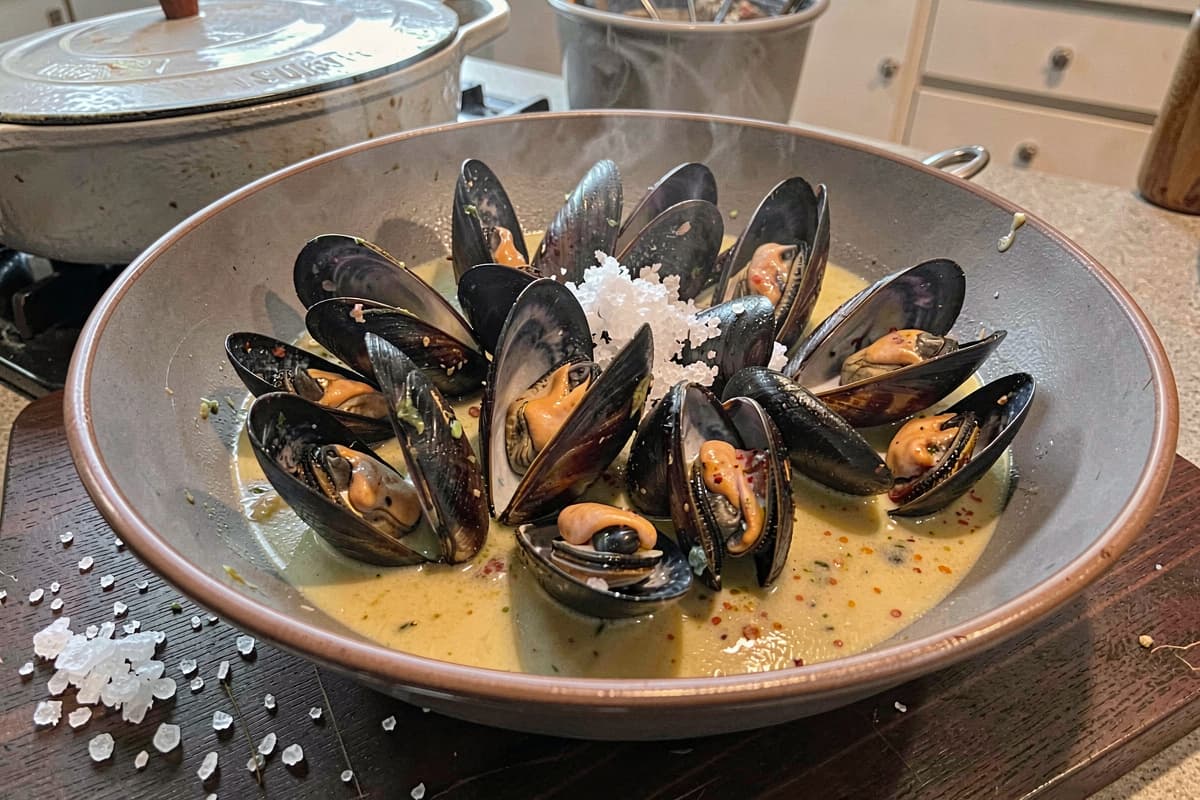
Mussels in Butter (Salt-Only Steam)
2 lb fresh mussels steamed open in ½ cup butter and salted broth. No wine, no garlic, no parsley. The strict carnivore moules-marinière.
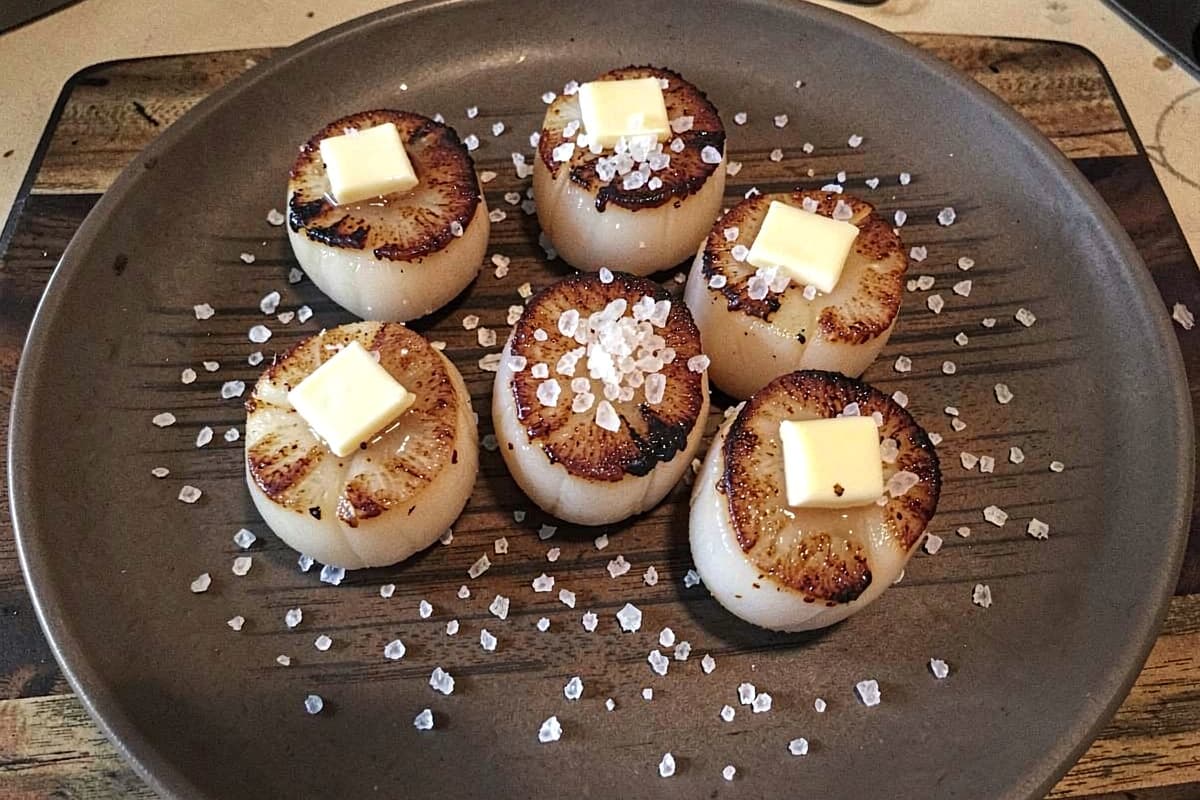
Pan-Seared Scallops (90 Seconds Per Side)
8 large dry-pack sea scallops seared in butter for 90 seconds per side. Salt only. The 4-minute restaurant-grade carnivore dish at $5 per scallop.
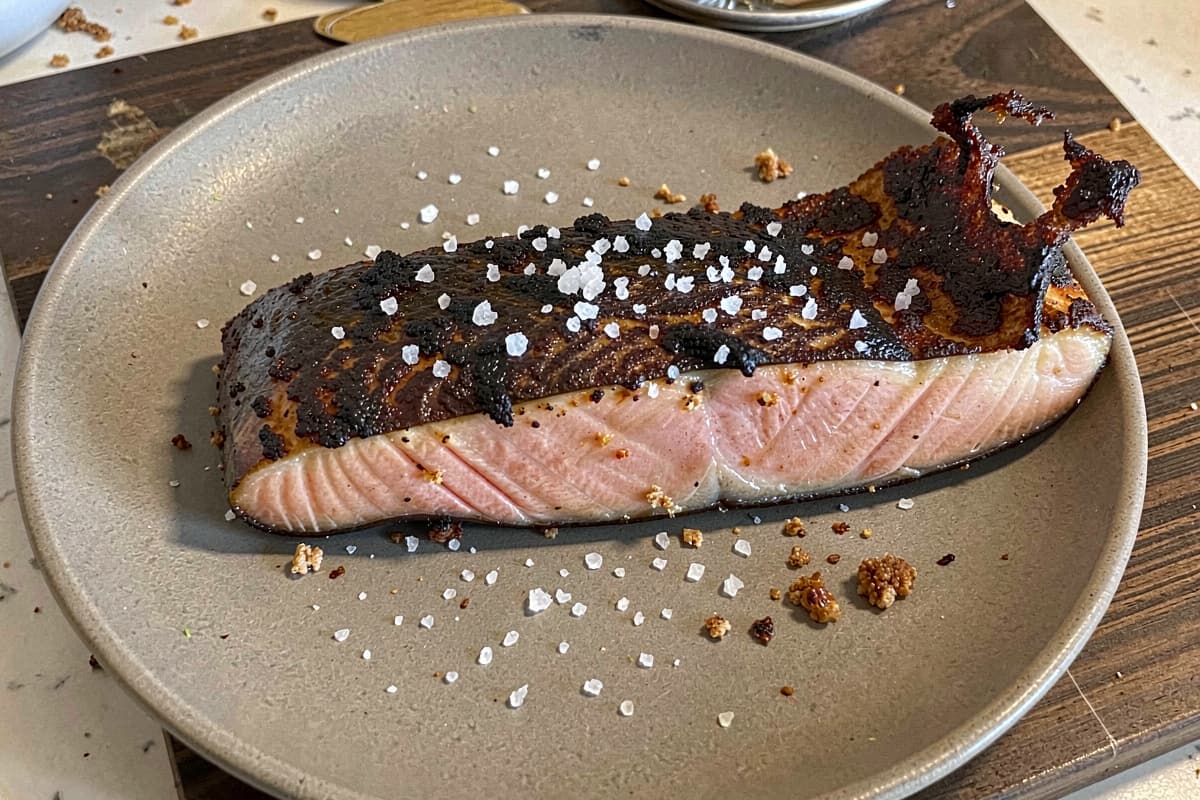
Pan-Fried Salmon (Crispy Skin)
6-oz salmon fillet seared skin-down for 5 minutes in cold pan, flipped 1 minute. Salt only — no lemon, no dill. The 7-minute crispy-skin carnivore dinner.
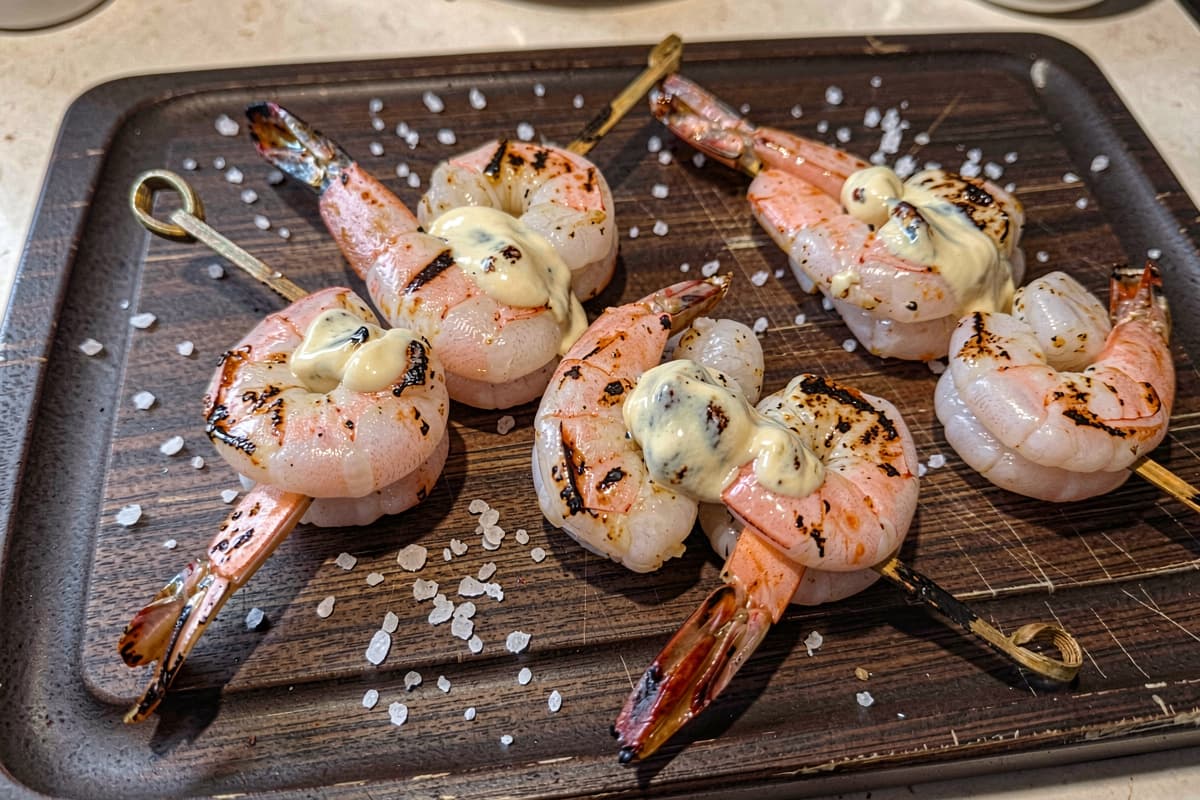
Grilled Shrimp Skewers (4-Minute Method)
1 lb large shrimp peeled, threaded on skewers, grilled over high heat for 90 seconds per side. Salt and butter only. $4 per serving.
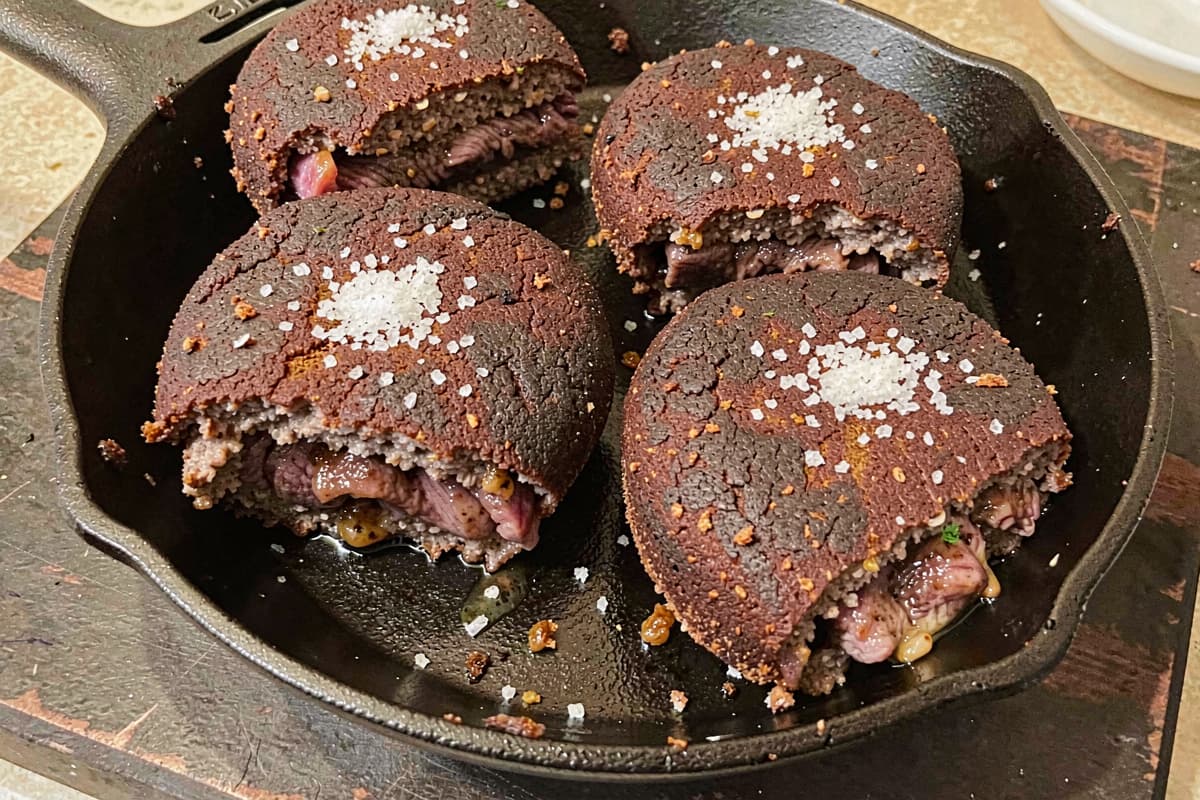
Lamb Burger (Carnivore, 80/20 Ground Lamb)
1 lb 80/20 ground lamb formed into 4 patties, seared in cast iron 3-4 minutes per side. Salt only. Richer than beef burgers, $7 per pound.
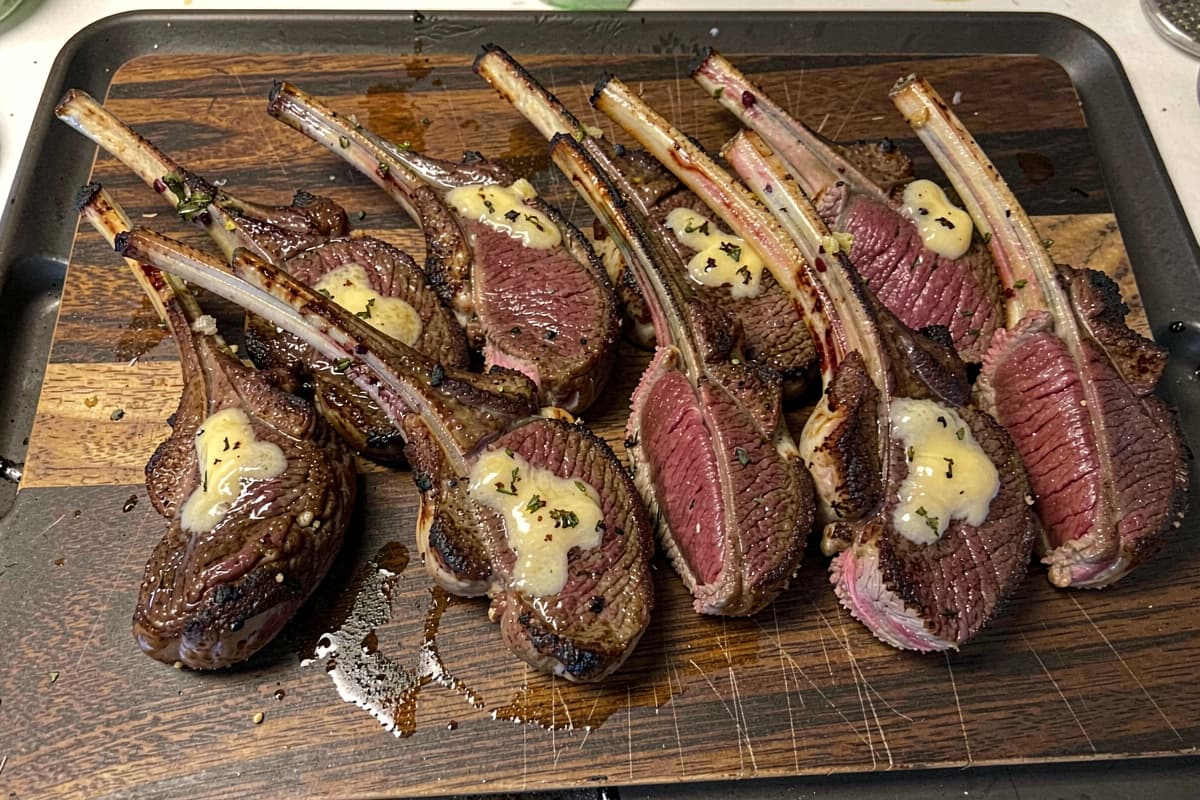
Pan-Seared Lamb Chops
8 lamb loin chops salted and seared in butter for 3 minutes per side. Salt only — no rosemary, no garlic. The 8-minute carnivore lamb dinner.
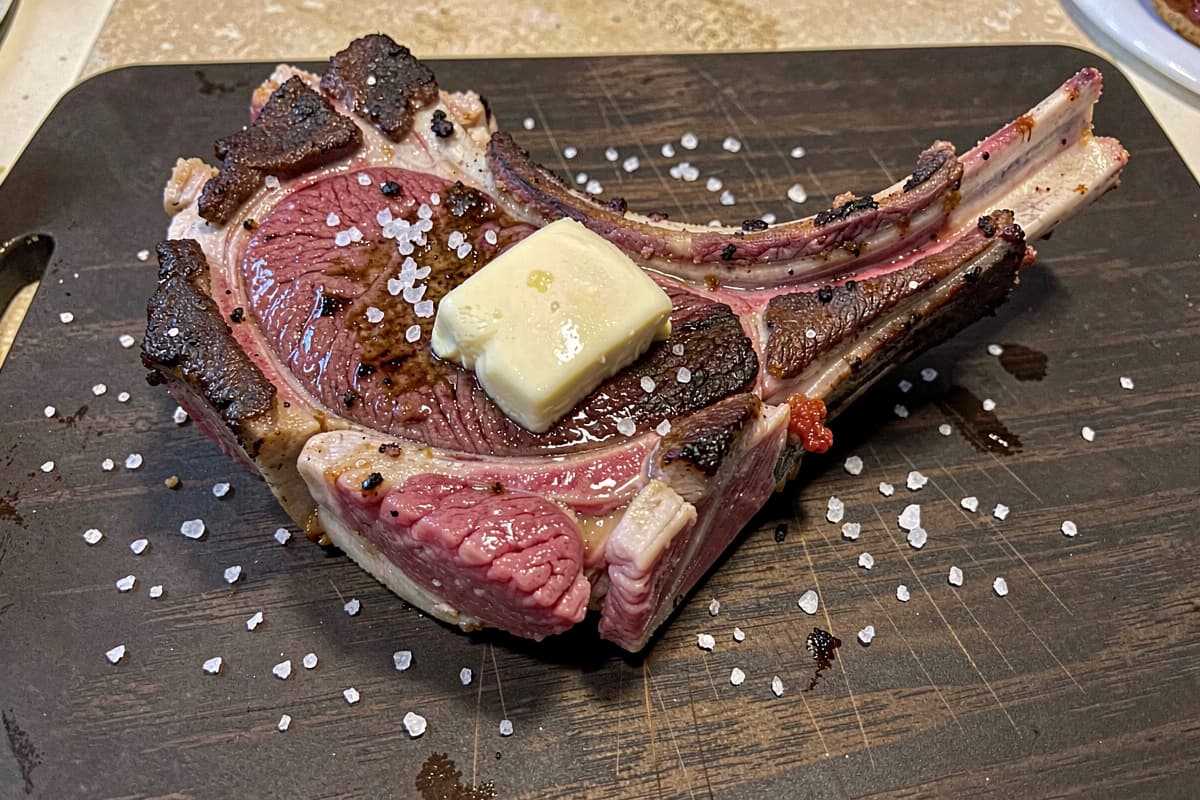
Pan-Seared Veal Chop
1 thick-cut veal rib chop salted and seared in butter, then finished in a 425°F oven to 145°F internal. Salt only. The Italian costoletta, carnivore-stripped.
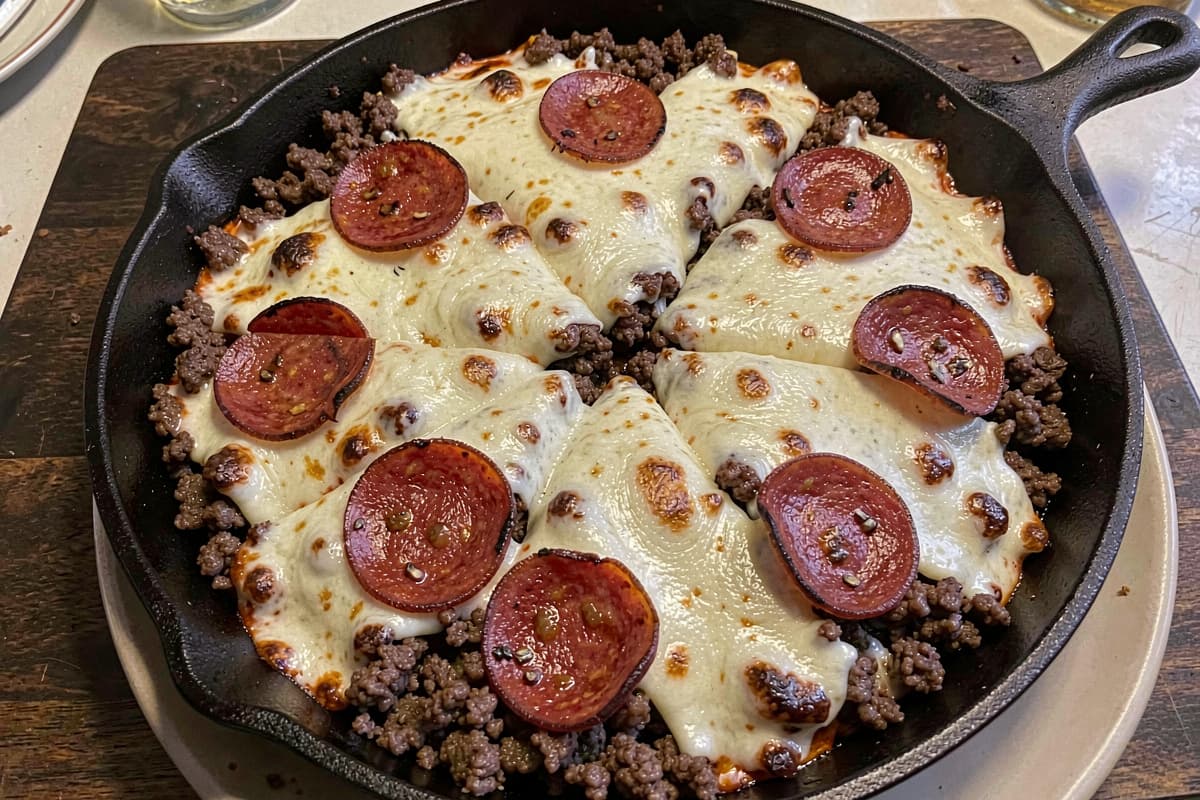
Carnivore Pizza (Meat-Base, No Crust)
Ground beef pressed into a 10-inch round, seared crispy, topped with melted cheese and pepperoni, baked until bubbling. The viral carnivore-pizza format.
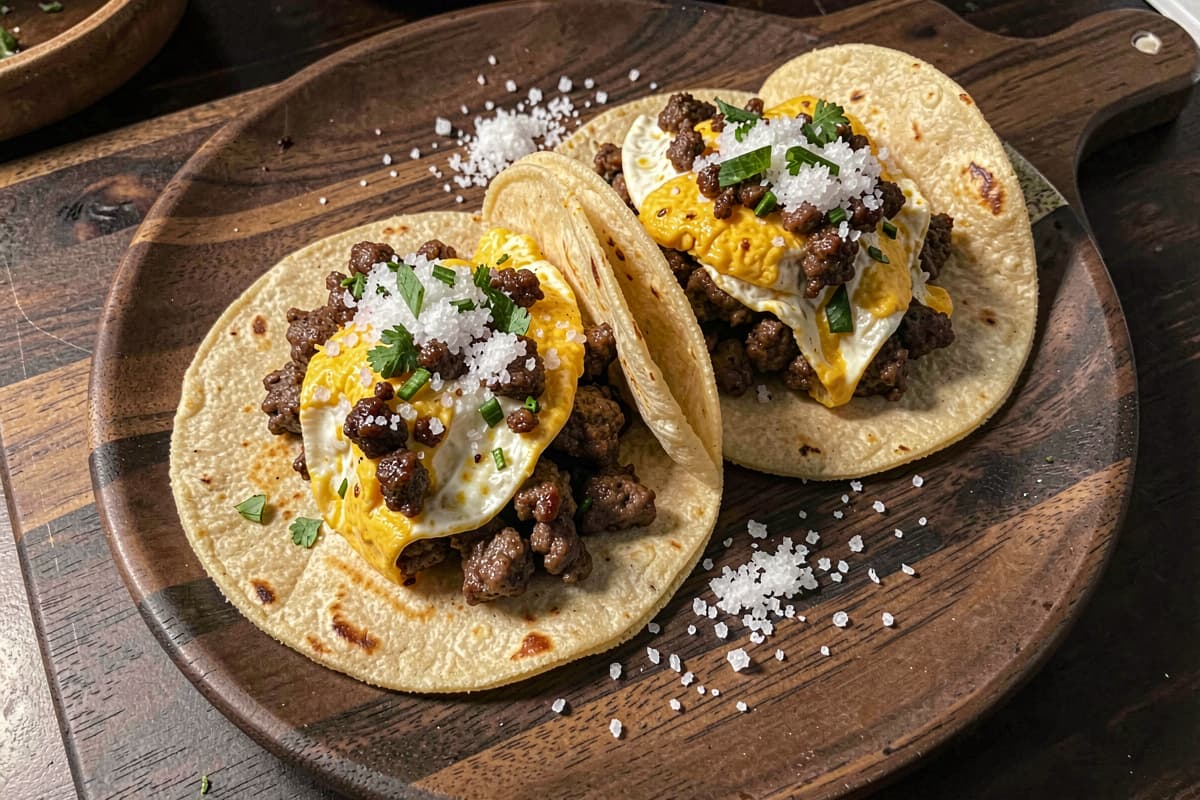
Carnivore Tacos (Egg-Wrap Shells)
Egg-and-cheese 'tortilla' wraps filled with seasoned ground beef. No corn, no flour. 38g protein per 2-taco serving. The viral keto-carnivore format.
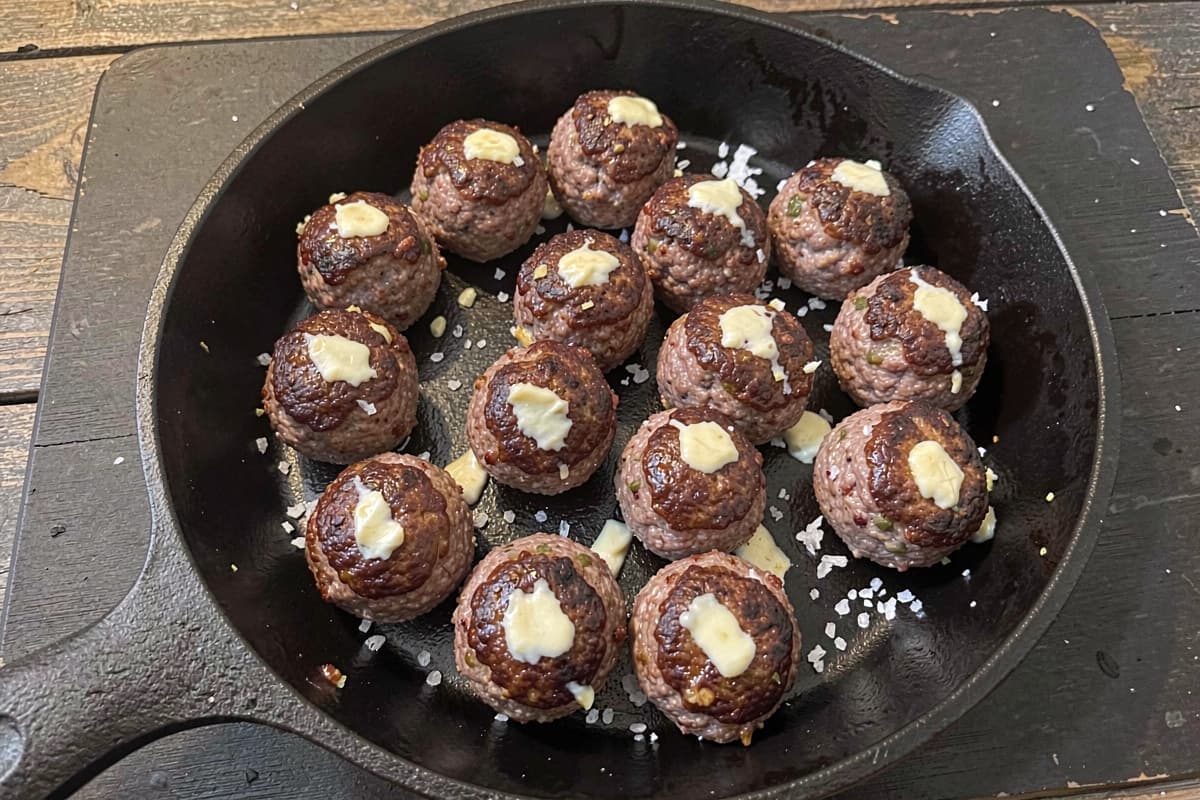
Pork Meatballs (No Binder, Salt + Eggs Only)
1 lb ground pork mixed with 1 egg, formed into 16 meatballs, seared in cast iron 8 minutes. No breadcrumbs, no parmesan, no Italian herbs.
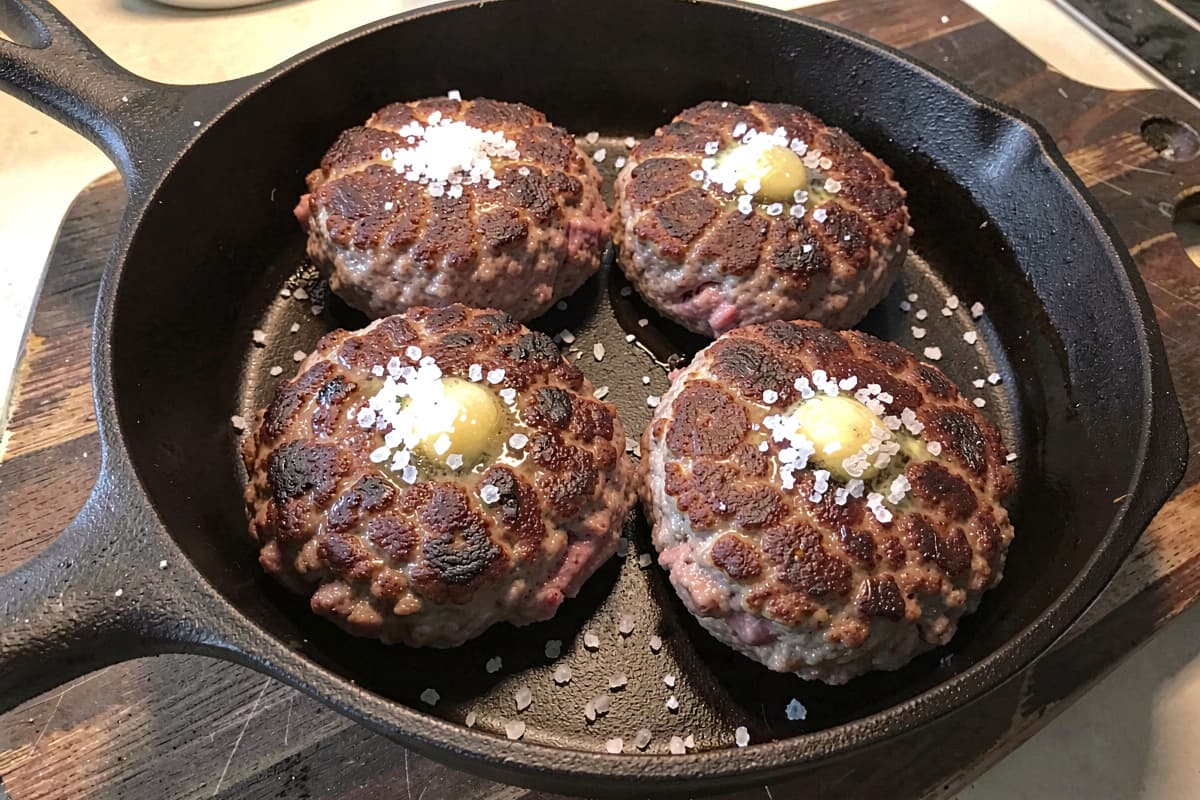
Venison Burger (Carnivore, Mixed with Pork Fat)
1 lb ground venison mixed 80/20 with pork fat (lean venison alone dries out). Formed into 4 patties, seared 3-4 minutes per side. Salt only.
How to build a carnivore dinner
A standard carnivore dinner is one piece of meat plus salt, cooked in fat. That's it. Pick one of three formats:
Whole muscle (steak, chop, or roast). A 12 oz cut delivers 60 to 80g protein and 30 to 50g fat depending on cut. Best with high-heat cast iron searing. Ribeye, sirloin, lamb chops, and bone-in pork chops fit here. Cook to 130°F internal for medium-rare, rest 5 minutes.
Ground beef preparations. 8 to 12 oz of 80/20 ground beef, cooked as smash burgers, meatballs, or just browned in a pan. Faster (under 10 minutes) and cheaper per pound than steaks. Add liver if you want micronutrient density (see beef-liver-bites).
Slow-cooked cuts. Beef short ribs, pork shoulder, brisket, or oxtail. Higher fat content, develops deeper flavor. Plan ahead — 4 to 8 hours in a slow cooker or low oven. Best for batch cooking; one cook session feeds 3 to 5 dinners.
For picking between specific cuts, see the comparison guides below.
Common Mistakes (and Fixes)
Cooking steak straight from the fridge
Pull steaks from the fridge 30 to 60 minutes before cooking. Cold meat hits the pan and drops the surface temperature, which prevents the hard sear that defines a good steak. Room-temp meat sears the moment it touches iron. The 'rest before cook' habit is more important than the rest after cook.
Using olive oil in the pan
Olive oil's smoke point (375°F) is below the temp you need for a hard sear, and it adds a plant-based ingredient if you're strict carnivore. Use butter (350°F smoke point but high-flavor browning), beef tallow (400°F), or ghee (450°F). Tallow is the most heat-stable option.
Resting too short or too long
5 minutes for a 12 oz steak. Less and the juices haven't redistributed — cutting in releases all the moisture. More and the steak is cold. The reverse-sear ribeye method gets this right because the long oven phase already starts the resting equilibrium.
Related Food Comparisons
A detailed head-to-head comparison of ribeye and sirloin steaks covering macros, micronutrients, flavor profiles, and cost per pound.
ComparisonFind out how tomahawk and ribeye steaks compare in nutrition, size, cooking method, and price. Are you paying more just for the bone?
ComparisonA detailed comparison of lamb and beef covering protein, fat, calories, iron, price, and which is better for carnivore diet success.
ComparisonCompare veal and beef across nutrition, taste, tenderness, cost, and suitability for the carnivore diet.
Frequently Asked Questions
How big should a carnivore dinner steak be?
8 to 16 oz for most adults. The right size depends on protein target for the day. A 200 lb male training hard typically needs 180g+ daily protein, which means a 12 oz steak (72g protein) plus other meals. A sedentary 130 lb female targeting 100g daily protein does fine with 8 oz (48g). Track for 2 weeks to dial in your size.
Do I need to eat vegetables with a carnivore dinner?
No. The carnivore diet is by definition free of plants, and the diet is designed around the position that vegetables aren't required for human health. People following the diet rely on organ meats (liver, kidney) for the micronutrients normally associated with vegetables. If you want to include some vegetables, you're following an animal-based diet, which is different from strict carnivore.
Can I eat the same steak every night?
Yes, and many carnivore dieters do. Boredom is the main risk, not nutrition. Rotating between ribeye, sirloin, ground beef, lamb, and pork is enough variety for most people. The bigger problem is cost — eating ribeye every night runs $700+ per month per person. Most experienced carnivore eaters use ground beef as the weekday default and reserve ribeye for 1 to 2 dinners per week.
What about chicken for carnivore dinner?
Chicken works on carnivore but is less popular than red meat. Chicken thighs (8g fat per 100g) are far better than chicken breast (3g fat per 100g) for satiety. The lower iron and B12 content compared to beef means most carnivore eaters use chicken as variety rather than a daily staple. If you do eat chicken, eat the skin.
Can I have wine or whiskey with dinner?
Most carnivore frameworks exclude alcohol. Wine contains residual sugar, color compounds from grapes, and added sulfites. Whiskey is grain-based. The strictest interpretations allow only water. The practical reality is that occasional alcohol doesn't break ketosis or weight loss in most people, but it slows fat burning by 24 to 48 hours.