Ribeye vs Sirloin: Nutrition, Taste & Best Uses

By Marcus Whitley · Third-Generation Butcher · Published April 2026
A detailed head-to-head comparison of ribeye and sirloin steaks covering macros, micronutrients, flavor profiles, and cost per pound.
| Per 100g cooked | Ribeye | Sirloin |
|---|---|---|
| Protein | 24g | 27g |
| Fat | 18g | 8g |
| Price/lb (avg) | $16.99 | $10.99 |
Verdict: Ribeye wins on flavor and satiety thanks to its marbling, while sirloin wins on protein density and price. For most carnivore dieters, keep both in your rotation: ribeye when you want indulgence, sirloin when you want lean fuel.
Quick Comparison (per 100g cooked)
| Nutrient | Ribeye | Sirloin |
|---|---|---|
| Protein | 24g | 27g |
| Fat | 18g | 8g |
| Calories | 263 | 183 |
| Iron | 2.1mg | 1.8mg |
| Price/lb | $16.99 | $10.99 |
Nutrition data per 100g cooked. Source: USDA FoodData Central
Nutritional Breakdown
Ribeye delivers 24g of protein and 18g of fat per 100g cooked, clocking in at 263 calories. Sirloin is leaner with 27g of protein and only 8g of fat for 183 calories. Both cuts are excellent sources of heme iron, B12, and zinc. Ribeye's higher fat content makes it more satiating on a carnivore diet, while sirloin gives you more protein per calorie — useful if you are eating for body recomposition.
Taste and Texture
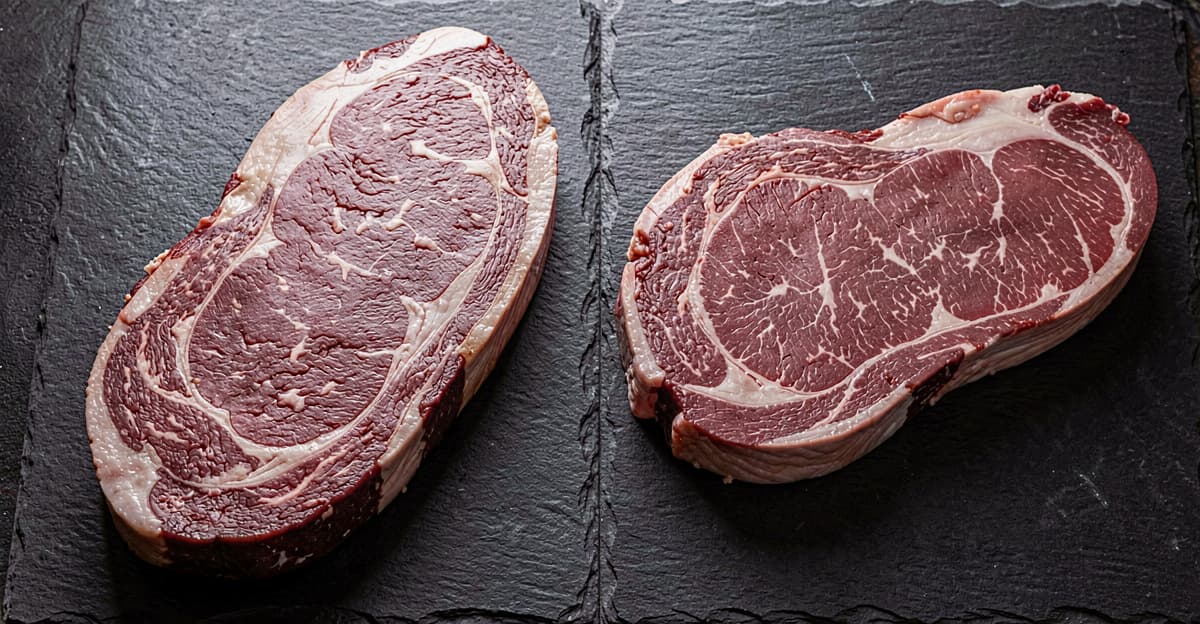
Ribeye is prized for its rich marbling, which renders into buttery pockets of flavor during cooking. The fat cap and intramuscular fat give it a juicy, almost succulent bite. Sirloin has a beefier, more concentrated flavor with a firmer chew. It shines when cooked to medium-rare and sliced against the grain. If you want richness, pick ribeye. If you want clean, beefy flavor, sirloin is your cut.
Best Cooking Methods
Both steaks do well in a screaming-hot cast iron skillet with butter. Ribeye benefits from a reverse sear: start low in the oven at 250 degrees F until the internal temperature hits 115 degrees F, then sear hard for 90 seconds per side. Sirloin is best cooked fast and hot — sear for 3 to 4 minutes per side over high heat. Avoid cooking sirloin past medium or it will dry out due to its lower fat content.
Cost and Value
Sirloin typically costs around $10.99 per pound versus $16.99 for ribeye, making it roughly 35 percent cheaper. For budget-minded carnivore dieters eating one to two pounds of meat per day, sirloin saves $150 to $200 per month. However, ribeye's higher fat content means you may need less added cooking fat, which closes the gap slightly.
Which Is Better for the Carnivore Diet?
Both are excellent carnivore cuts. Ribeye works better as a high-fat meal that keeps you full for hours. Sirloin is ideal if you are tracking macros and want to hit specific protein targets without excess calories. Track your daily intake with Carnivore Max to dial in your macros. Many experienced carnivore dieters rotate between the two — ribeye for weekend dinners, sirloin for everyday meals.
The Verdict
Ribeye wins on flavor and satiety thanks to its marbling, while sirloin wins on protein density and price. For most carnivore dieters, keep both in your rotation: ribeye when you want indulgence, sirloin when you want lean fuel.
Frequently Asked Questions
Is ribeye or sirloin healthier?
Both are nutrient-dense red meats rich in protein, iron, and B vitamins. Sirloin is leaner with fewer calories per serving, while ribeye provides more fat-soluble vitamins from its higher fat content. Neither is unhealthy — the best choice depends on your macro goals.
Which steak has more protein, ribeye or sirloin?
Sirloin has more protein per 100g (27g vs 24g) because it carries less intramuscular fat. If maximizing protein per calorie is your goal, sirloin is the better pick.
Why is ribeye more expensive than sirloin?
Ribeye comes from the rib section of the cow, which produces less meat per animal than the sirloin section. The marbling that makes ribeye tender and flavorful also contributes to higher demand and a premium price.
Can I eat ribeye every day on carnivore?
Yes. Many carnivore dieters eat ribeye daily. The high fat content helps maintain satiety and provides ample calories. Just be aware of the cost — at $16.99 per pound, eating 1.5 pounds daily comes to roughly $750 per month.
Track Your Macros with AI
Track your macros instantly — describe what you ate and our AI does the rest.
Download Free on iOS →