High Fat Meats: Best Fatty Cuts for the Carnivore Diet
By Mike Chen · Carnivore diet practitioner since 2022
Fat is fuel on the carnivore diet. Here are the fattiest cuts of meat ranked by fat content, with full nutrition data per 100g cooked.
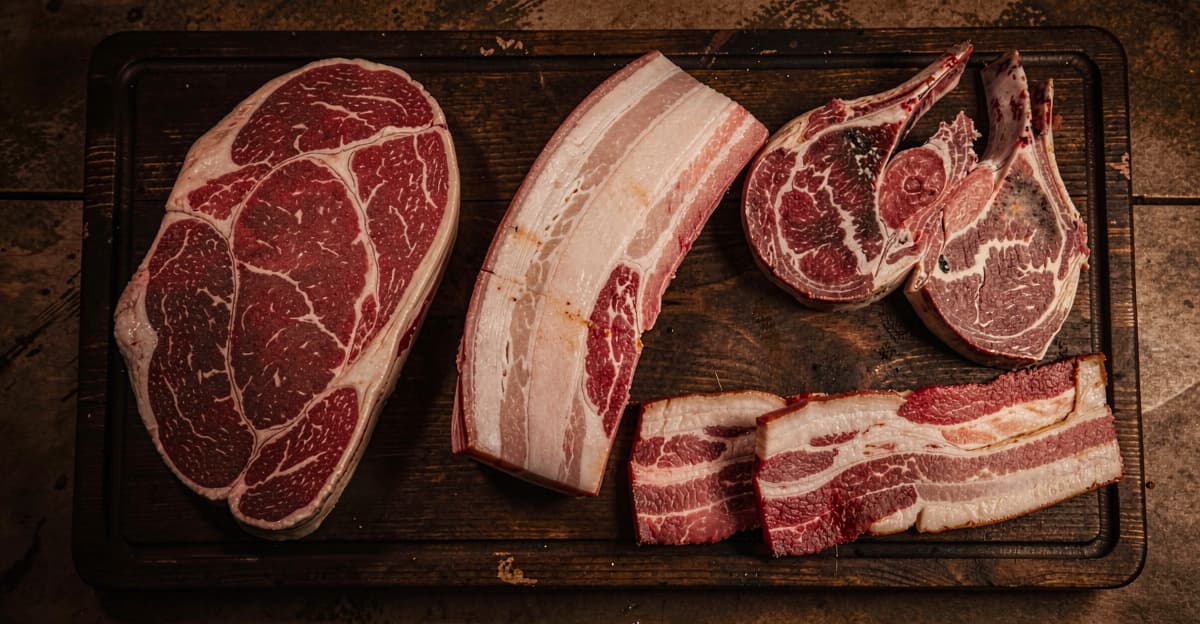
Top 12 High Fat Meats Ranked by Fat Content
| # | Meat | Fat | Protein | Calories | Carbs |
|---|---|---|---|---|---|
| 1 | Pork Belly | 53g | 16g | 518 | 0g |
| 2 | Beef Short Ribs | 36g | 22g | 400 | 0g |
| 3 | Lamb Shoulder | 21g | 24g | 283 | 0g |
| 4 | Ribeye Steak | 18g | 24g | 263 | 0g |
| 5 | Duck Leg (with skin) | 18g | 22g | 248 | 0g |
| 6 | Beef Chuck Roast | 16g | 26g | 250 | 0g |
| 7 | Bacon | 42g | 37g | 541 | 0g |
| 8 | Ground Beef 80/20 | 20g | 26g | 287 | 0g |
| 9 | Chicken Thigh (with skin) | 16g | 25g | 245 | 0g |
| 10 | Pork Shoulder | 19g | 25g | 269 | 0g |
| 11 | Beef Brisket | 17g | 24g | 253 | 0g |
| 12 | Lamb Ribs | 25g | 20g | 310 | 0g |
Nutrition data per 100g cooked. Source: USDA FoodData Central
Why Fat Matters on the Carnivore Diet
Without carbohydrates, your body relies on fat as its primary fuel source. Eating lean meat on a carnivore diet often leads to fatigue, hunger, and a phenomenon called “rabbit starvation” — protein poisoning from too much lean protein without enough fat. High fat cuts solve this by providing calorie-dense, satiating meals that keep energy levels stable throughout the day.
Best High Fat Beef Cuts
Ribeye is the gold standard fatty steak, but short ribs, brisket, and chuck roast often contain even more fat per serving. Ground beef in 80/20 or 73/27 ratios is the most affordable high-fat option at $5 to $6 per pound. For rendered cooking fat, save beef suet trimmings and make your own tallow — it is essentially free calories.
Pork: The Budget-Friendly Fat Source
Pork belly is one of the fattiest and most affordable cuts available, delivering 53g of fat per 100g cooked. Pork shoulder and bacon are other excellent high-fat options. On a per-calorie basis, pork often costs 30 to 50 percent less than equivalent beef cuts, making it ideal for carnivore dieters on a budget.
How to Add More Fat to Lean Cuts
If you have lean meat that needs more fat, cook it in beef tallow, butter, or ghee. Baste steaks in butter while searing. Wrap lean cuts in bacon before roasting. Serve lean meat alongside fatty sides like crispy pork belly or bone marrow. These techniques let you hit your fat targets even with leaner proteins.
Related Recipes
How Much Fat Do You Need on Carnivore?
There is no single right answer, but most experienced carnivore dieters land between 60 and 80 percent of calories from fat. In gram terms, that roughly translates to a 1:1 ratio of fat to protein by weight -- so if you eat 150g of protein, aim for about 150g of fat. By calories, fat is more energy-dense (9 calories per gram versus 4 for protein), so that 1:1 gram ratio actually works out to about 70 percent fat calories.
The practical approach most people use is eating to satiety with fatty cuts rather than hitting exact ratios. If you feel good, have steady energy, and are not losing weight too fast or too slow, your fat intake is probably fine. Where people run into trouble is eating too lean -- a condition historically called “rabbit starvation” or protein poisoning. Symptoms include nausea, diarrhea, fatigue, and persistent hunger despite eating large volumes of food. The fix is simple: choose fattier cuts, cook in tallow or butter, and do not trim the fat off your steaks. If you want to dial in your ratio precisely, track your meals for a week in a carnivore-specific tracker to see where you land.
Budget-Friendly High-Fat Options
Ground beef 73/27 is the undisputed king of budget carnivore eating -- $4 to $5 per pound at most grocery stores, with 20g of fat per 100g cooked. At roughly 287 calories per 100g, you get dense energy for very little money. A week of eating 2 pounds per day costs about $56 to $70, which covers 2,500+ calories and 180g+ protein daily.
Pork belly runs $3 to $5 per pound and delivers 53g of fat per 100g cooked -- the highest fat density on this list. Chicken thighs with skin at $2 to $3 per pound are another staple, providing a good balance of fat and protein at a fraction of the cost of steak. Beef short ribs go on sale regularly for $5 to $7 per pound and are packed with both fat and collagen. The ultimate hack: ask your butcher for free beef suet trimmings. Most butchers throw this away and will hand it over for nothing. Render it into tallow at home and you have an unlimited supply of pure cooking fat at zero cost. Check our crispy pork belly recipe for a way to turn cheap pork belly into a meal that tastes restaurant-quality.
Frequently Asked Questions
Why do carnivore dieters eat high fat meat?
What is the fattiest cut of beef?
Is eating high fat meat unhealthy?
How much fat should I eat on carnivore?
Track Your Macros with AI
Track your macros instantly — describe what you ate and our AI does the rest.
Download Free on iOS →