Smoked Beef Back Ribs (The Dino Bones)

By Marcus Whitley · Third-Generation Butcher · Updated 2026-05-08
Beef back ribs from a prime rib roast smoked at 225°F for 5-6 hours to 203°F. Cheap, fatty, easy. Salt only. 26g protein per 6 oz at $3-5 per pound.
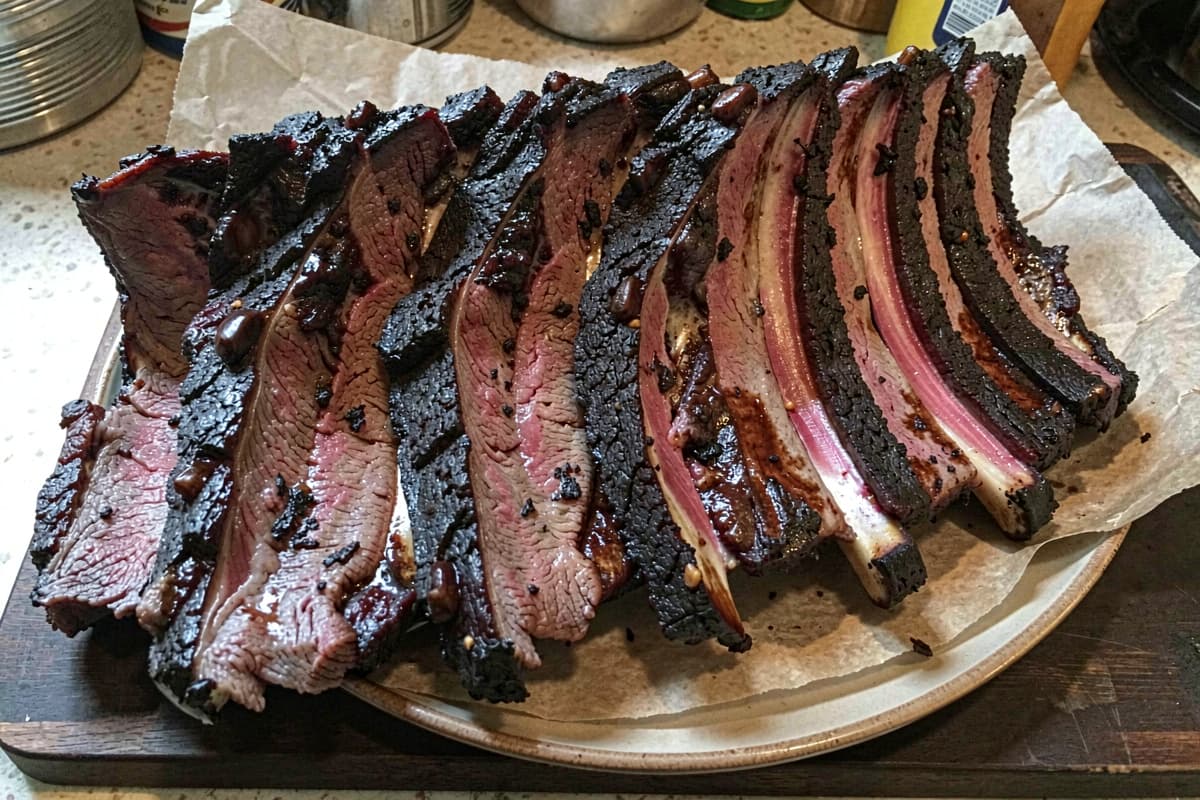
Carnivore smoked beef back ribs are the rack of bones removed when a butcher cuts a prime rib roast — sometimes called dinosaur bones for their size. Smoke at 225°F for 5 to 6 hours to an internal temperature of 203°F where the meat between the bones probes through with no resistance. Salt is the only seasoning. A 6-ounce cooked serving delivers 26g protein, 28g fat, and 360 calories — fattier than most smoked beef cuts because the back-rib muscle (the latissimus dorsi remnant) sits next to the marbled rib roast. Beef back ribs cost $3 to $5 per pound but each rack only carries ⅓ to ½ pound of meat between the bones (the rest is bone weight). One rack of 7 bones feeds 2 adults at roughly $5 to $7 per serving. Most butchers give them away or sell them cheaply because the boneless ribeye sells for $20+ per pound — back ribs are the byproduct.
Ingredients
| Ingredient | Protein | Fat | Calories |
|---|---|---|---|
| 6 oz beef back rib meat cooked (per serving) | 26g | 28g | 360 |
| Coarse salt | 0g | 0g | 0 |
| Per serving | 26g | 28g | 360 |
Macros per serving (after cooking and any fat draining). Source: USDA FoodData Central.
Instructions
- 1
Remove the silver-skin membrane from the bone side — slide a butter knife under the membrane at one end and pull it off in a sheet.
- 2
Salt both sides with 1.5 tbsp coarse salt. Let sit at room temperature for 30 minutes while smoker preheats.
- 3
Heat smoker to 225°F. Add 3 to 4 wood chunks (oak for balance, hickory for stronger smoke).
- 4
Place the rack bone-side down on the grate. Smoke uncovered for 4 hours.
- 5
Spritz with water every hour after the first 2 hours if bark looks dry. No juice, no vinegar, no sauce.
- 6
Probe between the bones at the 4.5-hour mark. Internal target is 200 to 203°F where the probe slides through with no resistance.
- 7
Optional: wrap in butcher paper for the final hour if you prefer more tender meat over thicker bark.
- 8
Rest 10 minutes wrapped loosely. Slice between every bone — beef back ribs are huge; one bone is roughly a single serving.
Nutrition per Serving
Frequently Asked Questions
Why are beef back ribs so cheap?
Beef back ribs are the byproduct of butchering a prime rib roast — when the butcher removes the bones to sell as boneless ribeye (at $20-30/lb), the bone rack with whatever meat is left between is what becomes the back-rib rack. Most of the meat went into the ribeye; what remains between the bones is what you cook. Many butchers give back ribs away free if you buy a prime rib; others sell them at $3 to $5 per pound.
Beef back ribs vs short ribs?
Different cuts entirely. Back ribs are the bones from the upper rib section (where ribeye comes from) — narrow, curved, with little meat. Short ribs come from the lower chuck/plate section — wider, flatter, with much more meat. Short ribs cost $9 to $14 per pound and feed more people per pound. Back ribs are cheaper and faster to cook but yield less meat. Choose based on what your butcher has and what dish you want.
How much meat do I actually get?
Less than you'd expect. A typical 7-bone rack weighs 3 to 4 pounds raw — but most of that is bone weight. Edible meat between the bones runs ⅓ to ½ pound per rack, yielding 5 to 8 ounces of cooked meat. Plan for 1 rack per 1 to 2 adults rather than the 1 rack per 3 to 4 you'd estimate from raw weight. Compensate for the bone-to-meat ratio when shopping.
Track This Meal in Carnivore Max
Log this recipe, track your macros, and stay on top of your carnivore diet.
Download Free on iOS →You Might Also Like
Whole 12-lb packer brisket smoked at 225°F for 14 hours to 203°F internal. Salt-only Texas-pepper omitted. Feeds 14 at $4 per serving.
RecipeCorned beef brisket soaked 4 hours to remove excess salt, then smoked at 225°F for 5-6 hours to 195°F. The carnivore pastrami — no peppercorn rub.
RecipeTri-tip smoked at 225°F to 110°F internal, then seared at 500°F for 90 seconds per side. Reverse-sear gives smoke flavor + crust. 2-hour cook.