Pan-Seared Filet Mignon (Cast Iron, 8 Minutes)

By Ryan Thomas · Fine-Dining Chef · Updated 2026-05-09
Filet mignon is a 6-8 oz tenderloin steak. Pan-sear in butter 3-4 min/side, baste, rest. 27g protein, 9g fat per 100g cooked. The most tender steak available.
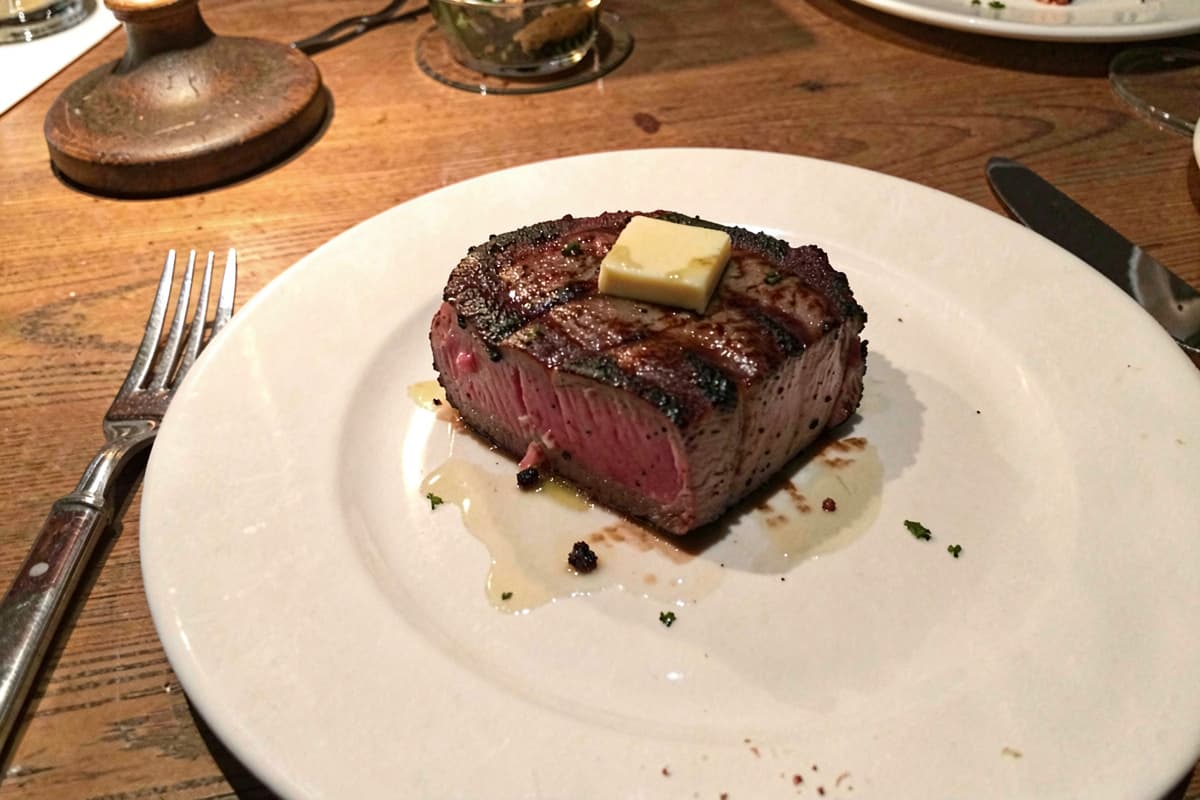
Pan-seared filet mignon is a 6 to 8 ounce individual tenderloin steak cooked in a cast iron skillet for 3 to 4 minutes per side, then butter-basted for the last minute. The tenderloin is the most tender muscle on the cow, with almost no connective tissue or muscle fiber tension — knife pressure alone slices the cooked steak. A 6-ounce cooked filet delivers 46g protein, 15g fat (after butter baste), and 340 calories. Filet mignon runs $25 to $40 per pound; a 6-oz raw filet costs $9 to $15 each. The cut is lean (9g fat per 100g cooked) so the butter baste is essential — without added fat the steak eats dry despite the tender texture. Pull at 125°F internal for medium-rare; rest 5 minutes; eat whole or sliced into 1-inch medallions. Filet is the only steak where the cooking technique can ruin tenderness: high heat shortens muscle fibers and toughens the meat above 140°F internal.
Ingredients
| Ingredient | Protein | Fat | Calories |
|---|---|---|---|
| 6 oz filet mignon cooked | 46g | 15g | 290 |
| 1 tbsp butter (basting) | 0g | 11g | 100 |
| Coarse salt | 0g | 0g | 0 |
| Per serving | 46g | 26g | 440 |
Macros per serving (after cooking and any fat draining). Source: USDA FoodData Central.
Instructions
- 1
Salt the steak on both sides 30 minutes to 24 hours before cooking.
- 2
Heat a cast iron skillet over high heat until smoking. Add 1 tbsp butter.
- 3
Pat the steak dry. Place in the foaming butter and don't move it for 4 minutes.
- 4
Flip. Add the second tbsp of butter. Sear for 3 minutes.
- 5
Tilt the pan and spoon the foaming butter over the top of the steak continuously for the last 60 seconds.
- 6
Pull at 125°F internal for medium-rare (rises to 130°F during rest).
- 7
Rest 5 minutes on a cutting board. Eat whole or slice into 1-inch medallions.
Nutrition per Serving
Frequently Asked Questions
Why does my filet mignon turn out tough?
Almost always overcooking. Filet has very little fat and no connective tissue to keep it moist past medium-rare. Above 140°F internal the muscle fibers contract dramatically and the steak goes from buttery-tender to dense and chewy. Use a probe thermometer; pull at 125°F; never cook past medium (140°F final). If you've been cooking by feel and your filet is tough, the thermometer is the fix.
Should I wrap filet mignon in bacon?
Personal preference. Bacon-wrapped filet (a steakhouse classic) adds fat and salt but obscures the cut's defining characteristic — its pure tender beef texture. The carnivore version of bacon-wrapped filet is fine; just cook the bacon halfway separately first, then wrap and finish with the steak. Otherwise the bacon undercooks while the filet finishes.
Is filet mignon worth the price?
Depends on what you value. Per-pound macros are similar to other premium steaks (27g protein, 9g fat per 100g cooked). What you're paying for is the tenderness — the ability to slice with a butter knife. For carnivore eating where you're optimizing protein per dollar, ribeye ($15-20/lb) or chuck eye ($7-10/lb) are better value. For special-occasion meals where the experience matters, filet is the only cut that delivers that specific texture.
Track This Meal in Carnivore Max
Log this recipe, track your macros, and stay on top of your carnivore diet.
Download Free on iOS →You Might Also Like
Chateaubriand is the center-cut tenderloin, 1.5-2 lb roast. Reverse sear at 250°F to 120°F, finish with butter baste. 27g protein, 9g fat per 100g cooked.
RecipeTeres major is a 1 lb shoulder cut as tender as filet mignon at half the price. Pan-sear 3 minutes per side, rest, slice across the grain. 27g protein per 100g.
Recipe1 thick-cut veal rib chop salted and seared in butter, then finished in a 425°F oven to 145°F internal. Salt only. The Italian costoletta, carnivore-stripped.