Teres Major Steak (The Filet's Cheap Twin)

By Brendan Fitzgerald · Irish Heritage Cook · Updated 2026-05-09
Teres major is a 1 lb shoulder cut as tender as filet mignon at half the price. Pan-sear 3 minutes per side, rest, slice across the grain. 27g protein per 100g.
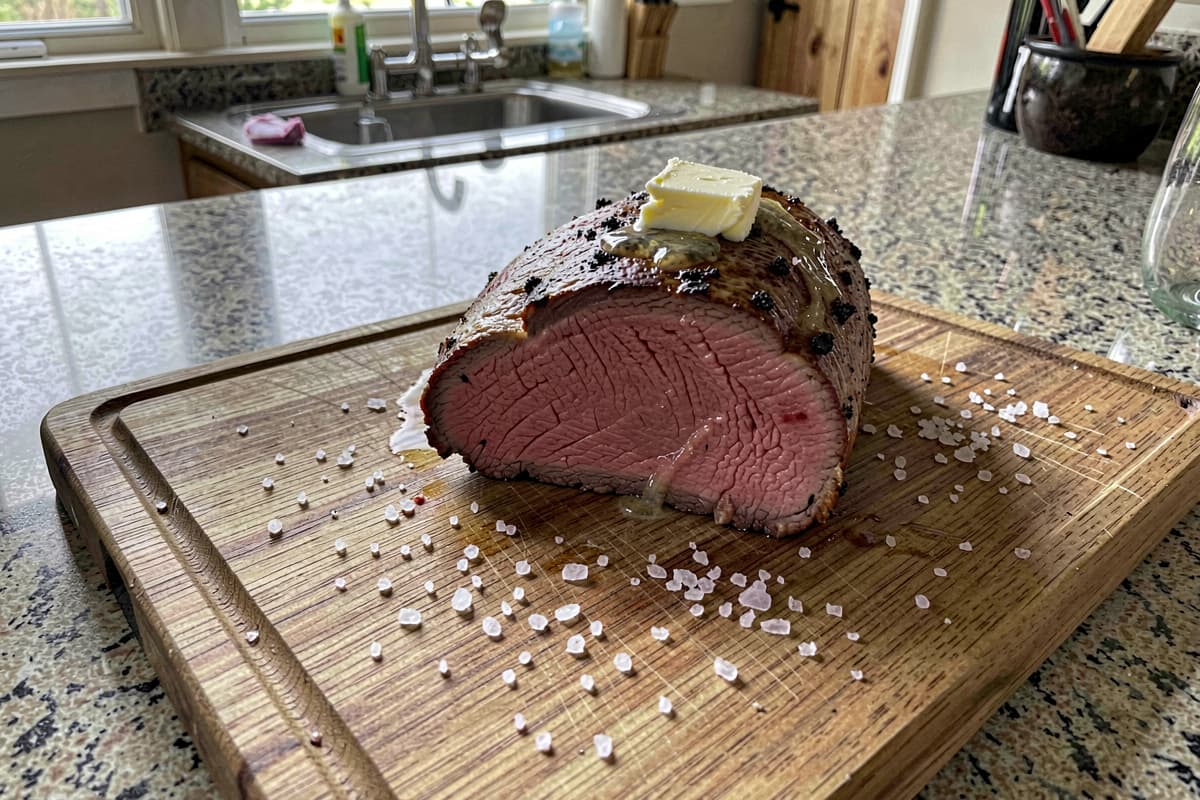
Teres major is a 1-pound shoulder cut sometimes called the petite tender or shoulder tender. It's the second-most-tender muscle in beef behind the filet mignon, despite costing roughly half as much. The cut has the shape of a small football and cooks in 8 to 10 minutes total — pan-sear 3 minutes per side at high heat, rest 5 minutes, slice across the grain. A 5-ounce cooked serving delivers 46g protein, 12g fat, and 300 calories. At $9 to $14 per pound (vs $25-35 for filet mignon), teres major is the highest tenderness-per-dollar cut at the butcher counter. Most butchers don't display it; you may need to ask. The cut is lean (only 7g fat per 100g cooked) so finishing with 1 tablespoon of butter per serving is essential — without added fat it eats dry despite the tender texture.
Ingredients
| Ingredient | Protein | Fat | Calories |
|---|---|---|---|
| 5 oz teres major cooked (per serving) | 38g | 10g | 245 |
| 1 tbsp butter (per serving) | 0g | 11g | 100 |
| Coarse salt | 0g | 0g | 0 |
| Per serving | 46g | 21g | 345 |
Macros per serving (after cooking and any fat draining). Source: USDA FoodData Central.
Instructions
- 1
Salt the whole teres major roast generously and let sit at room temperature for 30 minutes (or dry-brine 24 hours in the fridge).
- 2
Heat a cast iron skillet over high heat until smoking. Add 1 tbsp butter and let it foam.
- 3
Pat the teres major dry. Sear on the first side for 3 minutes without moving.
- 4
Flip. Sear the second side for 3 minutes. Tilt the pan and baste with the butter for the last minute.
- 5
Pull at 125°F internal (rises to 130°F during rest for medium-rare).
- 6
Rest on a cutting board for 5 minutes. Top with the second tablespoon of butter.
- 7
Slice across the grain into ¼-inch thick slices. The grain runs along the length of the roast.
Nutrition per Serving
Frequently Asked Questions
Why is teres major so cheap if it's nearly as tender as filet?
Teres major comes from the shoulder (chuck primal), which traditionally sells for less because the rest of the shoulder is tougher cuts used for grinding or slow cooking. The teres major muscle itself is small (about 1 lb per cow) and butchers often grind it into chuck blends rather than separating it. Asking your butcher for it specifically usually unlocks $10-14/lb pricing.
How do I find teres major at my butcher?
It's also called petite tender, shoulder tender, beef shoulder petite tender, or sometimes mock tender (though mock tender is technically a different cut). Most chain grocery butchers don't carry it; independent butchers and meat-focused stores (Whole Foods, restaurant supply, ranch CSAs) usually do. Pre-order if needed — it's a small muscle, often only 1-2 per cow.
Can I cook teres major like a filet?
Yes — same technique. Pan-sear, oven-roast, sous vide, or reverse sear all work. The cut is leaner than filet (7g fat vs 9g per 100g cooked) so add more cooking fat. Pull at 125°F internal for medium-rare. Don't cook past 135°F or it dries out fast.
Track This Meal in Carnivore Max
Log this recipe, track your macros, and stay on top of your carnivore diet.
Download Free on iOS →You Might Also Like
Filet mignon is a 6-8 oz tenderloin steak. Pan-sear in butter 3-4 min/side, baste, rest. 27g protein, 9g fat per 100g cooked. The most tender steak available.
RecipeChateaubriand is the center-cut tenderloin, 1.5-2 lb roast. Reverse sear at 250°F to 120°F, finish with butter baste. 27g protein, 9g fat per 100g cooked.
RecipeA perfectly seared ribeye basted in golden butter — the king of carnivore dinners. 48g protein and 42g fat per 10 oz cooked. Pull at 130°F medium-rare.