Pan-Fried Salmon (Crispy Skin)

By Yuki Tanaka · Seafood Specialist · Updated 2026-05-08
6-oz salmon fillet seared skin-down for 5 minutes in cold pan, flipped 1 minute. Salt only — no lemon, no dill. The 7-minute crispy-skin carnivore dinner.
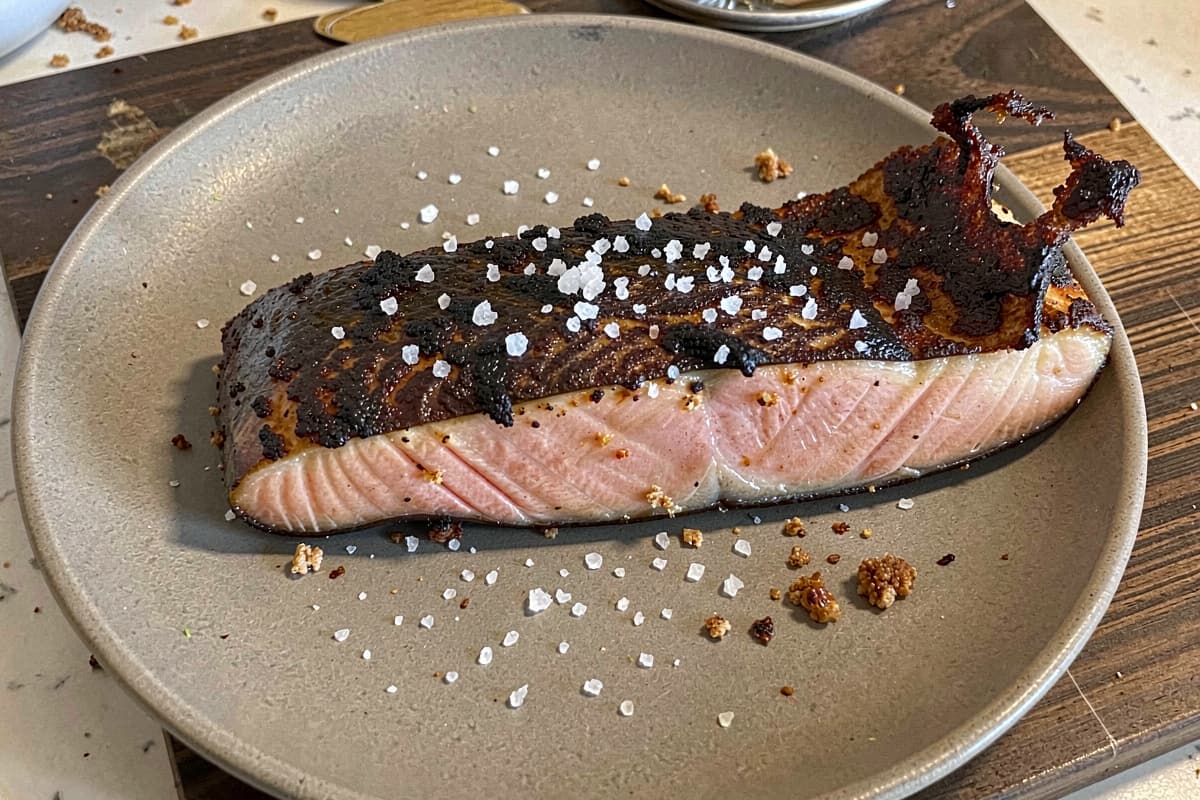
Carnivore pan-fried salmon is a 6-ounce skin-on salmon fillet salted and placed skin-side down in a COLD 10-inch cast iron skillet, then cooked over medium-high heat for 5 to 6 minutes as the fat under the skin renders and the skin crisps shatteringly. Then flip 60 seconds on the meat side to finish. Salt is the only seasoning. The cold-pan start is non-negotiable — it's what produces the crispy-skin texture that defines great pan-fried salmon. A 6-ounce cooked serving delivers 36g protein, 18g fat, and 320 calories, plus the omega-3 contribution that makes salmon the most-cited carnivore-friendly seafood. Atlantic farmed salmon costs $9 to $13 per pound; wild-caught Sockeye and King run $18 to $30. Pull at 130°F internal for medium-rare or 145°F for fully cooked (FDA recommends 145°F minimum). The cold-pan-start technique is from Thomas Keller and produces the most reliably crispy skin of any pan-frying method.
Ingredients
| Ingredient | Protein | Fat | Calories |
|---|---|---|---|
| 6 oz salmon cooked, skin-on (per serving) | 36g | 18g | 320 |
| Coarse salt (per serving) | 0g | 0g | 0 |
| Per serving | 36g | 18g | 320 |
Macros per serving (after cooking and any fat draining). Source: USDA FoodData Central.
Instructions
- 1
Pat the salmon completely dry with paper towels — wet skin won't crisp.
- 2
Salt both sides with ½ tsp coarse salt.
- 3
Place the salmon skin-side down in a COLD 10-inch cast iron skillet (no oil, no butter — the salmon renders its own fat).
- 4
Set heat to medium-high. As the pan heats, the skin renders and crisps gradually.
- 5
Cook skin-side down for 5 to 6 minutes WITHOUT moving. The skin should release from the pan when fully crispy — if it sticks, it's not done yet.
- 6
Flip with a wide spatula (the skin is brittle — use care).
- 7
Sear the meat side 60 to 90 seconds, depending on doneness preference. Pull at 130°F for medium-rare, 145°F for fully cooked.
- 8
Transfer to a plate skin-side up. Rest 1 minute (longer and skin softens). Serve immediately.
Nutrition per Serving
Frequently Asked Questions
Why cold-pan start?
Salmon skin needs time for the subcutaneous fat to render before the skin can crisp. A hot-pan start shocks the skin and seals it before the fat layer underneath can liquefy — the fat stays trapped and the skin ends up rubbery. The cold-pan start lets the skin and fat come up to temperature gradually together; the fat renders out as the pan heats, and the skin dehydrates on the bottom of the pan as moisture evaporates. The technique is from Thomas Keller's Per Se and Bouchon kitchens.
Wild-caught vs farmed salmon?
Different products. Wild-caught (Sockeye, King, Coho) has firmer texture, deeper flavor, and higher omega-3 content per gram. Farmed Atlantic has milder taste, softer texture, and slightly lower omega-3. Wild costs $18 to $30 per pound; farmed costs $9 to $13. For carnivore eaters who want the omega-3 nutritional advantage, wild is worth the premium. For everyday cooking, farmed Atlantic is fine and produces excellent crispy-skin salmon.
What internal temperature?
FDA-recommended minimum is 145°F internal. Many chefs and home cooks pull at 130°F (medium-rare, slightly translucent center) for the silkiest texture. Above 145°F, salmon dries quickly and the texture turns chalky. The 'pull at 130 to 135°F for best texture' approach is below FDA but well-tested in restaurant kitchens; the 'pull at 145°F to be safe' approach is the conservative recommendation. Choose based on personal risk tolerance and salmon source quality.
Track This Meal in Carnivore Max
Log this recipe, track your macros, and stay on top of your carnivore diet.
Download Free on iOS →You Might Also Like
A no-cook, nutrient-dense plate loaded with omega-3s. Perfect for a quick carnivore lunch or snack when you do not feel like cooking.
Recipe1-inch thick ahi tuna steak seared 90 seconds per side in butter. Salt only — no soy, no sesame. Rare center, crusty exterior. The 4-minute carnivore dinner.
Recipe1 lb cod fillets seared in butter for 3-4 minutes per side. Salt only — no flour, no lemon. 32g protein, 6g fat per 6 oz. The cleanest fish dinner.