5-Minute Sardine Plate

By Yuki Tanaka · Seafood Specialist · Updated 2026-05-07
A no-cook, nutrient-dense plate loaded with omega-3s. Perfect for a quick carnivore lunch or snack when you do not feel like cooking.
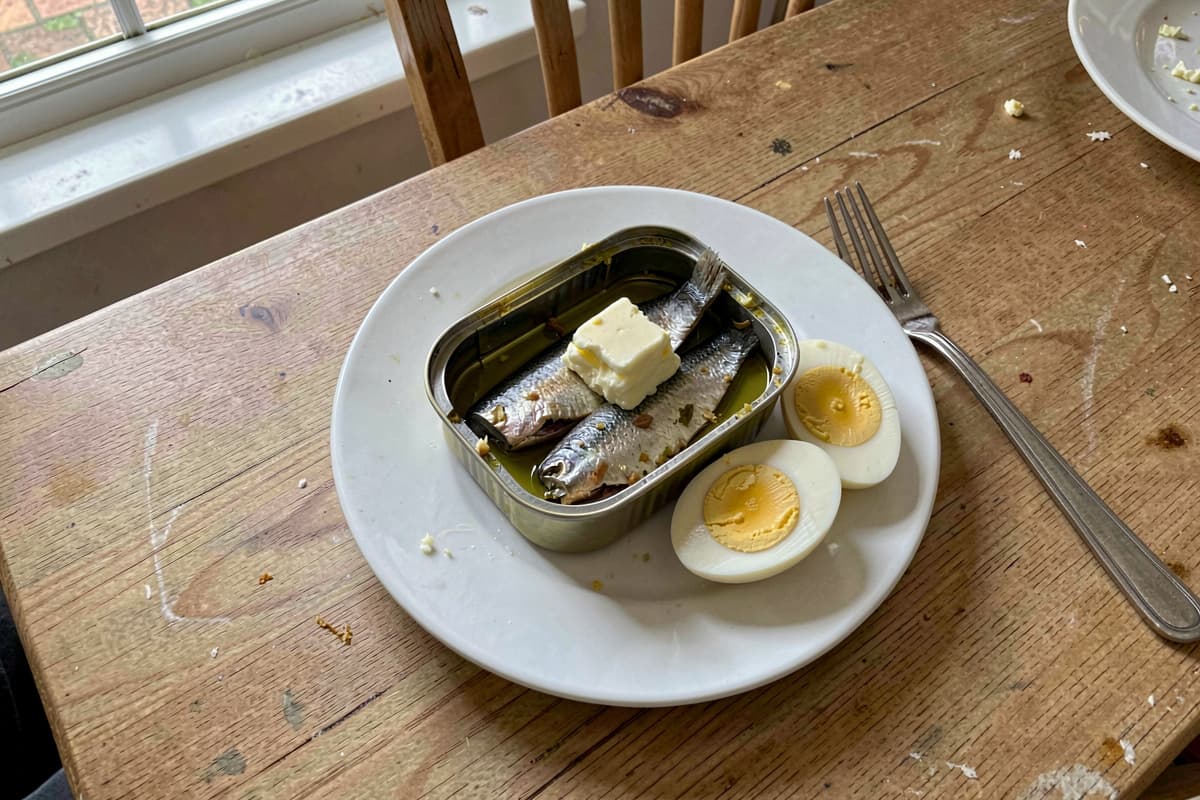
A 5-minute carnivore sardine plate is one 3.75 oz can of sardines packed in olive oil, drained, served alongside 2 hard-boiled eggs and 1 tablespoon of butter. Total cook time is 0 minutes if the eggs are already boiled. The plate provides 35g protein, 26g fat, 380 calories, and 700mg of EPA + DHA omega-3s — more omega-3 in one meal than most people get all week. Sardines also contain 250mg of calcium per can because the small bones are eaten with the fish. Wild-caught sardines accumulate almost no mercury due to their short lifespan and low position on the food chain. Two cans per week is a common protocol among carnivore dieters for omega-3 intake without taking fish oil pills. The plate costs about $4 to $5 — sardines run $1.50 to $3 per can, eggs $0.30 each. Total prep is 5 minutes if eggs are pre-boiled, or 12 minutes from scratch (10 minutes for the eggs plus 2 minutes plating).
Ingredients
| Ingredient | Protein | Fat | Calories |
|---|---|---|---|
| 1 can sardines in olive oil, drained (3.75 oz) | 22g | 8g | 175 |
| 2 hard-boiled eggs | 13g | 10g | 145 |
| 1 tbsp butter (partial — pat on plate) | 0g | 8g | 60 |
| Per serving | 35g | 26g | 380 |
Macros per serving (after cooking and any fat draining). Source: USDA FoodData Central.
Instructions
- 1
Drain sardines and arrange on a plate.
- 2
Halve the hard-boiled eggs and place alongside the sardines.
- 3
Add a pat of butter on top of the sardines or eggs while still warm.
- 4
Season with a pinch of salt if desired.
- 5
Eat immediately. This is the fastest carnivore meal you can make.
Nutrition per Serving
Frequently Asked Questions
Sardines in olive oil, water, or tomato sauce?
Olive oil for carnivore eating. Water-packed sardines are leaner but lack the fat that makes the meal satiating, and tomato sauce adds plant ingredients. If you prefer water-packed for a leaner protein option, add a tablespoon of butter or olive oil to bring the fat content back up. Avoid mustard- and barbecue-flavored cans — they almost always contain sugar and seed oils.
How many cans of sardines is safe per week?
Most carnivore dieters eat 2 to 4 cans per week with no issues. Sardines are very low in mercury due to their short lifespan and low position on the food chain — far safer than tuna. The main reason not to eat more is variety; rotating sardines with other seafood (mackerel, salmon, oysters) gives you a wider micronutrient profile.
Can I use fresh sardines instead of canned?
Yes, but the recipe doubles in cook time and the omega-3 content is roughly the same. Fresh sardines are pan-fried in butter for 3 minutes per side over medium heat. Canned sardines have one major advantage: the bones are softened during pressure-cooking and edible, providing about 250mg of calcium per can — fresh sardine bones aren't soft enough to eat unless you pressure-cook them yourself.
Track This Meal in Carnivore Max
Log this recipe, track your macros, and stay on top of your carnivore diet.
Download Free on iOS →You Might Also Like
Easy baked egg cups with melted cheddar and crispy bacon bits. 6g protein per cup. Batch 12 in 25 minutes, reheat through the week — $0.50 each.
RecipeSneak nature's multivitamin into your diet by mixing liver with ground beef. You will not even taste the liver, but your body will thank you.
RecipeThe classic carnivore breakfast: crispy bacon, runny eggs, savory beef sausage. 38g protein, 40g fat, 520 calories per plate. 12 minutes start to plate.