Beef Osso Buco (Carnivore Adaptation)

By Antonio Russo · Italian Heritage Chef · Updated 2026-05-08
Cross-cut beef shanks braised in beef broth at 325°F for 3 hours. Salt only — no wine, no soffritto, no gremolata. Italian technique, carnivore framing.
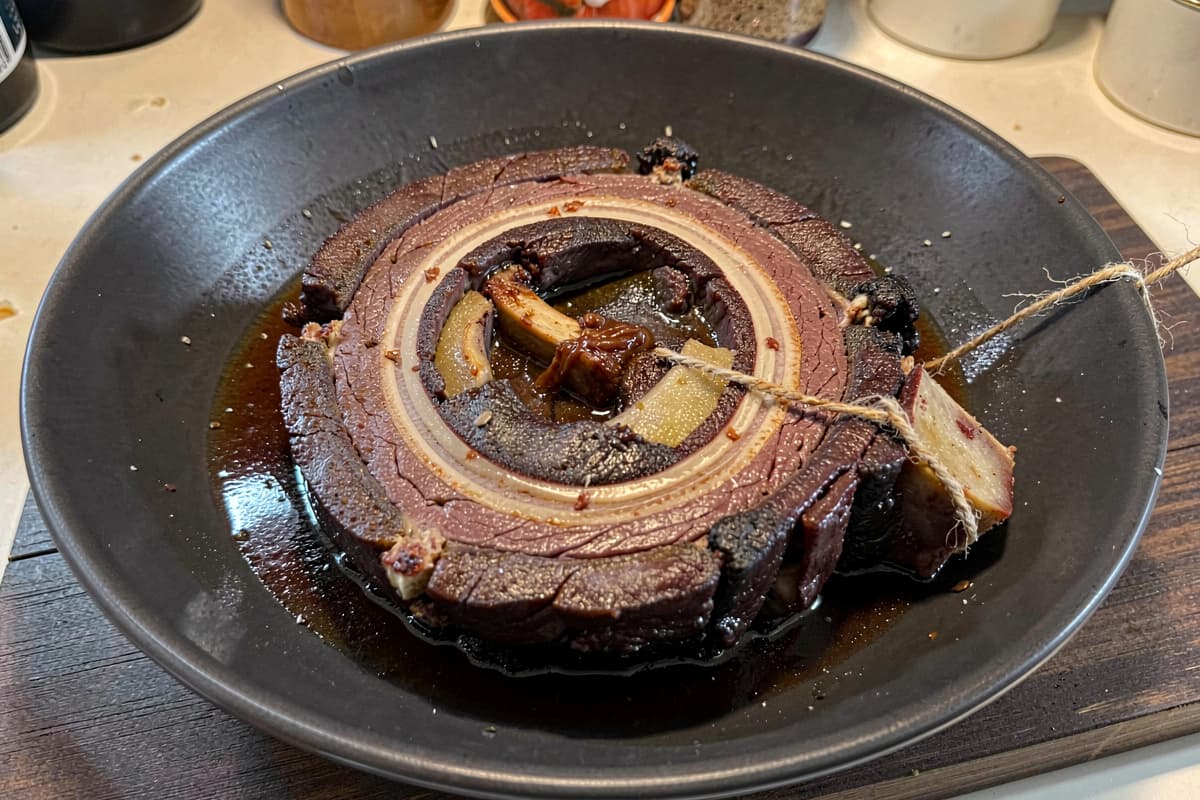
Carnivore beef osso buco is 4 cross-cut beef shank slabs (each about 1.5 inches thick with a marrow-bone center) seared in tallow, then braised in 3 cups of beef broth at 325°F for 3 hours. Salt is the only seasoning. Traditional Italian osso buco uses veal shanks, white wine, soffritto (carrot, celery, onion), and finishes with gremolata (parsley, garlic, lemon zest) — all plant matter excluded from strict carnivore. The braising technique is the keeper. Beef shanks (often labeled 'beef shins' or 'beef center cut shank') cost $5 to $9 per pound — about half the price of veal shank — and the higher fat content of beef carries the dish without wine and aromatics. A single 8-ounce slab delivers 50g protein, 22g fat, and 400 calories, plus the marrow inside the bone (about 60 calories of pure beef fat per shank). The marrow is the prize; spoon it directly from the bone.
Ingredients
| Ingredient | Protein | Fat | Calories |
|---|---|---|---|
| 1 beef shank slab cooked, meat + marrow (per serving) | 50g | 18g | 360 |
| ½ tbsp tallow + marrow contribution (per serving) | 0g | 4g | 40 |
| Per serving | 50g | 22g | 400 |
Macros per serving (after cooking and any fat draining). Source: USDA FoodData Central.
Instructions
- 1
Preheat oven to 325°F. Pat shank slabs dry with paper towels. Tie each slab around its perimeter with kitchen twine to keep it from falling apart during the long braise.
- 2
Apply 2 tsp coarse salt across all sides of the shanks.
- 3
Heat 2 tbsp beef tallow in a 6-quart Dutch oven over high heat until shimmering.
- 4
Sear shanks 2 at a time, 4 minutes per side, until both faces are deeply browned. Set aside.
- 5
Pour 3 cups beef broth into the Dutch oven, scraping up any browned bits from the bottom. Return all shanks to the pot — broth should come halfway up.
- 6
Bring to a simmer on the stovetop. Transfer covered to the 325°F oven.
- 7
Braise for 3 hours, turning shanks at the 1.5-hour mark. Meat should pull from the bone with fork pressure.
- 8
Remove from oven. Snip kitchen twine. Serve each shank in a wide bowl with ½ cup of the braising liquid. Spoon marrow directly from the bone (the prize of osso buco).
Nutrition per Serving
Frequently Asked Questions
Beef shank vs veal shank?
Beef shanks come from older cattle (typically 18 to 30 months) and have more pronounced beef flavor and slightly tougher connective tissue. Veal shanks come from younger cattle (under 6 months) and are more tender but milder in taste — the traditional osso buco cut. The 3-hour braise in this recipe handles either. Beef shank costs $5 to $9 per pound; veal shank runs $14 to $20. For carnivore eaters, beef shank is the better dollar-for-dollar choice.
Why no gremolata?
Gremolata (parsley, garlic, lemon zest) is plant matter and the bright herby finish that defines traditional osso buco. Carnivore versions skip it entirely; the fat-rich braising liquid plus marrow do the flavor work. The result is a heavier, beefier dish closer to a French daube than a Milanese osso buco. If you allow some plants, gremolata is what makes the original dish iconic — this recipe is the strict animal-only adaptation.
Why tie the shanks?
Beef shank slabs have an outer ring of meat that surrounds the marrow bone. During a 3-hour braise the connective tissue holding the ring to the bone breaks down, and the meat falls off in pieces. Kitchen twine wrapped around the perimeter keeps the slab intact for a clean presentation. After braising, snip the twine; the meat is tender enough to fall apart on the plate. Untied versions taste identical but look messier.
Track This Meal in Carnivore Max
Log this recipe, track your macros, and stay on top of your carnivore diet.
Download Free on iOS →You Might Also Like
Cross-cut beef shanks braised in 4 cups of beef broth at 300°F for 4 hours. Salt only — no wine, no soffritto. The marrow-bone payoff dish.
Recipe4 lamb shanks braised in beef broth at 325°F for 3 hours until fall-off-the-bone tender. Salt only, no wine, no veggies. Yields 4 hearty servings.
RecipeRich, gelatinous bone broth packed with collagen and minerals. 24-hour slow simmer. 10g protein and 40 calories per cup. Sets to soft gel when cold.