Hanger Steak (Butcher's Cut, Pan-Seared)

By Emma Clarke · Food Writer · Updated 2026-05-09
Hanger steak is a 1-1.5 lb tender cut historically kept by butchers. Pan-sear 3 min/side, slice across grain. 25g protein, 14g fat per 100g cooked.
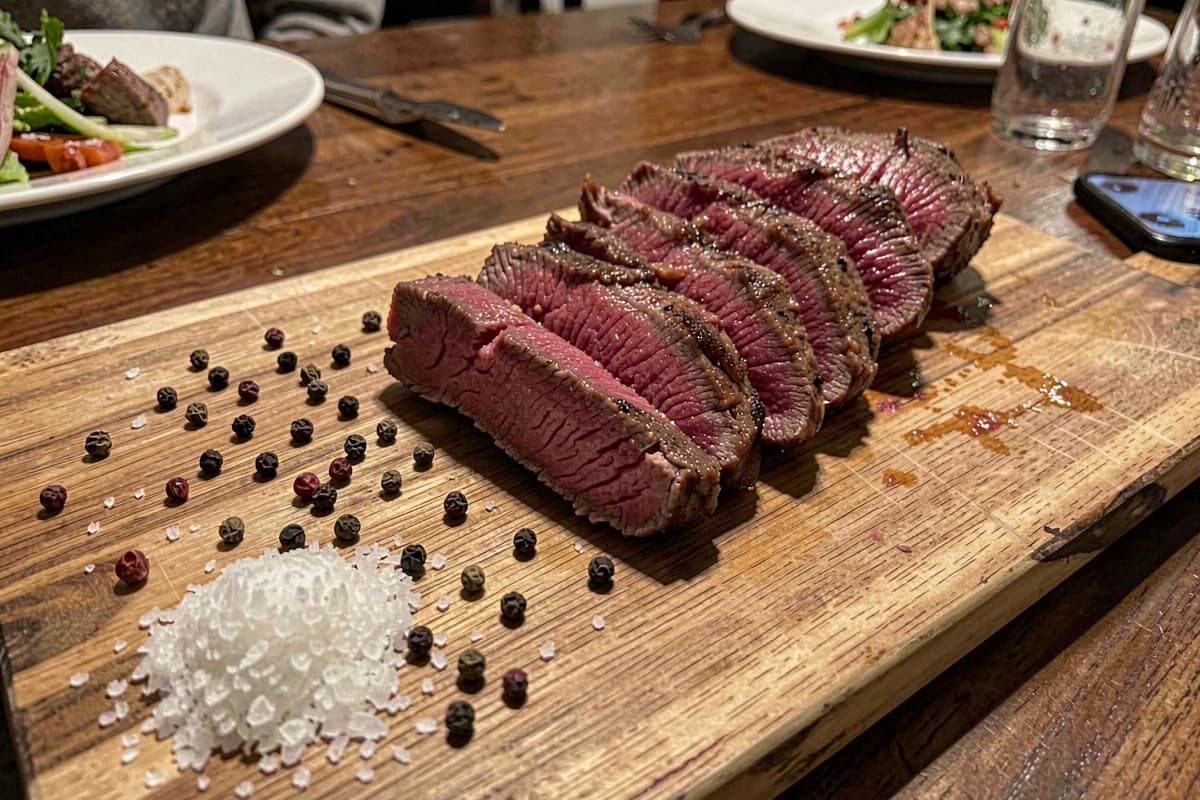
Hanger steak is a 1 to 1.5 pound tender cut from the diaphragm region of the cow, historically called the 'butcher's steak' because butchers reserved it for themselves before it became popular in restaurants. There's only one hanger steak per cow. The cut has a strong beefy flavor and the second-most-tender texture of any steak (behind tenderloin), at $14 to $20 per pound. A 6-ounce cooked hanger delivers 43g protein, 24g fat, and 385 calories. Pan-sear at high heat for 3 minutes per side in butter; pull at 125°F internal; rest 5 minutes; slice across the grain — which runs visibly along the long axis of the cut. The grain in hanger is unusually pronounced, so slicing direction matters more than for most cuts. Avoid cooking past medium (140°F) — hanger gets noticeably tough above that temperature, which is why many restaurants serve it strictly at medium-rare.
Ingredients
| Ingredient | Protein | Fat | Calories |
|---|---|---|---|
| 6 oz hanger steak cooked (per serving) | 43g | 24g | 385 |
| 1 tbsp butter (per serving) | 0g | 11g | 100 |
| Coarse salt | 0g | 0g | 0 |
| Per serving | 43g | 35g | 485 |
Macros per serving (after cooking and any fat draining). Source: USDA FoodData Central.
Instructions
- 1
If the hanger has a thick membrane down the center, trim it out (most butchers do this for you).
- 2
Salt the steak on both sides 30 minutes to 24 hours before cooking.
- 3
Heat a cast iron skillet over high heat until smoking. Add 2 tbsp butter.
- 4
Pat the steak dry. Place in the foaming butter and don't move for 3 minutes.
- 5
Flip. Sear for 3 minutes, basting with butter in the last 30 seconds.
- 6
Pull at 125°F internal (rises to 130°F during rest for medium-rare).
- 7
Rest 5 minutes. Slice across the visible grain into ¼-inch slices.
- 8
Top with any remaining pan butter.
Nutrition per Serving
Frequently Asked Questions
Why is hanger called the butcher's steak?
Before WWII, butchers in France and the US would keep the hanger steak (one per cow) for themselves rather than display it for sale — it was tender, flavorful, and considered too 'unusual-looking' for retail customers. The name 'onglet' in French translates to 'hanger' or the 'butcher's tenderloin.' The cut became fashionable in American steakhouses in the 1990s, and pricing rose accordingly. Pre-1990s it was nearly free; today it's $14-20/lb.
What's the membrane down the middle?
The hanger steak naturally has a thick connective tissue membrane (silver skin) running down the center of the cut, dividing it into two muscle bundles. Most butchers remove it before retail sale; if not, you can trim it out yourself with a sharp knife. The membrane itself is too tough to eat after a quick sear — it's collagen-heavy and needs slow cooking to break down.
Can I marinate hanger steak?
Yes, but skip plant-based marinades for carnivore eating. Hanger has a strong beefy flavor that doesn't need much enhancement; salt and butter are usually enough. If you want extra punch, dry-brine 24 hours before cooking with coarse salt, then top with rendered tallow or butter at the end. Vinegar or citrus marinades can break down the texture nicely but conflict with strict carnivore framing.
Track This Meal in Carnivore Max
Log this recipe, track your macros, and stay on top of your carnivore diet.
Download Free on iOS →You Might Also Like
Skirt steak is a 1.5-2 lb diaphragm cut. Sear 2-3 min/side over very high heat, slice paper-thin across the grain. 24g protein, 18g fat per 100g cooked.
RecipeFlank is a lean 1.5-2 lb cut from the abdomen. Sear 3-4 min/side, slice thin across the grain. 24g protein, 5g fat per 100g cooked. Cheap and lean.
RecipeRibeye or strip steak in a 500°F+ cast iron skillet for 4 minutes per side, butter-basted last 60 seconds. The everyday 8-minute carnivore dinner.