Lamb vs Beef: Nutrition, Flavor & Cost Compared

By Omar Khan · Pakistani Heritage Cook · Published April 2026
A detailed comparison of lamb and beef covering protein, fat, calories, iron, price, and which is better for carnivore diet success.
| Per 100g cooked | Lamb (loin chop) | Beef (ribeye) |
|---|---|---|
| Protein | 26g | 24g |
| Fat | 14g | 18g |
| Price/lb (avg) | $13.99 | $16.99 |
Verdict: Beef is the more practical daily staple with better budget options and wider availability. Lamb is nutritionally excellent and adds welcome variety. Use both: beef as your base, lamb as your rotation meat.
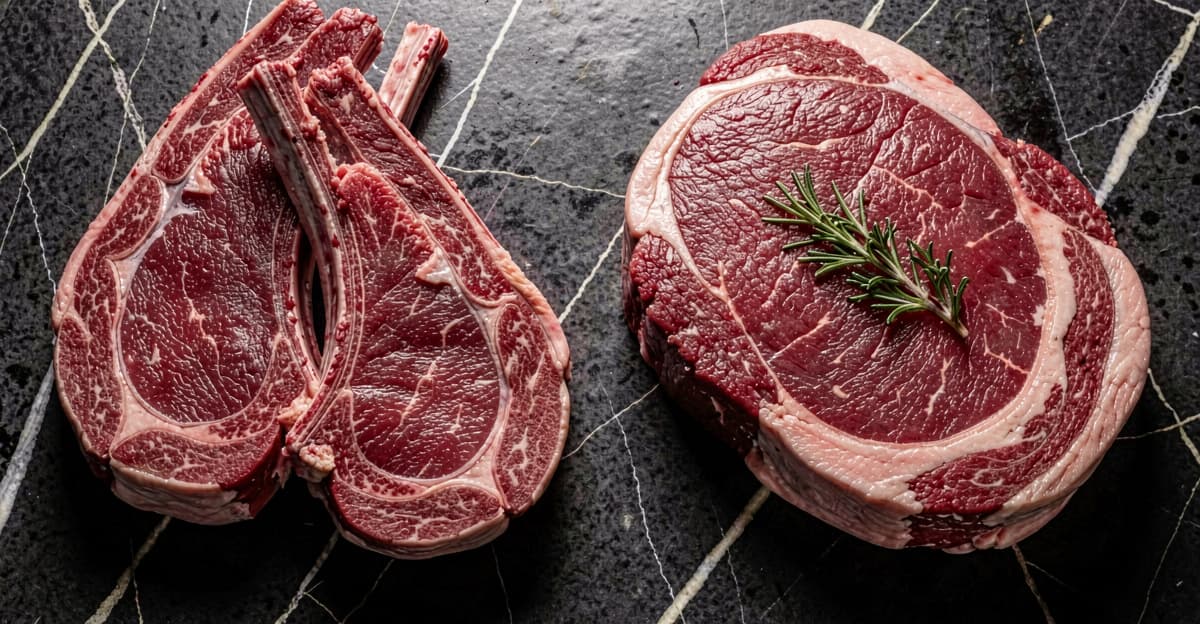
Quick Comparison (per 100g cooked)
| Nutrient | Lamb (loin chop) | Beef (ribeye) |
|---|---|---|
| Protein | 26g | 24g |
| Fat | 14g | 18g |
| Calories | 234 | 263 |
| Iron | 1.9mg | 2.1mg |
| Price/lb | $13.99 | $16.99 |
Nutrition data per 100g cooked. Source: USDA FoodData Central
Nutritional Breakdown
Lamb loin chops provide 26g protein and 14g fat per 100g cooked (234 calories). Beef ribeye delivers 24g protein and 18g fat (263 calories). Iron content is similar — 1.9mg for lamb versus 2.1mg for beef. Lamb is slightly richer in omega-3 fatty acids, especially grass-fed lamb, and is an excellent source of conjugated linoleic acid (CLA). Beef provides more B12 and zinc per serving.
Taste and Flavor
Lamb has a distinctive, slightly gamey flavor that comes from branched-chain fatty acids in the fat. Some people love it, others find it too strong. Beef has a milder, more universally appealing beefy taste. On a carnivore diet where you eat meat at every meal, having both options prevents palate fatigue. Lamb pairs exceptionally well with simple salt and high-heat cooking.
Best Cooking Methods
Lamb loin chops cook best with a quick, hot sear — 3 minutes per side in a cast iron skillet with butter or tallow. Lamb is best served medium-rare to medium; overcooking makes it tough and intensifies the gamey flavor. Beef ribeye benefits from a reverse sear or butter basting. Both meats are excellent grilled over charcoal.
Cost and Availability
Lamb loin chops average around $13.99 per pound, while beef ribeye costs approximately $16.99. However, beef offers far more affordable cuts (chuck, sirloin, ground beef) that bring the average daily cost down. Lamb has fewer budget-friendly options — ground lamb at $7.99 per pound is the most economical choice.
Which Is Better for the Carnivore Diet?
Beef is the better everyday staple due to its wider range of affordable cuts, milder flavor, and slightly higher iron and zinc content. Lamb is an excellent secondary meat that adds variety and omega-3s to your diet. The ideal carnivore approach uses beef as the foundation and rotates in lamb two to three times per week. Use Carnivore Max to track how rotating different meats affects your overall nutrient intake.
The Verdict
Beef is the more practical daily staple with better budget options and wider availability. Lamb is nutritionally excellent and adds welcome variety. Use both: beef as your base, lamb as your rotation meat.
Frequently Asked Questions
Is lamb better than beef nutritionally?
They are comparable. Lamb has more omega-3s and CLA, while beef has more iron, zinc, and B12. Both are excellent nutrient-dense red meats suitable for the carnivore diet.
Why does lamb taste gamey?
The distinctive flavor of lamb comes from branched-chain fatty acids (BCFAs) present in the fat. Grass-fed lamb tends to have a stronger flavor. Younger lamb (spring lamb) is milder in taste.
Is lamb or beef better for iron?
Beef has a slight edge in iron content — about 2.1mg per 100g cooked versus 1.9mg for lamb. Both are good sources of highly bioavailable heme iron.
Can I eat lamb every day on carnivore?
Yes. Lamb is a nutrient-dense animal food that is fully compatible with daily carnivore eating. Ground lamb is the most affordable way to eat lamb regularly.
Track Your Macros with AI
Track your macros instantly — describe what you ate and our AI does the rest.
Download Free on iOS →