Bone-In Ribeye Reverse Sear

By Michael Park · Korean Heritage Carnivore · Updated 2026-05-09
Reverse sear: 250°F oven to 115°F internal, then 60-second blast in butter. Edge-to-edge medium-rare for thick bone-in ribeye. 24g protein, 18g fat per 100g.
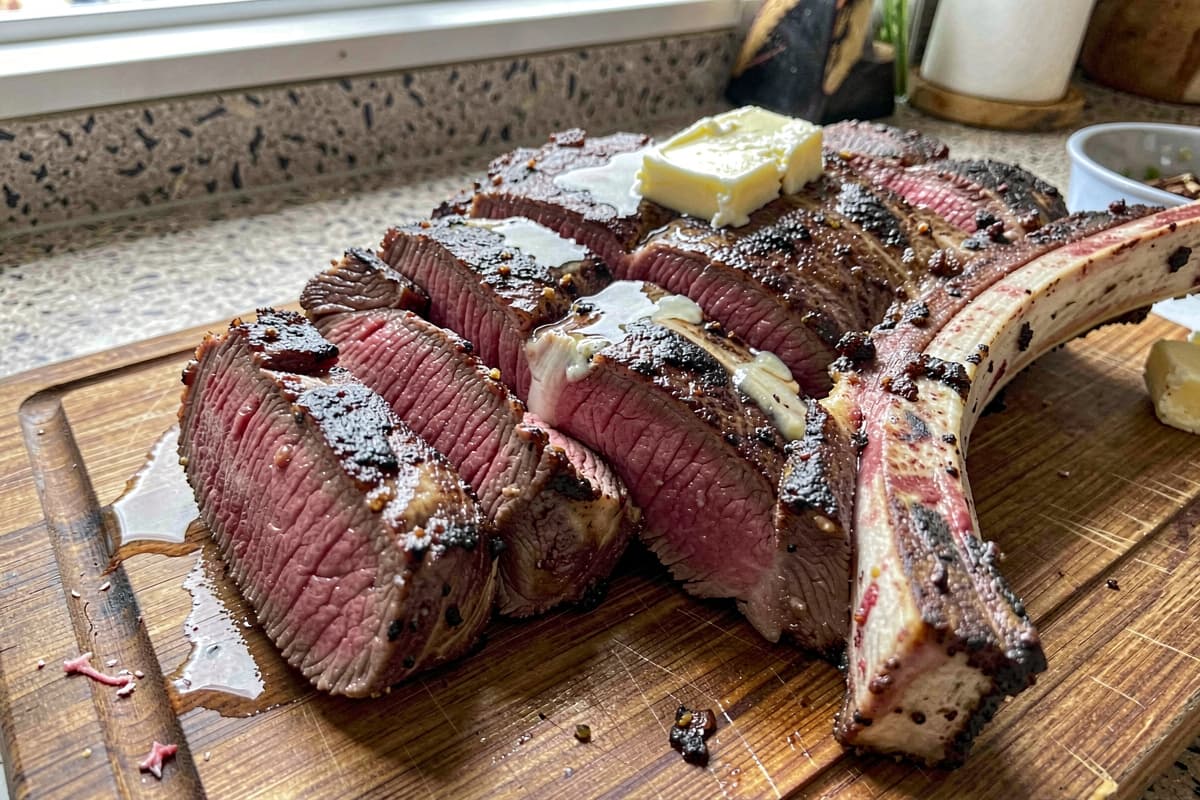
Bone-in ribeye reverse sear is a 16 to 20 ounce bone-in ribeye cooked at 250°F oven until 115°F internal (about 30 to 40 minutes), then finished with a 60 to 90 second sear in butter on each side. The technique produces edge-to-edge medium-rare with a thinner gray ring and more uniform color than traditional pan-only cooking. An 8-ounce cooked serving delivers 54g protein, 41g fat, and 600 calories. Bone-in ribeye runs $18 to $28 per pound, so a 1.5-inch thick steak (16 oz raw) costs $18 to $28 each. The bone insulates the meat closest to it and contributes flavor during the slow phase. Pull from the oven at 115°F; rest 5 minutes uncovered while heating the cast iron; sear 60 to 90 seconds per side in foaming butter (no longer or you'll overshoot 130°F). Carry-over cooking adds 3 to 5°F during the post-sear rest. The reverse sear is specifically the right method for bone-in steaks 1.5 inches and thicker; thinner bone-in steaks can use traditional high-heat searing without the oven phase.
Ingredients
| Ingredient | Protein | Fat | Calories |
|---|---|---|---|
| 8 oz bone-in ribeye cooked (per serving) | 54g | 36g | 540 |
| 1 tbsp butter (per serving) | 0g | 11g | 100 |
| Coarse salt | 0g | 0g | 0 |
| Per serving | 54g | 47g | 650 |
Macros per serving (after cooking and any fat draining). Source: USDA FoodData Central.
Instructions
- 1
Salt the steak generously on both sides 40 minutes to 24 hours before cooking. For best results, dry-brine 24 hours uncovered in the fridge on a wire rack.
- 2
Take the steak out 30 minutes before cooking. Insert probe thermometer into the center, away from the bone.
- 3
Preheat oven to 250°F. Place steak on a wire rack on a sheet pan.
- 4
Roast at 250°F until internal hits 115°F. For a 1.5-inch thick steak this takes about 30-40 minutes.
- 5
Pull from oven and rest uncovered for 5 minutes while heating a cast iron skillet over high heat until smoking.
- 6
Add 2 tbsp butter to the smoking pan. Place the steak in the foaming butter; sear 60-90 seconds per side.
- 7
Sear the fat strip on the bone side for 30 seconds, holding with tongs.
- 8
Pull at 130°F internal. Rest 5 more minutes. Slice meat off the bone, then across the grain into ½-inch slabs.
Nutrition per Serving
Frequently Asked Questions
Why reverse sear instead of just searing in cast iron?
Thick steaks (1.5+ inches) develop a thick gray gradient between the seared crust and the medium-rare center when cooked at high heat from the start. Reverse sear flips the order: cook low and slow first to bring the entire interior to just-below-target temperature, then sear at the very end to develop only the crust. The result is edge-to-edge medium-rare with a thin (¼-inch or less) gray gradient. For thinner steaks (under 1 inch), traditional searing produces the same result faster.
How do I know when to pull from the oven?
Probe thermometer into the center of the meat, away from the bone. Pull at 10-15°F below your target final temperature. For medium-rare (130°F final), pull at 115-120°F because the sear adds another 5-7°F and the post-sear rest carries over another 3-5°F. Most failures of reverse sear come from pulling too late at the oven phase — by the time the sear is done you've blown past medium-rare into medium-well.
Can I reverse sear without an oven (e.g. on a grill)?
Yes. Set up a 2-zone fire on a charcoal or gas grill. Place the steak on the cooler indirect side until internal hits 115°F (about 35-50 minutes for a thick bone-in ribeye). Then move to the direct side over high heat for 60-90 seconds per side to sear. Same technique, same temperature targets — just outdoors. The grill adds a smoke component the oven doesn't.
Track This Meal in Carnivore Max
Log this recipe, track your macros, and stay on top of your carnivore diet.
Download Free on iOS →You Might Also Like
Reverse sear: 250°F oven to 115°F internal, then 500°F sear 8 minutes. Edge-to-edge medium-rare for an 8-12 lb prime rib roast. 24g protein per 100g.
RecipeBone-in prime rib — 4-rib roast (8-10 lb) at 250°F oven to 115°F, sear at 500°F. Salt only. 24g protein, 18g fat per 100g. Feeds 8-10.
RecipeA perfectly seared ribeye basted in golden butter — the king of carnivore dinners. 48g protein and 42g fat per 10 oz cooked. Pull at 130°F medium-rare.