Sous Vide Pork Loin (140°F for 4 Hours)

By Samantha Brooks · Sous-Vide Specialist · Updated 2026-05-08
3-lb pork loin sous vide at 140°F for 4 hours, then seared in cast iron. Salt only. Edge-to-edge pink, USDA-safe, juicier than oven-roast.
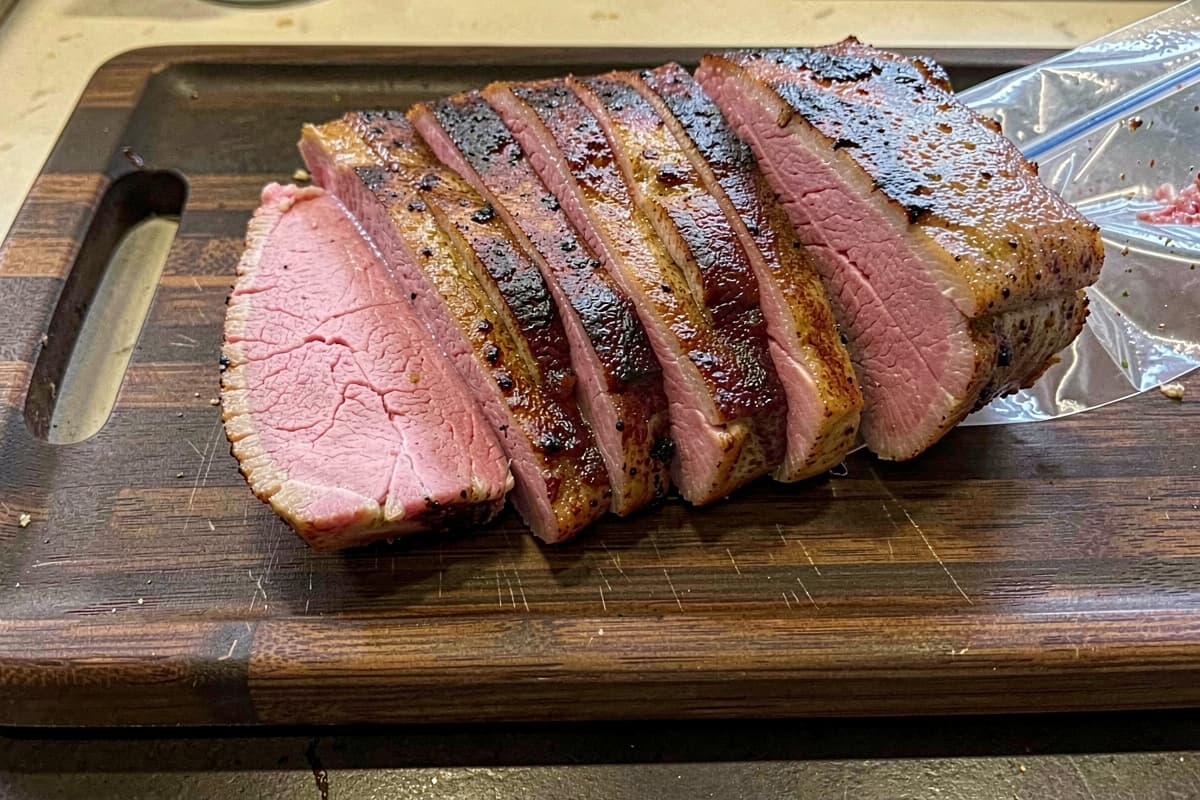
Carnivore sous vide pork loin is a 3-pound boneless pork loin sealed in a vacuum bag with 1 tablespoon of salt, cooked in a 140°F water bath for 4 hours, then seared in cast iron at 500°F for 2 minutes per side to develop a crust. The 140°F temperature is the lowest safe target after the FDA's 2011 update — the long hold at temperature pasteurizes the meat at a temperature that's well below the 145°F oven minimum. Result: pork loin pink edge to edge with no moisture loss. A 5-ounce cooked serving delivers 32g protein, 12g fat, and 240 calories. Pork loin costs $3 to $5 per pound; a 3-pound roast yields 8 to 10 servings at roughly $1.50 each — the cheapest sous vide protein available. Sous vide circulators (Anova, Joule) cost $80 to $150 and pay for themselves in 6 months of carnivore cooking — meat doesn't dry out, and you can run the cook unattended while you do other things.
Ingredients
| Ingredient | Protein | Fat | Calories |
|---|---|---|---|
| 5 oz sous vide pork loin cooked (per serving) | 32g | 11g | 220 |
| ⅛ tbsp butter (per serving) | 0g | 1g | 15 |
| Coarse salt | 0g | 0g | 0 |
| Per serving | 32g | 12g | 240 |
Macros per serving (after cooking and any fat draining). Source: USDA FoodData Central.
Instructions
- 1
Pat the pork loin dry. Apply 1 tbsp coarse salt to all surfaces.
- 2
Vacuum-seal the loin in a sous vide bag. If using zip-loc displacement method, slowly lower the bag into water to push air out, then seal.
- 3
Set sous vide circulator to 140°F. Submerge the bagged loin and cook for 4 hours.
- 4
Remove the bag from the water bath. Transfer the loin to a paper-towel-lined plate. Pat the surface completely dry — wet surface = no crust during sear.
- 5
Heat a 12-inch cast iron skillet over high heat until smoking.
- 6
Add 1 tbsp butter. Sear the loin 90 seconds per side on all four sides — 6 minutes total — until exterior is deeply browned.
- 7
Transfer to cutting board. No rest needed (sous vide meat is already evenly tempered).
- 8
Slice in ½-inch slabs across the grain. Serve immediately.
Nutrition per Serving
Frequently Asked Questions
Why 140°F instead of 145°F?
USDA pasteurization tables show that pork held at 140°F for 36 minutes is equivalent to pork hit instantly at 145°F — both eliminate pathogens with the same margin. Sous vide cooks for 4 hours at temperature, which is more than 6x the pasteurization minimum. The lower target temperature produces dramatically juicier meat than the 145°F minimum used in oven cooking. This is the foundation of sous vide cooking; lower temperature plus longer time equals the same safety with better texture.
Do I need a vacuum sealer?
No, but it helps. Vacuum sealers (FoodSaver, $80-150) produce a tight seal that conducts heat efficiently and stores leftovers well. The water-displacement method works for short cooks: place meat in a quality zip-loc bag, lower it slowly into the water bath until water pushes air out, then seal at the surface. For 4-hour cooks, vacuum sealing is more reliable. Either way, regular sandwich-grade plastic bags don't work — they leach plasticizers at sous vide temperatures.
Why sous vide pork loin?
Pork loin is so lean that oven cooking dries it within a 5-degree window of the 145°F target. Sous vide eliminates the dryness risk because the water bath can never exceed 140°F — overshoot is impossible. The result is pork loin that's juicy edge to edge, with a hard sear at the end providing the crust. For lean cuts of any kind (pork tenderloin, chicken breast, beef tenderloin), sous vide is the highest-floor cooking method.
Track This Meal in Carnivore Max
Log this recipe, track your macros, and stay on top of your carnivore diet.
Download Free on iOS →You Might Also Like
1-1.5 lb pork tenderloin sous vide at 140°F for 90 minutes, then seared. Salt only. The leanest pork cut, cooked perfectly without drying.
Recipe4 lb boneless pork loin smoked at 225°F for 2.5 hours to 145°F. Dry-brine 24 hours, salt only. The lean cousin of pulled pork. 32g protein per 5 oz.
RecipeThick-cut bone-in pork chops in a 425°F oven for 14-18 minutes to 145°F internal. Salt and butter only. The 20-minute carnivore weeknight dinner.