Roasted Lamb Ribs (Salt-Only)

By Ahmed Hassan · Halal Carnivore Practitioner · Updated 2026-05-08
Lamb breast ribs roasted at 300°F for 2 hours, then crisped at 425°F. Salt only. The cheapest lamb cut at $5-7 per pound. 28g protein per 6 oz cooked.
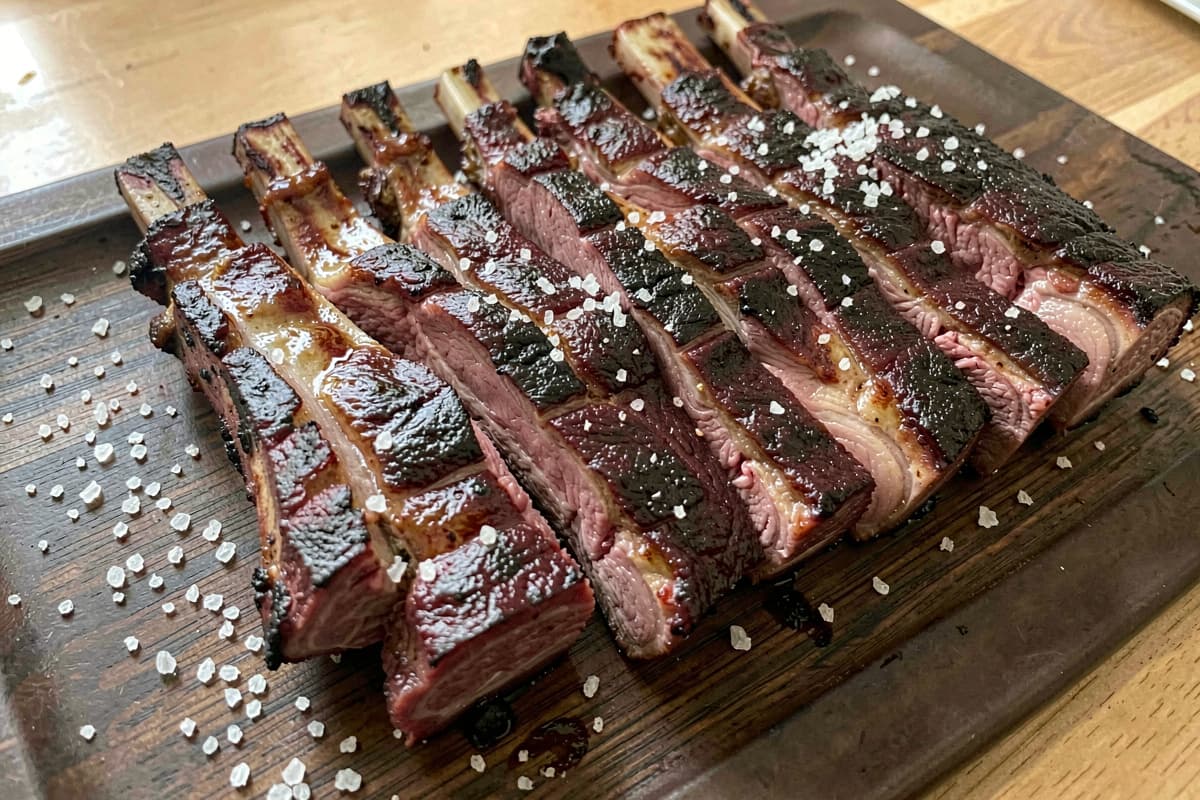
Carnivore roasted lamb ribs are a 3 to 4 pound rack of lamb breast ribs (the equivalent of pork spare ribs from a sheep) roasted at 300°F for 2 hours, then crisped at 425°F for 10 minutes to render fat and brown the exterior. Salt is the only seasoning — no garlic, no rosemary, no Middle Eastern spice rub. Lamb ribs are the cheapest lamb cut available, costing $5 to $7 per pound at most grocery stores and ethnic markets, and yielding 4 to 5 servings per rack at roughly $5 each. A 6-ounce cooked serving delivers 28g protein, 30g fat, and 380 calories — fattier than most lamb cuts because lamb breast carries more subcutaneous fat. The two-temperature method (low slow + high finish) is essential for breast ribs: the 300°F phase renders subcutaneous fat into the meat without overcooking; the 425°F finish develops a crust that lamb breast otherwise lacks. Look for lamb ribs at halal markets and Middle Eastern grocers if your standard supermarket doesn't carry them.
Ingredients
| Ingredient | Protein | Fat | Calories |
|---|---|---|---|
| 6 oz lamb ribs cooked (per serving) | 28g | 30g | 380 |
| Coarse salt | 0g | 0g | 0 |
| Per serving | 28g | 30g | 380 |
Macros per serving (after cooking and any fat draining). Source: USDA FoodData Central.
Instructions
- 1
Preheat oven to 300°F. Pat lamb ribs dry with paper towels.
- 2
Apply 1.5 tbsp coarse salt across all surfaces.
- 3
Place ribs on a wire rack inside a sheet pan, fat-cap up.
- 4
Roast at 300°F for 2 hours until ribs are deeply browned and fat has rendered.
- 5
Crank the oven to 425°F. Continue roasting for 8 to 12 minutes until the surface crisps.
- 6
Pull when the bones twist freely and the rib fat is well-rendered.
- 7
Rest 10 minutes loosely tented.
- 8
Slice between every bone for individual ribs, or every 2 bones for 2-rib portions.
Nutrition per Serving
Frequently Asked Questions
Where do I find lamb ribs?
Most US grocery stores don't carry lamb ribs because demand is low. Halal and Middle Eastern markets reliably stock them year-round. Latino markets (especially in cities with large Mexican or Caribbean communities) often have lamb ribs around the holidays. Costco occasionally stocks lamb belly or lamb riblets. Ethnic butchers will special-order a rack with 3 to 5 days notice. Online sources (Crowd Cow, Porter Road) ship lamb ribs but markup is 50% over local prices.
Lamb ribs vs pork ribs — same technique?
Similar but not identical. Lamb breast ribs have less meat between bones than pork spare ribs (a typical lamb rib carries 30% less meat). The lower meat-to-fat ratio means lamb ribs render fat more aggressively during the cook — the surface turns deeper brown without sugar from a rub. Cooking time is shorter than pork ribs (2 hours vs 5+) because lamb fat renders faster. Don't apply pork-rib timing to lamb ribs or you'll get dry, crusty meat.
Is lamb breast safe to eat fatty?
Yes. Lamb fat (especially from grass-fed lamb) contains conjugated linoleic acid (CLA) and a high ratio of monounsaturated fats compared to most red meats. The branched-chain fatty acids that give lamb its distinctive taste are concentrated in the fat. Carnivore eaters generally favor fattier cuts because the fat-to-protein ratio matches caloric needs better than lean protein alone. If you're uncomfortable with high fat, trim the surface fat before cooking; you'll lose some flavor but reduce the fat content by 20 to 30%.
Track This Meal in Carnivore Max
Log this recipe, track your macros, and stay on top of your carnivore diet.
Download Free on iOS →You Might Also Like
6-pound bone-in leg of lamb smoked at 250°F for 4 hours to 135°F internal. Salt and butter only, no garlic or rosemary. Feeds 8 at $5 per serving.
RecipeFrenched rack of lamb seared 4 minutes per side, finished in a 425°F oven to 130°F internal. 25 minutes total. Salt and butter only.
ComparisonA detailed comparison of lamb and beef covering protein, fat, calories, iron, price, and which is better for carnivore diet success.