Rack of Lamb (Carnivore, Salt + Butter)

By Brendan Fitzgerald · Irish Heritage Cook · Updated 2026-05-08
Frenched rack of lamb seared 4 minutes per side, finished in a 425°F oven to 130°F internal. 25 minutes total. Salt and butter only.
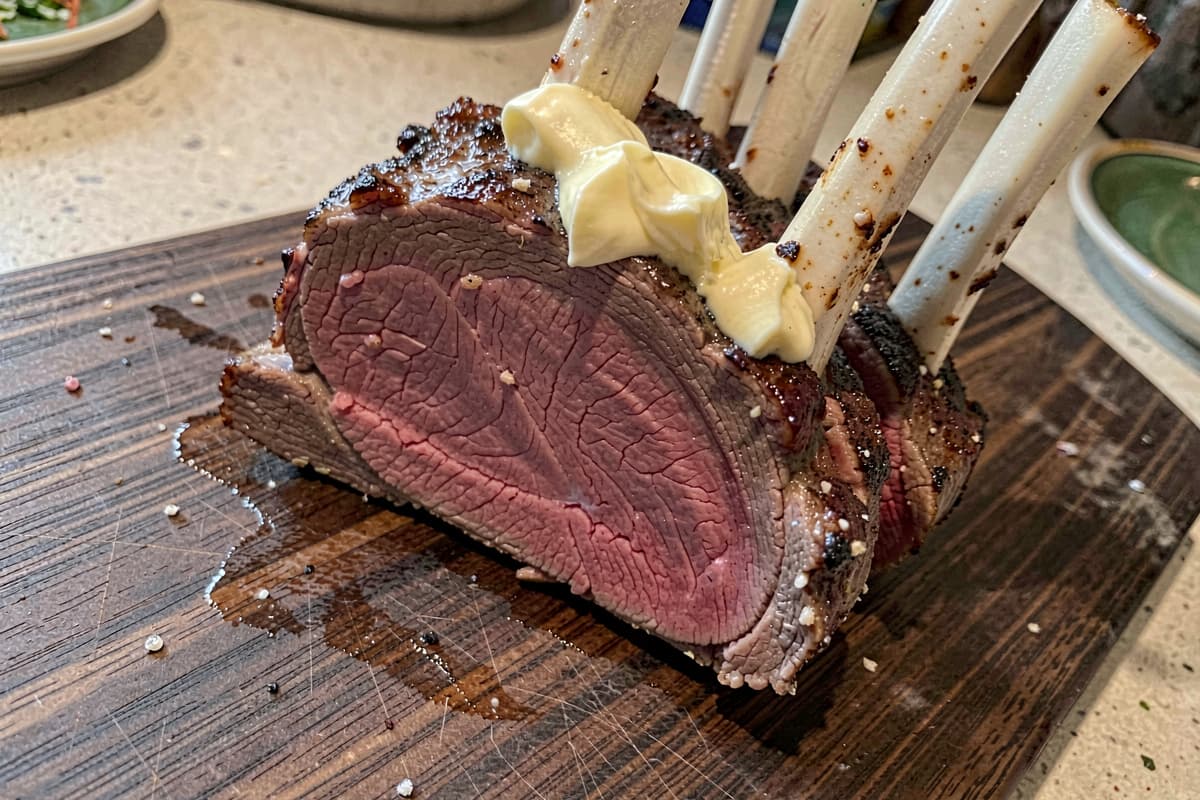
Carnivore rack of lamb is a frenched 8-bone rack (about 1.5 to 2 pounds) seared in a hot cast iron skillet for 4 minutes per side, then finished in a 425°F oven for 8 to 12 minutes to an internal temperature of 130°F for medium-rare. Salt is the only seasoning; 1 tablespoon of butter added during the final 2 minutes of the sear bastes the surface. No garlic, no rosemary, no Dijon crust. A 6-ounce cooked serving delivers 36g protein, 26g fat, and 380 calories. Frenched racks (where the bone tops are scraped clean for presentation) cost $18 to $26 per pound; a single 1.5-pound rack feeds 2 to 3 adults at roughly $14 to $20 per serving — among the highest-end carnivore dinner options. Slice between bones for individual chops; some prefer slicing every other bone for thicker double-bone portions.
Ingredients
| Ingredient | Protein | Fat | Calories |
|---|---|---|---|
| 6 oz rack of lamb cooked (per serving) | 36g | 24g | 360 |
| ⅓ tbsp butter (per serving) | 0g | 4g | 30 |
| Coarse salt | 0g | 0g | 0 |
| Per serving | 36g | 26g | 380 |
Macros per serving (after cooking and any fat draining). Source: USDA FoodData Central.
Instructions
- 1
Remove rack from fridge 30 minutes before cooking. Preheat oven to 425°F.
- 2
Pat the rack dry with paper towels. Salt all sides with 1.5 tsp coarse salt.
- 3
Heat a 12-inch cast iron skillet over high heat until smoking.
- 4
Place the rack fat-cap down in the skillet. Sear for 4 minutes until the fat renders and the surface is deeply browned.
- 5
Flip the rack onto its meat side. Sear for 3 minutes. Add 1 tbsp butter to the pan during the final minute and tilt to baste.
- 6
Transfer the skillet to the 425°F oven. Roast for 8 to 12 minutes until internal temperature reaches 125°F.
- 7
Pull at 125°F (rises to 130°F during rest). Transfer to a cutting board, tent loosely with foil.
- 8
Rest 8 minutes. Slice between every bone for individual chops, or every other bone for thicker double-bone portions.
Nutrition per Serving
Frequently Asked Questions
What is a 'frenched' rack?
Frenching means scraping the meat off the upper portion of the rib bones so the bare bones poke out cleanly above the meat. It's a presentation technique borrowed from French butchery — the white bones look striking against the seared meat. Frenched racks cost more per pound because you're paying for the prep work; an unfrenched rack saves $4 to $6 per pound and tastes identical. To french yourself, run a paring knife along each bone and pull the connective tissue.
Why no garlic or rosemary?
Both are plant matter, excluded from strict carnivore. Lamb has strong enough flavor on its own (the branched-chain fatty acids in lamb fat give it a distinctive taste) that herbs aren't necessary for taste — they're a cultural pairing, not a culinary requirement. Salt and butter are the carnivore-aligned alternative and let the lamb flavor dominate. If you allow some plants, the classic Dijon-and-herb crust is fine; this recipe is the strict version.
What's the right internal temperature for lamb?
130 to 135°F medium-rare. Lamb fat begins to taste tallowy and harsh above 145°F (well-done) — the same fatty-acid composition that makes lamb distinctive at lower temperatures becomes unpleasant at higher ones. Pull at 125 to 130°F and let carryover finish the cook during the rest. Medium-rare is the standard target across European, Australian, and American lamb traditions.
Track This Meal in Carnivore Max
Log this recipe, track your macros, and stay on top of your carnivore diet.
Download Free on iOS →You Might Also Like
6-pound bone-in leg of lamb smoked at 250°F for 4 hours to 135°F internal. Salt and butter only, no garlic or rosemary. Feeds 8 at $5 per serving.
ComparisonA detailed comparison of lamb and beef covering protein, fat, calories, iron, price, and which is better for carnivore diet success.
Recipe5 lb boneless leg of lamb roasted at 350°F for 75-90 minutes to 130°F internal. Salt only, no garlic. Easier carving than bone-in, same lamb flavor.