Pan-Seared Veal Chop

By Antonio Russo · Italian Heritage Chef · Updated 2026-05-08
1 thick-cut veal rib chop salted and seared in butter, then finished in a 425°F oven to 145°F internal. Salt only. The Italian costoletta, carnivore-stripped.
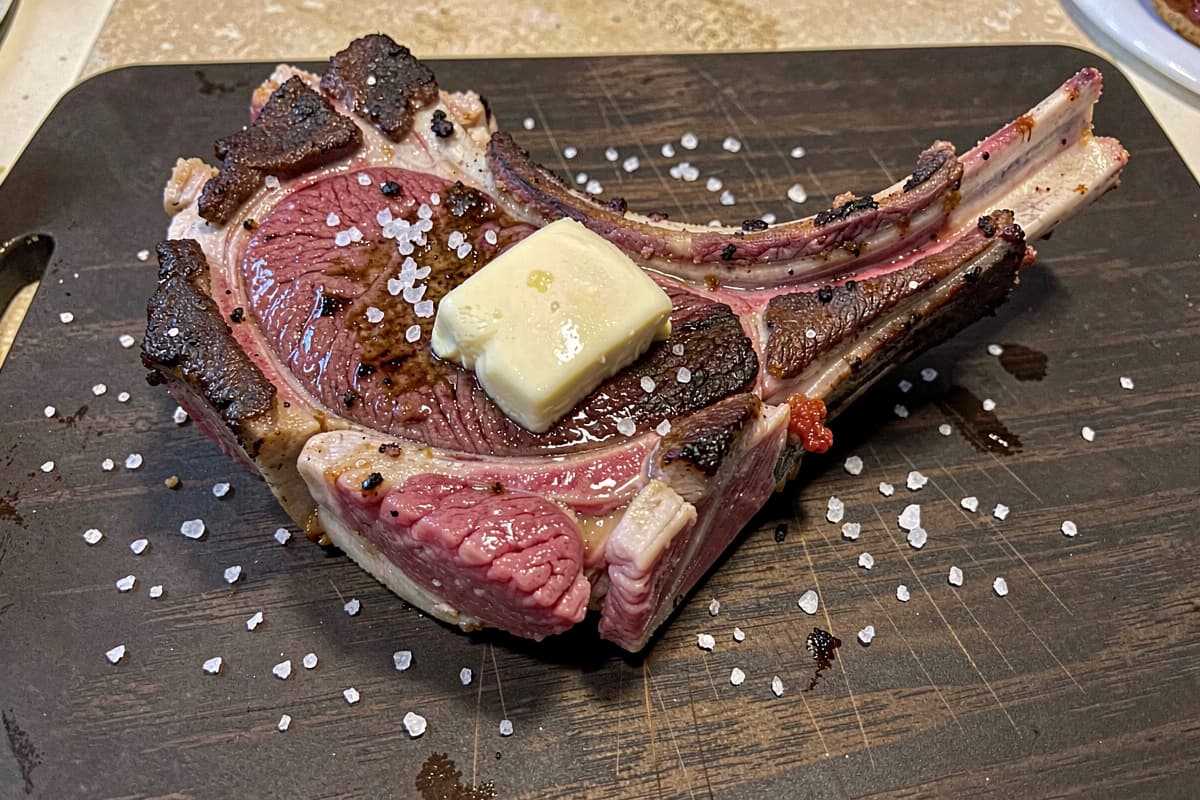
Carnivore pan-seared veal chop is a 1.5-inch thick bone-in veal rib chop (about 14 ounces with the bone) salted and seared in 2 tablespoons of butter for 3 minutes per side, then finished in a 425°F oven for 6 to 8 minutes until internal temperature reaches 140°F. Pull and let carryover bring it to 145°F (the modern USDA safe minimum) during a 5-minute rest. Salt is the only seasoning. Veal is the meat from young cattle (typically under 6 months) — more tender than beef, milder in flavor, and pricier. A 10-ounce cooked serving (one chop minus the bone) delivers 50g protein, 18g fat, and 360 calories. Veal rib chops cost $18 to $30 per pound — more expensive than most beef cuts but cheaper than veal shanks or sweetbreads. The Italian costoletta alla milanese is the traditional preparation; the carnivore version skips the breading and lemon. Most blind tasters describe veal as 'beef with milder flavor and silkier texture' — closer to a tender steak than to chicken.
Ingredients
| Ingredient | Protein | Fat | Calories |
|---|---|---|---|
| 10 oz veal chop cooked, off bone (per serving) | 50g | 12g | 320 |
| 1 tbsp butter remaining (per serving) | 0g | 6g | 40 |
| Coarse salt | 0g | 0g | 0 |
| Per serving | 50g | 18g | 360 |
Macros per serving (after cooking and any fat draining). Source: USDA FoodData Central.
Instructions
- 1
Remove the chop from the fridge 30 minutes before cooking. Preheat oven to 425°F.
- 2
Pat the chop completely dry with paper towels. Salt all sides with 1 tsp coarse salt.
- 3
Heat 2 tbsp butter in a 12-inch oven-safe cast iron skillet over high heat until foaming.
- 4
Place the chop in the skillet. Sear 3 minutes without moving.
- 5
Flip and sear 2 minutes on the second side.
- 6
Stand the chop on its fat-cap edge for 60 seconds to render the fat strip.
- 7
Transfer the skillet to the 425°F oven. Roast for 6 to 8 minutes until internal temperature reaches 140°F.
- 8
Pull at 140°F (rises to 145°F during rest, the modern USDA safe minimum). Rest 5 minutes on a cutting board. Serve whole on the bone or slice off the bone.
Nutrition per Serving
Frequently Asked Questions
What's the difference between veal and beef?
Veal is meat from cattle under 6 months old; beef is from cattle 18 to 30 months old. Veal is paler in color (light pink vs dark red), more tender (less developed connective tissue), and milder in flavor. Veal also has slightly less fat and slightly more moisture. Veal rib chops are essentially baby ribeyes — same cut, smaller scale, milder taste. Cost-wise veal runs 1.5 to 2x the price of beef per pound; the trade-off is texture and tenderness.
Is veal ethical?
Veal-production practices vary widely. Crate-raised veal (the older controversial practice) is largely phased out in the US — the AVA-approved standards now require group-housed calves with access to roughage. 'Pasture-raised veal' is the highest-welfare option, available at some farmers markets and online specialty butchers (US Wellness, Heritage Foods). Standard supermarket veal labeled 'Provimi' or similar comes from group-housed but milk-fed calves. The ethics question is real but the practices have improved substantially in the last 15 years.
Why pull at 145°F?
USDA pull temperature for veal is 145°F (same as pork) — equivalent to medium-doneness with a slight pink center. Above 150°F, veal dries out quickly because the lean meat has no thermal buffer (similar to pork tenderloin). Below 140°F, the texture is still slightly raw. The 140 to 145°F window is the sweet spot for veal chops. Pull at 140°F and let carryover bring it up during the 5-minute rest. Don't overcook.
Track This Meal in Carnivore Max
Log this recipe, track your macros, and stay on top of your carnivore diet.
Download Free on iOS →You Might Also Like
Filet mignon is a 6-8 oz tenderloin steak. Pan-sear in butter 3-4 min/side, baste, rest. 27g protein, 9g fat per 100g cooked. The most tender steak available.
ComparisonA detailed head-to-head comparison of ribeye and sirloin steaks covering macros, micronutrients, flavor profiles, and cost per pound.
ComparisonCompare veal and beef across nutrition, taste, tenderness, cost, and suitability for the carnivore diet.