Whole Roast Chicken — Salt-Only Carnivore Recipe

By Lisa Martin · Mother + Batch-Cook Specialist · Updated 2026-05-08
4-5 lb whole chicken dry-brined 24 hours, roasted at 425°F for 65-75 minutes to 165°F internal. Salt only — no garlic or rosemary. Feeds 4-6.
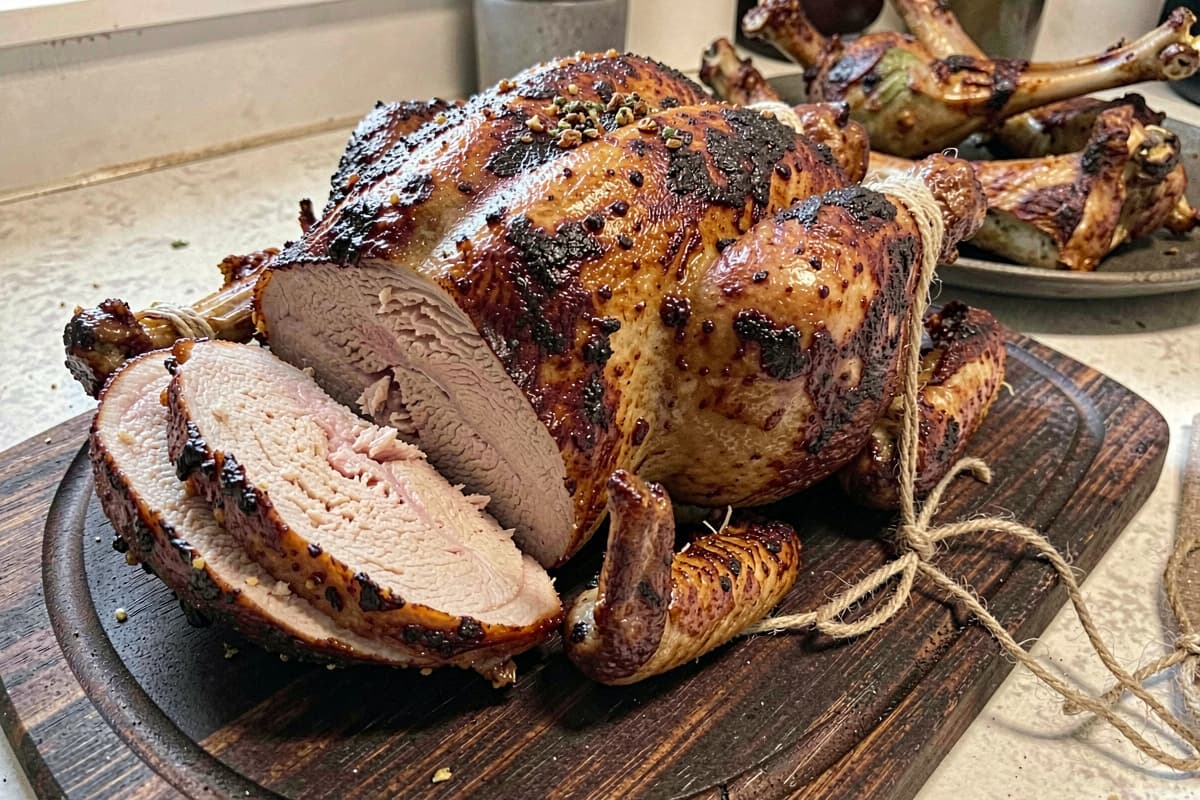
Carnivore whole roast chicken is a 4 to 5 pound whole chicken dry-brined with 1 tablespoon of coarse salt for 24 hours, then roasted at 425°F for 65 to 75 minutes until the breast reaches 165°F and the thigh reaches 175°F. Salt is the only seasoning — no garlic, no rosemary, no lemon, no butter under the skin. The 24-hour dry brine is what produces crisp skin without elaborate technique; the salt draws moisture out and the air-dried surface crisps fast at high oven heat. A 5-ounce mixed-meat serving (breast + thigh) delivers 35g protein, 12g fat, and 260 calories. Whole chickens cost $1.50 to $3 per pound at most grocery stores; a 4.5-pound bird feeds 4 to 6 adults at roughly $2 to $3 per serving — among the cheapest dinner options on the site. Save the bones for a 24-hour bone broth (see related recipes). Total active time: 5 minutes of prep plus the unattended roast.
Ingredients
| Ingredient | Protein | Fat | Calories |
|---|---|---|---|
| 5 oz mixed chicken cooked, skin-on (per serving) | 35g | 12g | 260 |
| Coarse salt (per serving) | 0g | 0g | 0 |
| Per serving | 35g | 12g | 260 |
Macros per serving (after cooking and any fat draining). Source: USDA FoodData Central.
Instructions
- 1
24 hours before cooking: pat the chicken completely dry inside and out. Apply 1 tbsp coarse salt evenly across all surfaces, including under the breast skin and inside the cavity.
- 2
Place the chicken uncovered on a rack in the fridge to dry-brine. The skin will dry tight against the meat — essential for crisping.
- 3
Remove from fridge 30 minutes before cooking. Preheat oven to 425°F.
- 4
Tuck wing tips under the body. Tie the legs together loosely with butcher's twine.
- 5
Place the chicken breast-side up on a wire rack inside a roasting pan. Insert probe thermometer into the thickest part of the breast.
- 6
Roast at 425°F for 65 to 75 minutes. Pull when breast hits 165°F and thigh reaches 175°F.
- 7
If the breast hits target before the thigh, tent the breast with foil and continue cooking until the thigh catches up.
- 8
Rest 15 minutes loosely tented. Carve the breasts off the bone and slice across the grain; pull thigh meat by hand.
Nutrition per Serving
Frequently Asked Questions
Why dry-brine instead of wet-brine?
Dry brining produces crispier skin than wet brining. Wet brine soaks the skin in liquid which then has to evaporate during cooking — hard to do at 425°F before the meat overcooks. Dry brine pulls moisture out of the surface over 24 hours; the dehydrated skin crisps fast in the oven. Wet brine is fine if you have only 4 hours to brine; dry brine is the standard for 24-hour-plus prep timelines.
Why no garlic, no rosemary, no lemon?
All three are plant matter and excluded from strict carnivore. The garlic-rosemary-lemon roast chicken is the standard cultural pairing in Western cuisine; carnivore versions skip all of them. The result is purer-tasting chicken — skin crispier, meat juicier without competing flavors. If you allow some plants, lemon halves in the cavity and a sprig of rosemary are 1-minute additions. This recipe is the strict version.
Should I stuff the cavity?
Don't stuff with bread or vegetables (excluded from carnivore). Some carnivore eaters tuck a few pats of butter inside the cavity to baste the breast from below — this works well and adds about 100 calories per serving. Half a lemon (if you allow some plants) or no stuffing at all are the other options. Avoid stuffing with raw chicken parts (giblets) since they don't reach safe temperature in the cavity environment.
Track This Meal in Carnivore Max
Log this recipe, track your macros, and stay on top of your carnivore diet.
Download Free on iOS →You Might Also Like
Whole chicken backbone removed, flattened, salted, roasted at 450°F for 40 minutes. Half the time of whole-bird roasting with crispier skin.
RecipeWhole turkey dry-brined 24 hours, butter under the skin, smoked at 225°F for 6-7 hours to 165°F. Salt only, no rub. Feeds 10-12 at $2 per serving.
RecipeRich, gelatinous bone broth packed with collagen and minerals. 24-hour slow simmer. 10g protein and 40 calories per cup. Sets to soft gel when cold.