Braised Beef Cheeks (4-Hour Slow Cook)

By Antonio Russo · Italian Heritage Chef · Updated 2026-05-08
2 lb beef cheeks seared and braised in beef broth at 300°F for 4 hours until fork-tender. Salt only. The Italian guancia tradition, carnivore-stripped.
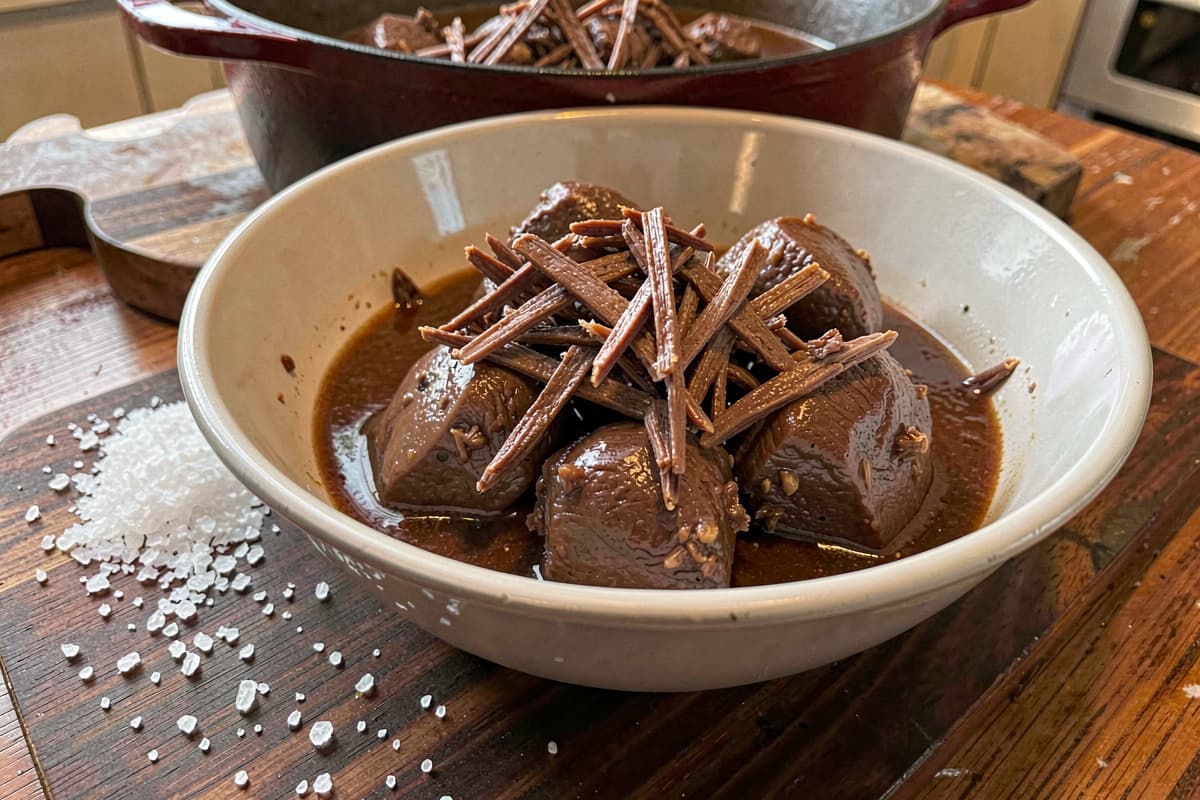
Carnivore braised beef cheeks are 2 pounds of trimmed beef cheek (the masseter muscle) seared in tallow, then braised in 3 cups of beef broth at 300°F for 4 hours until fork-tender. Salt is the only seasoning — no wine, no soffritto, no bay. Beef cheeks are heavy in collagen (the cheek works constantly during chewing) and convert that collagen into gelatin during the long slow braise, producing fork-shred-tender meat with a glossy beef-flavored gravy. A 6-ounce cooked serving delivers 36g protein, 22g fat, and 340 calories. Beef cheeks cost $7 to $12 per pound at butchers and ethnic markets; 2 pounds feeds 4 adults at roughly $4 to $6 per serving. Italian guancia, French joue, Mexican cachete — all use beef cheeks and all build on the same braising principle. The carnivore version drops the regional aromatics and lets the meat speak. Reheats beautifully — flavor improves overnight.
Ingredients
| Ingredient | Protein | Fat | Calories |
|---|---|---|---|
| 6 oz braised beef cheek (per serving) | 36g | 18g | 300 |
| ½ tbsp tallow (per serving) | 0g | 4g | 35 |
| ¾ cup broth concentrate (per serving) | 0g | 0g | 5 |
| Per serving | 36g | 22g | 340 |
Macros per serving (after cooking and any fat draining). Source: USDA FoodData Central.
Instructions
- 1
Preheat oven to 300°F. Pat beef cheeks dry with paper towels.
- 2
Apply 1.5 tsp coarse salt across all sides.
- 3
Heat 2 tbsp beef tallow in a 6-quart Dutch oven over high heat until shimmering.
- 4
Sear cheeks 3 minutes per side, both sides, until deeply browned. Don't crowd; cook in batches if needed.
- 5
Pour 3 cups beef broth into the Dutch oven, scraping up any browned bits. Return all cheeks to the pot — broth should come halfway up the meat.
- 6
Bring to a simmer on the stovetop. Cover and transfer to the 300°F oven.
- 7
Braise for 4 hours, turning the cheeks at the 2-hour mark. Pull when meat falls apart with light fork pressure.
- 8
Skim fat off the surface (or leave it for richer eating). Serve in wide bowls with ½ cup of broth spooned over each portion.
Nutrition per Serving
Frequently Asked Questions
What are beef cheeks exactly?
Beef cheeks are the masseter muscle — the muscle the cow uses to chew constantly throughout its life. The continuous use builds heavy collagen content (more than any other beef cut except oxtail). When braised low and slow, that collagen converts into gelatin, producing the silky melting texture that makes beef cheeks sought-after. Italian, French, and Mexican cuisines all have iconic beef-cheek preparations (guancia, joue, cachete). The cut is increasingly available at standard butchers as 'beef cheek meat.'
Beef cheek vs beef shank?
Both are heavy in connective tissue and respond well to long slow braises, but the textures differ. Beef cheeks shred into fine fibers — almost like pulled pork. Beef shanks slice into solid slabs of meat with a marrow bone center. Cheeks are richer-tasting; shanks are more brothy. Cheeks are smaller (each about 1 lb); shanks are large (cross-cut slabs at 8 to 12 oz each). Cost is similar at $7 to $12 per pound for both. Choose based on the texture you want.
Where do I find beef cheeks?
Most US grocery stores don't display beef cheeks but the meat counter often has them in the back — ask. Latin American markets reliably stock cheeks year-round. Halal and ethnic butchers more reliably than supermarkets. Online specialty butchers (US Wellness Meats, Crowd Cow) ship cheeks at premium prices for grass-fed quality. Cost ranges $7 to $12 per pound at standard stores; grass-fed runs $14 to $20. Trim the silver-skin connective tissue before cooking; what's underneath is solid muscle.
Track This Meal in Carnivore Max
Log this recipe, track your macros, and stay on top of your carnivore diet.
Download Free on iOS →You Might Also Like
Cross-cut beef shanks braised in beef broth at 325°F for 3 hours. Salt only — no wine, no soffritto, no gremolata. Italian technique, carnivore framing.
RecipeCross-cut beef shanks braised in 4 cups of beef broth at 300°F for 4 hours. Salt only — no wine, no soffritto. The marrow-bone payoff dish.
Recipe3 lb oxtail seared and braised in beef broth at 325°F for 4 hours until fall-apart. Salt only — no soy, no wine. The collagen-richest carnivore dish.