Flat Iron Steak (Pan-Seared, 8 Minutes)

By Samantha Brooks · Sous-Vide Specialist · Updated 2026-05-09
Flat iron is a 6-8 oz shoulder steak with ribeye-level tenderness at $8-12/lb. Pan-sear 3-4 min/side. 27g protein, 13g fat per 100g cooked.
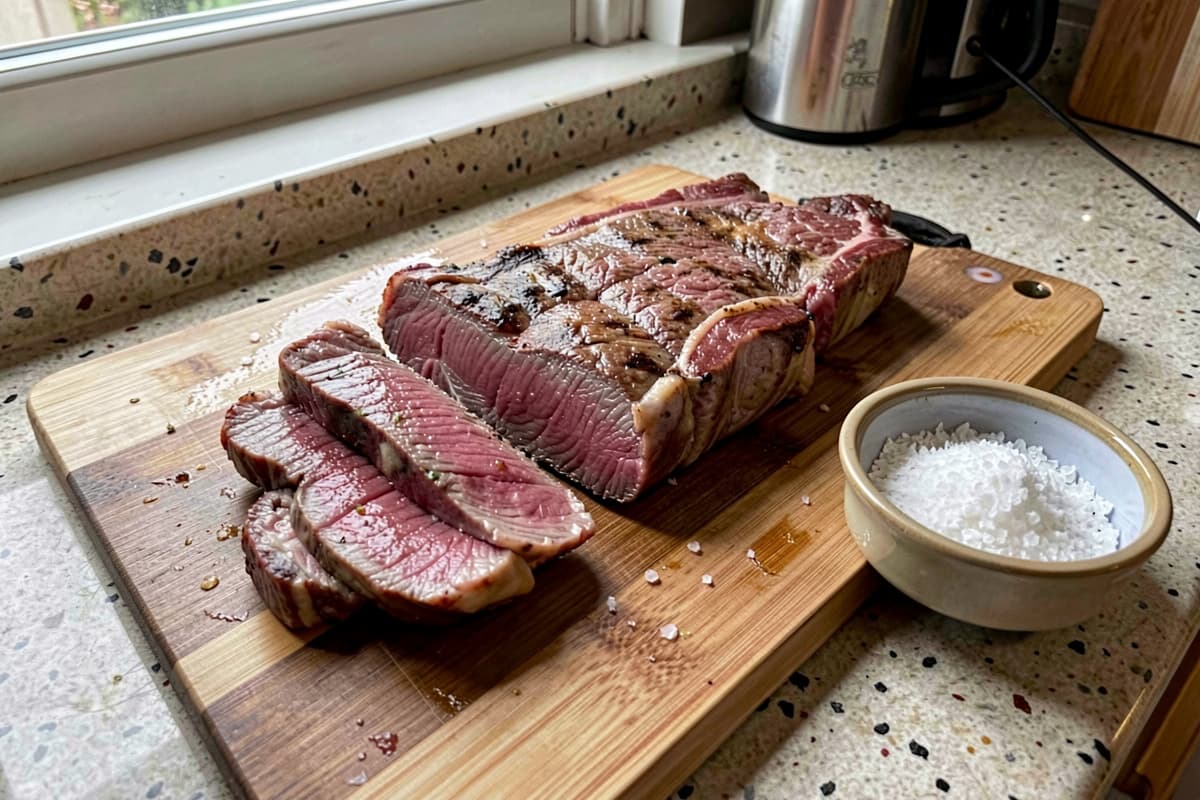
Flat iron steak is a 6 to 8 ounce steak cut from the top blade of the chuck (shoulder). After ribeye and tenderloin, it's the third-most-tender cut on the cow according to USDA muscle profiling, despite running $8 to $12 per pound versus $15-plus for ribeye. A 6-ounce cooked flat iron delivers 46g protein, 22g fat, and 380 calories. The cut has a single muscle band — easier to cook evenly than chuck steaks that have multiple muscles meeting at fat seams. Cooks in 8 minutes total: 3 to 4 minutes per side in a smoking-hot cast iron with butter and salt only. Pull at 130°F for medium-rare; rest 5 minutes; slice across the grain. The grain runs visibly along the long axis of the steak. Flat iron is the cut that put butcher's tenderness comparisons on the map in 2002 when researchers identified the underused muscle.
Ingredients
| Ingredient | Protein | Fat | Calories |
|---|---|---|---|
| 6 oz flat iron cooked | 46g | 22g | 380 |
| 1 tbsp butter (basting) | 0g | 8g | 70 |
| Coarse salt | 0g | 0g | 0 |
| Per serving | 46g | 30g | 450 |
Macros per serving (after cooking and any fat draining). Source: USDA FoodData Central.
Instructions
- 1
Salt both sides of the steak 30 minutes ahead. Pat dry just before cooking.
- 2
Heat a cast iron skillet over high heat until smoking.
- 3
Add 1 tbsp butter, swirl. Place the steak down and don't move it for 3 minutes.
- 4
Flip. Cook the second side for 3 minutes. Tilt the pan and baste for the last 30 seconds.
- 5
Pull at 125°F internal for medium-rare (rises to 130°F during rest).
- 6
Rest 5 minutes on a cutting board.
- 7
Slice across the grain into ¼-inch slices. The grain runs along the long axis.
Nutrition per Serving
Frequently Asked Questions
What does 'across the grain' mean for flat iron?
The flat iron is rectangular and the muscle fibers run lengthwise along the long axis of the steak. Slicing perpendicular to those fibers (across the grain) produces tender bites; slicing along the grain produces tough strips that take real effort to chew. Look at the surface — the visible parallel lines are the grain.
Why is flat iron sometimes called top blade?
It comes from the top blade roast (infraspinatus muscle) of the shoulder. The top blade has a thick connective tissue band running through the middle; butchers split that band into two flat iron steaks. Some butcher counters label it 'top blade steak' or 'flat iron steak' interchangeably — they're the same cut.
Can I cook flat iron rare?
Yes — pull at 115°F internal for rare (cool red center), 125°F for medium-rare (warm red), 135°F for medium. Lean cuts dry out above 140°F, so flat iron is best at medium-rare or below. The dense muscle fibers stay tender at lower temperatures.
Track This Meal in Carnivore Max
Log this recipe, track your macros, and stay on top of your carnivore diet.
Download Free on iOS →You Might Also Like
Top blade is a chuck cut with a single connective band. Pan-sear, slice the band out, eat the two muscles separately. 26g protein per 100g.
RecipeChuck eye is the same muscle as ribeye, butchered from the chuck end. 24g protein, 16g fat per 100g cooked. Pan-sear 4 min/side, $7-10/lb vs $15+ for ribeye.
RecipeA perfectly seared ribeye basted in golden butter — the king of carnivore dinners. 48g protein and 42g fat per 10 oz cooked. Pull at 130°F medium-rare.