Whole Roast Duck (Pekin, Salt-Only)

By Carl Henderson · Retired French Chef · Updated 2026-05-08
5-6 lb Pekin duck dry-brined 24 hours, roasted at 325°F for 90 minutes then 425°F for 15. Salt only. Yields a rich crispy bird and 1+ cups of rendered duck fat.
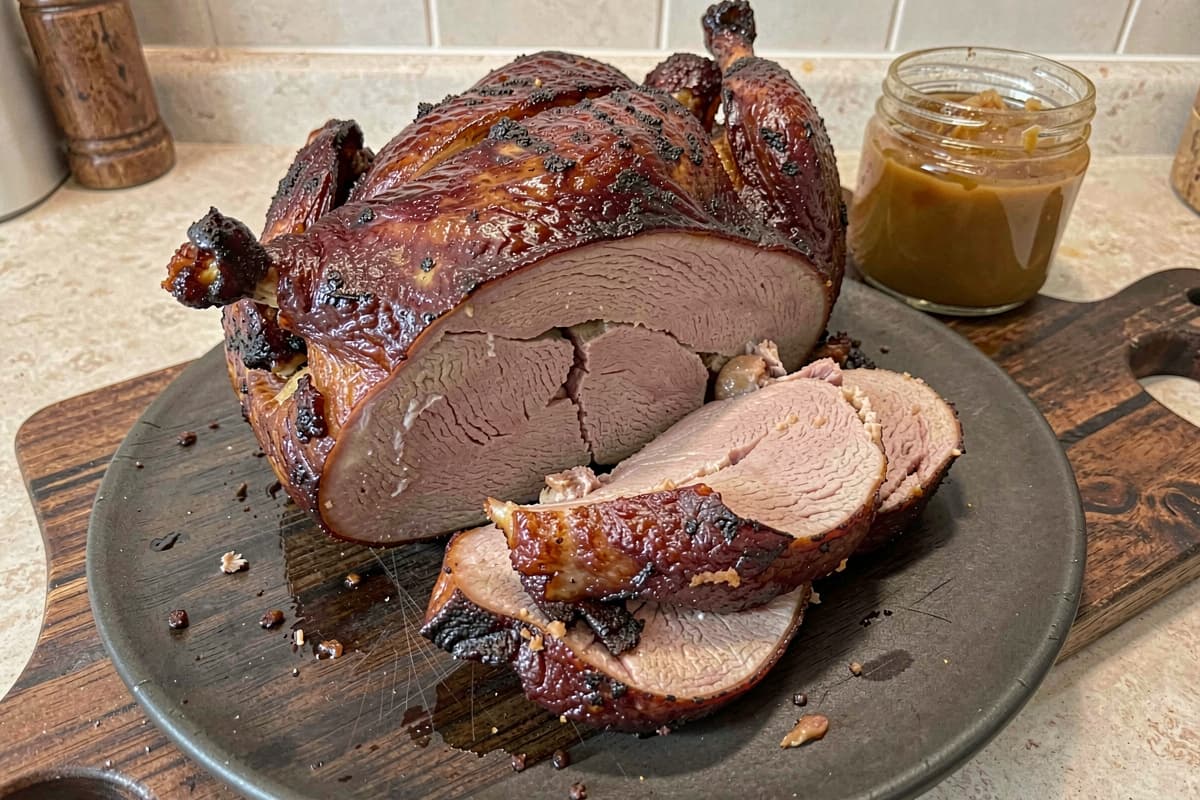
Carnivore whole roast duck is a 5 to 6 pound Pekin duck dry-brined for 24 hours with 1.5 tablespoons of coarse salt, roasted at 325°F for 90 minutes (low-and-slow renders the fat), then blasted at 425°F for 15 minutes to crisp the skin. Salt is the only seasoning. Pull when breast reaches 165°F and thigh reaches 175°F. The two-temperature method is what differentiates duck from chicken — duck has 2 to 3x the subcutaneous fat layer, which needs time at low heat to render before the high-heat finish crisps the skin. A 6-ounce mixed-meat serving (breast + thigh) delivers 28g protein, 24g fat, and 340 calories, plus a yield of roughly 1 to 1.5 cups of rendered duck fat per bird. Whole Pekin ducks cost $5 to $9 per pound; a 5-pound bird feeds 4 adults at roughly $7 to $11 per serving plus the duck fat as a separate kitchen-fat output. Pierce the skin with a fork before roasting to help fat escape during the cook.
Ingredients
| Ingredient | Protein | Fat | Calories |
|---|---|---|---|
| 6 oz mixed roast duck cooked, skin-on (per serving) | 28g | 24g | 340 |
| Coarse salt (per serving) | 0g | 0g | 0 |
| Per serving | 28g | 24g | 340 |
Macros per serving (after cooking and any fat draining). Source: USDA FoodData Central.
Instructions
- 1
24 hours before cooking: pat the duck completely dry inside and out. Trim excess neck-flap fat (save for rendering separately).
- 2
Pierce the skin all over with a fork — about 30 to 40 pricks across the breast, thigh, and back. The pricks should go through the skin and fat layer but NOT into the meat.
- 3
Apply 1.5 tbsp coarse salt across all surfaces including the cavity. Refrigerate uncovered on a rack for 24 hours.
- 4
Preheat oven to 325°F. Place duck breast-side up on a wire rack inside a deep roasting pan (the pan catches significant rendered fat).
- 5
Roast at 325°F for 90 minutes. Internal temperature should be approaching 155°F at the breast. Skin will be golden but not yet crispy.
- 6
Crank oven to 425°F. Continue roasting for 15 minutes until skin is shatteringly crispy and breast reaches 165°F, thigh 175°F.
- 7
Rest 20 minutes loosely tented.
- 8
Carve breasts off the bone, slice across the grain. Pull thigh meat by hand. Strain the rendered fat from the pan through cheesecloth into a glass jar.
Nutrition per Serving
Frequently Asked Questions
Why pierce the skin?
Duck has 2 to 3x the subcutaneous fat layer of chicken. Without pricking the skin, the rendering fat has nowhere to escape during the cook — it pools under the skin and produces a soggy, leathery texture. The 30 to 40 fork pricks give the rendering fat exit points. Done well, you'll see fat actively bubbling out of the pricks during the first 30 minutes. The visual signal that the technique is working.
What about the rendered duck fat?
Strain it. One 5 to 6 pound duck yields roughly 1 to 1.5 cups of pure duck fat. Strain through cheesecloth into a glass mason jar; refrigerate 6 months or freeze 1 year. Smoke point 375°F. Use for searing eggs, basting steaks, sautéing other proteins, or making confit. Commercial duck fat at Whole Foods runs $12 to $18 per cup; the home-rendered version is free as a byproduct of dinner. The fat is arguably the more valuable output of a roast duck than the meat.
Pekin vs Moulard duck for whole-roasting?
Pekin for most home cooks. Pekin ducks are smaller (5 to 7 lbs), milder in flavor, more universally available, and better-priced ($5 to $9 per pound vs $9 to $14 for Moulard). Moulard ducks are larger and gamier — better for special occasions or when you specifically want the deeper duck flavor. Both work with the same recipe technique; adjust cooking time up by 15 to 20 minutes for the larger Moulard.
Track This Meal in Carnivore Max
Log this recipe, track your macros, and stay on top of your carnivore diet.
Download Free on iOS →You Might Also Like
Magret duck breasts scored, salted, seared skin-down 8 min in a cold pan, finished 5 min in oven to 130°F. The classic French method, salt-only.
RecipeDuck legs salt-cured 24 hours, then slow-cooked submerged in duck fat at 200°F for 2.5 hours. The French preservation classic, no thyme or bay.
Recipe4-5 lb whole chicken dry-brined 24 hours, roasted at 425°F for 65-75 minutes to 165°F internal. Salt only — no garlic or rosemary. Feeds 4-6.