Reverse-Sear Standing Rib Roast (Carnivore)

By Emma Clarke · Food Writer · Updated 2026-05-08
5-7 lb 3-bone standing rib roast cooked low at 250°F to 115°F internal, then seared at 500°F. Salt only. The carnivore Sunday-dinner centerpiece.
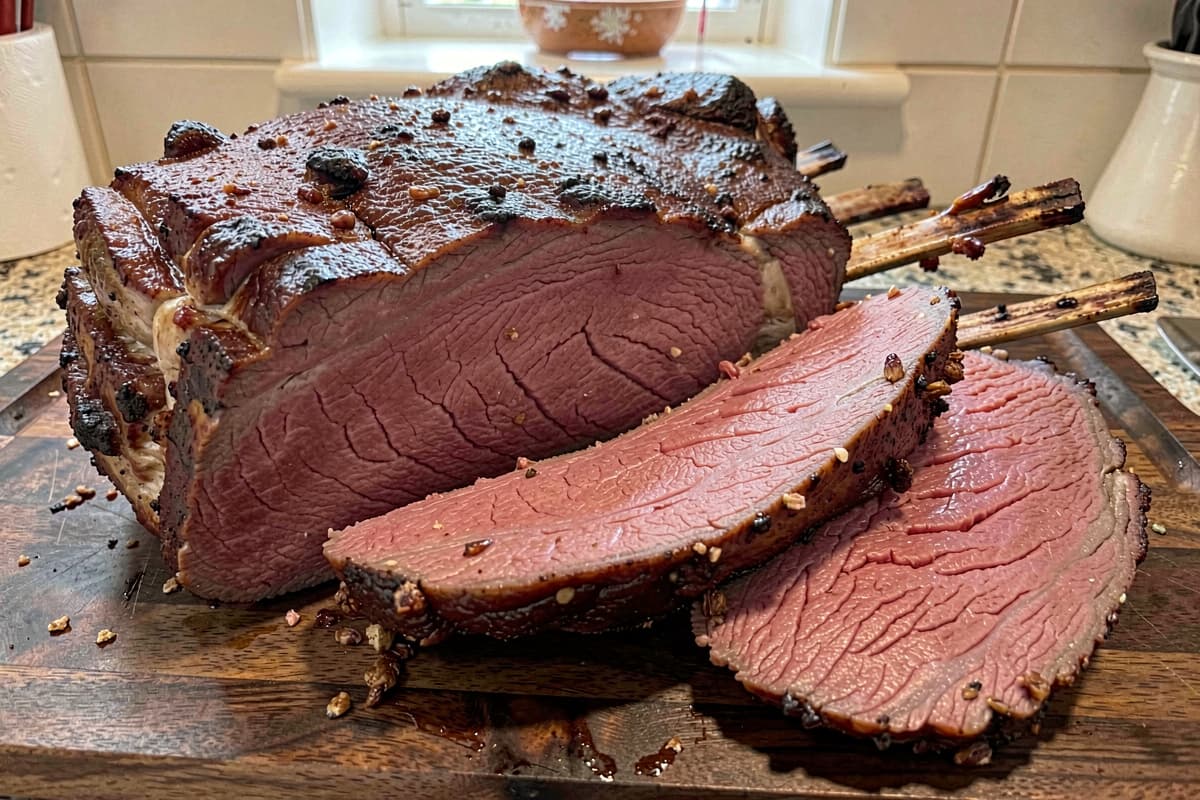
Carnivore standing rib roast is a 5 to 7 pound 3-bone rib roast cooked low at 250°F for about 2.5 hours to an internal temperature of 115°F, then finished at 500°F for 8 to 10 minutes to crust the exterior. The reverse-sear method produces a uniform rosy interior edge to edge with a hard mahogany crust — closer to prime-rib house style than the traditional high-then-low approach. Salt is the only seasoning. A 6-ounce cooked serving delivers 40g protein, 28g fat, and 410 calories. Bone-in rib roast costs $14 to $22 per pound depending on grade (USDA Choice vs Prime); a 6-pound roast feeds 8 to 10 adults at roughly $10 to $14 per serving. Pull from the oven at 125°F since the heavy roast carries 5 to 8 degrees of carryover during the rest, landing at 130 to 133°F medium-rare. Slice between bones for clean portions or across for thinner slices.
Ingredients
| Ingredient | Protein | Fat | Calories |
|---|---|---|---|
| 6 oz standing rib roast cooked (per serving) | 40g | 28g | 410 |
| Coarse salt | 0g | 0g | 0 |
| Per serving | 40g | 28g | 410 |
Macros per serving (after cooking and any fat draining). Source: USDA FoodData Central.
Instructions
- 1
Pat the roast dry. Apply 2 tbsp coarse salt to all surfaces, including the cut ends. Refrigerate uncovered on a rack for 12 to 24 hours to dry-brine.
- 2
Remove from fridge 1 hour before cooking. Preheat oven to 250°F.
- 3
Place the roast bone-side down on a wire rack inside a roasting pan. Insert probe thermometer into the thickest part of the meat avoiding the bone.
- 4
Roast at 250°F until internal temperature reaches 115°F — about 2.5 hours for a 6-pound roast.
- 5
Remove from oven. Crank temperature to 500°F (or as high as your oven goes).
- 6
Once oven is fully preheated, return the roast and sear for 8 to 10 minutes until exterior is deeply browned.
- 7
Pull when internal temperature reaches 125°F (rises to 130-133°F during rest for medium-rare).
- 8
Rest 20 minutes loosely tented. Carve away from the bones in one clean cut, then slice in ½-inch slabs across the grain.
Nutrition per Serving
Frequently Asked Questions
Standing rib roast vs prime rib — same thing?
Yes, mostly. 'Prime rib' is the colloquial name; 'standing rib roast' is the butcher term. Either label refers to the bone-in rib section (ribs 6 through 12) cooked as a roast standing on its bones. 'Prime' technically refers to USDA Prime grade (the top 2% of beef by marbling) but the prime-rib name predates the grading system and applies regardless of grade. USDA Choice is what most grocery stores carry; USDA Prime costs 30 to 40% more.
Bone-in or boneless?
Bone-in. The bones add structural integrity during the long roast and protect the meat closest to them from drying. Bone-in roasts cook 10 to 15% slower than boneless and develop deeper crust because the bones force the meat away from the pan. The trade-off is carving — most home cooks find bone-in roasts harder to slice. The fix: have your butcher cut the bones off and tie them back on with twine; remove twine after roasting for easy slicing.
Why reverse-sear instead of high-then-low?
Reverse-sear (low first, hard sear last) produces uniform color from edge to edge — the entire interior reaches the same temperature before the sear adds the crust. High-then-low (sear first, finish slow) leaves a gradient: well-done band right under the crust, pink center. For roasts above 4 pounds, the gradient is visually unappealing on a cut slice. Reverse-sear has been the standard approach in fine-dining kitchens since the late 2000s.
Track This Meal in Carnivore Max
Log this recipe, track your macros, and stay on top of your carnivore diet.
Download Free on iOS →You Might Also Like
Bone-in prime rib — 4-rib roast (8-10 lb) at 250°F oven to 115°F, sear at 500°F. Salt only. 24g protein, 18g fat per 100g. Feeds 8-10.
RecipeReverse sear: 250°F oven to 115°F internal, then 500°F sear 8 minutes. Edge-to-edge medium-rare for an 8-12 lb prime rib roast. 24g protein per 100g.
Recipe4-5 lb trimmed tenderloin roasted at 425°F for 35-45 minutes to 130°F internal. Salt and butter only. The cleanest centerpiece roast for 8 people.