Slow-Cooked Beef Tongue (Lengua)

By Alicia Reyes · Hispanic Carnivore Community Lead · Updated 2026-05-08
Whole beef tongue simmered in salted water for 3-4 hours until tender, then peeled and sliced. Salt only — no bay, no peppercorn. The Mexican-Texan classic.
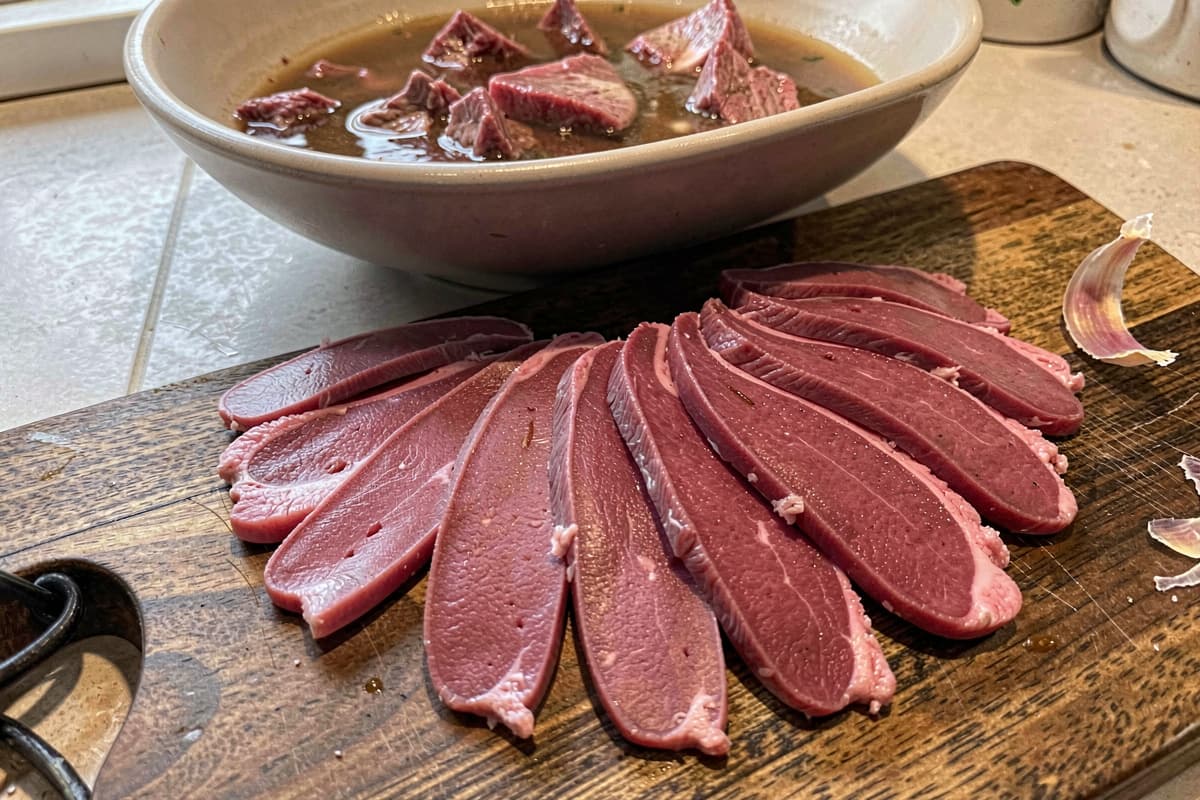
Carnivore slow-cooked beef tongue (lengua) is a 3-pound whole beef tongue submerged in salted water and simmered for 3 to 4 hours at a bare simmer (just below boiling) until a fork slides through the thickest part with no resistance. Salt is the only seasoning — no bay leaves, no peppercorns, no vegetables. After cooking, the rough outer skin peels off in one sheet to reveal tender pink meat that slices like a roast. A 4-ounce serving delivers 22g protein, 18g fat, and 250 calories. Beef tongue costs $5 to $9 per pound at most grocery stores and Latino markets; a single 3-pound tongue feeds 6 to 8 adults at roughly $2 to $4 per serving. The texture is dense and beefy — most blind tasters describe it as 'tender pot roast' rather than as organ meat. Slice thin across the grain for taco-style portions or thick across the grain for plate-style. Whole tongues are a Mexican and Texan staple; the carnivore version skips the cilantro and lime.
Ingredients
| Ingredient | Protein | Fat | Calories |
|---|---|---|---|
| 4 oz beef tongue cooked, peeled (per serving) | 22g | 18g | 250 |
| Coarse salt (per serving) | 0g | 0g | 0 |
| Per serving | 22g | 18g | 250 |
Macros per serving (after cooking and any fat draining). Source: USDA FoodData Central.
Instructions
- 1
Rinse the tongue under cold water. Place in a 6-quart pot.
- 2
Cover with cold water — about 8 to 10 cups, fully submerging the tongue with 2 inches of water above the surface.
- 3
Add 1 tbsp coarse salt.
- 4
Bring to a boil, then immediately reduce to a bare simmer (small bubbles barely breaking the surface). High simmer toughens the meat; low simmer renders it tender.
- 5
Cook covered 3 to 4 hours, checking at 3 hours. The tongue is done when a fork slides through the thickest part with no resistance.
- 6
Lift the tongue from the broth with tongs onto a cutting board. Let cool for 10 minutes — easier to peel when slightly cool but still warm.
- 7
Peel the rough outer skin off — it should come off in one sheet with light pulling. Discard the skin.
- 8
Slice the tongue thin across the grain for taco-style, or thick (½-inch) for plate-style. Save the cooking broth for soups (it's beef-flavored salted water).
Nutrition per Serving
Frequently Asked Questions
What does beef tongue taste like?
Most blind tasters identify it as 'tender pot roast' or 'a fattier brisket.' The flavor is purely beef — no organ-meat mineral notes. The texture is dense and slightly chewy, more like a pot roast than a steak. Tongue is muscle (it's the muscle the cow uses every time it eats), so it cooks more like other muscle cuts than like classic organ meats (liver, kidney). For carnivore eaters easing into nose-to-tail, tongue is one of the gentlest entry points after heart.
Why peel the skin?
The outer skin of the tongue is rough textured, bitter, and tough — inedible even after slow cooking. The boil tenderizes the muscle underneath but the skin stays unpalatable. The peel comes off easily after cooking but stays glued to the meat before — that's why this is a slow-simmer recipe, not a sear-then-slow recipe. Skip the peel and you'll discover why the dish is always sliced and served with the skin removed.
Whole vs sliced tongue?
Whole tongue is the standard format at most stores and butchers. Pre-sliced tongue (cooked, peeled, ready-to-heat) shows up in some delis at 2 to 3x the price per pound. Cured tongue (similar to corned beef preparation) is a separate product. For this recipe, buy the cheapest fresh whole tongue available. Frozen tongues are common — thaw fully in the fridge for 48 hours before cooking. The cooking time is the same.
Track This Meal in Carnivore Max
Log this recipe, track your macros, and stay on top of your carnivore diet.
Download Free on iOS →You Might Also Like
2 lb beef cheeks seared and braised in beef broth at 300°F for 4 hours until fork-tender. Salt only. The Italian guancia tradition, carnivore-stripped.
RecipeCorned beef brisket soaked 4 hours to remove excess salt, then smoked at 225°F for 5-6 hours to 195°F. The carnivore pastrami — no peppercorn rub.
RecipePork shoulder smoked low-and-slow for 12 hours, salt-only seasoning, no sauce. 8 servings of fall-apart tender pulled pork at $4-5 per serving.