Smoked Pulled Pork (Carnivore)

By James O'Brien · BBQ Pit Master
Pork shoulder smoked low-and-slow for 12 hours, salt-only seasoning, no sauce. 8 servings of fall-apart tender pulled pork at $4-5 per serving.
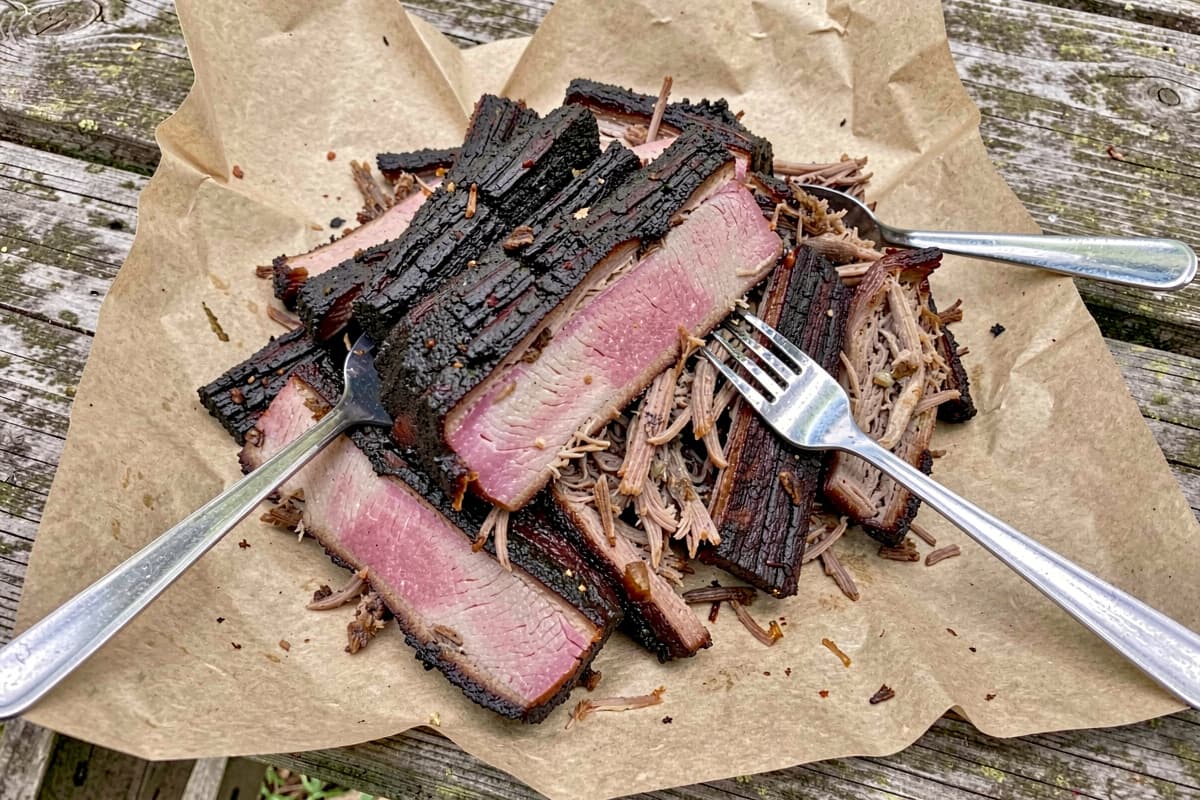
Carnivore smoked pulled pork is a 4-pound bone-in pork shoulder smoked at 225°F for 10 to 12 hours, then pulled into shreds. Salt is the only seasoning — no rubs with sugar or paprika, no sauce. The long cook breaks down the connective tissue and renders the marbled fat throughout the meat, producing 8 servings of 6 oz pulled pork at 30g protein, 20g fat, and 290 calories each. Internal target is 203°F (when the meat shreds with light pressure). The bark forms naturally from salt and smoke; the inside stays moist because pork shoulder has 19g of fat per 100g cooked. Total cost: about $24 for the cut, yielding $3 per serving. Stores 4 days refrigerated or 3 months frozen. Each 6 oz serving costs about $3 in raw cuts, making it one of the cheapest dinner options for batch eating. The pink smoke ring just under the bark forms in the first 4 hours; if your smoker can't hold 225°F that long, use a 250°F oven and accept slightly less smoke flavor.
Ingredients
| Ingredient | Protein | Fat | Calories |
|---|---|---|---|
| 6 oz pulled pork shoulder (per serving, after cooking) | 30g | 20g | 290 |
| Coarse salt (per serving) | 0g | 0g | 0 |
| Wood smoke (no calories) | 0g | 0g | 0 |
| Per serving | 30g | 20g | 290 |
Macros per serving (after cooking and any fat draining). Source: USDA FoodData Central.
Instructions
- 1
Pat the pork shoulder dry with paper towels. Apply coarse salt generously on all sides — about 2 tbsp total.
- 2
Refrigerate uncovered on a wire rack for 12 to 24 hours to dry-brine. The salt penetrates and the surface dries for better bark formation.
- 3
Heat the smoker to 225°F. Add wood chunks for smoke (oak gives mild background flavor; hickory or apple add more pronounced smoke).
- 4
Place the pork shoulder fat-cap up on the grate. Insert a probe thermometer into the thickest part of the meat, avoiding the bone.
- 5
Cook at 225°F until internal temp reaches 165°F (about 6 hours). The bark forms during this phase.
- 6
Wrap in butcher paper or foil. Continue cooking until internal temp reaches 203°F (another 4-6 hours).
- 7
Rest wrapped in a cooler for 1 hour. Pull apart with two forks — the meat should shred under light pressure. Discard the bone.
- 8
Serve immediately, or refrigerate in 6 oz portions for meal prep. Reheats well in a hot skillet for 90 seconds per side.
Nutrition per Serving
Frequently Asked Questions
Can I make this without a smoker?
Yes. Use a 250°F oven for the same time (about 12 hours). You lose the smoke flavor but gain ease. The internal temp targets are identical: 165°F for wrap, 203°F for pull. For some smoke flavor without a smoker, add 1 tsp of smoked salt to the dry brine instead of regular coarse salt.
Why no rub or sauce?
Most BBQ rubs contain sugar (brown sugar, molasses) and most BBQ sauces contain large amounts of sugar plus seed oils. Both are excluded on carnivore. Salt + smoke is enough — pork shoulder has rich enough flavor on its own that traditional barbecue rubs were never necessary, just popular.
How long does cooked pulled pork keep?
4 days refrigerated in a sealed container. Mix in 2-3 tbsp of the rendered fat (saved from the smoker drip pan) before storing — this keeps the meat moist during reheats. Freezes well in vacuum-sealed bags for 3 months. Reheat from frozen in a skillet over medium heat for 4-5 minutes with the lid on.
Track This Meal in Carnivore Max
Log this recipe, track your macros, and stay on top of your carnivore diet.
Download Free on iOS →You Might Also Like
Crunchy outside, melt-in-your-mouth tender inside. Scored, salted, slow-roasted 90 min then crisped at 450°F. 22g protein, 46g fat per 6 oz cooked.
RecipeRich, gelatinous bone broth packed with collagen and minerals. 24-hour slow simmer. 10g protein and 40 calories per cup. Sets to soft gel when cold.
ComparisonCompare beef tallow and ghee across nutrition, smoke point, flavor, and cost. Find out which cooking fat is best for the carnivore diet.