Beef Tallow vs Ghee: Which Fat Is Best?

By Elena Petrov, PhD · Food Scientist · Published April 2026
Compare beef tallow and ghee across nutrition, smoke point, flavor, and cost. Find out which cooking fat is best for the carnivore diet.
| Per 100g cooked | Beef Tallow | Ghee |
|---|---|---|
| Protein | 0g | 0g |
| Fat | 100g | 100g |
| Price/lb (avg) | $8.99 | $12.99 |
Verdict: Beef tallow is the purest carnivore option — cheaper, dairy-free, and great for high-heat cooking. Ghee wins on versatility and vitamin content. Use tallow as your everyday fat and ghee for added flavor when desired.
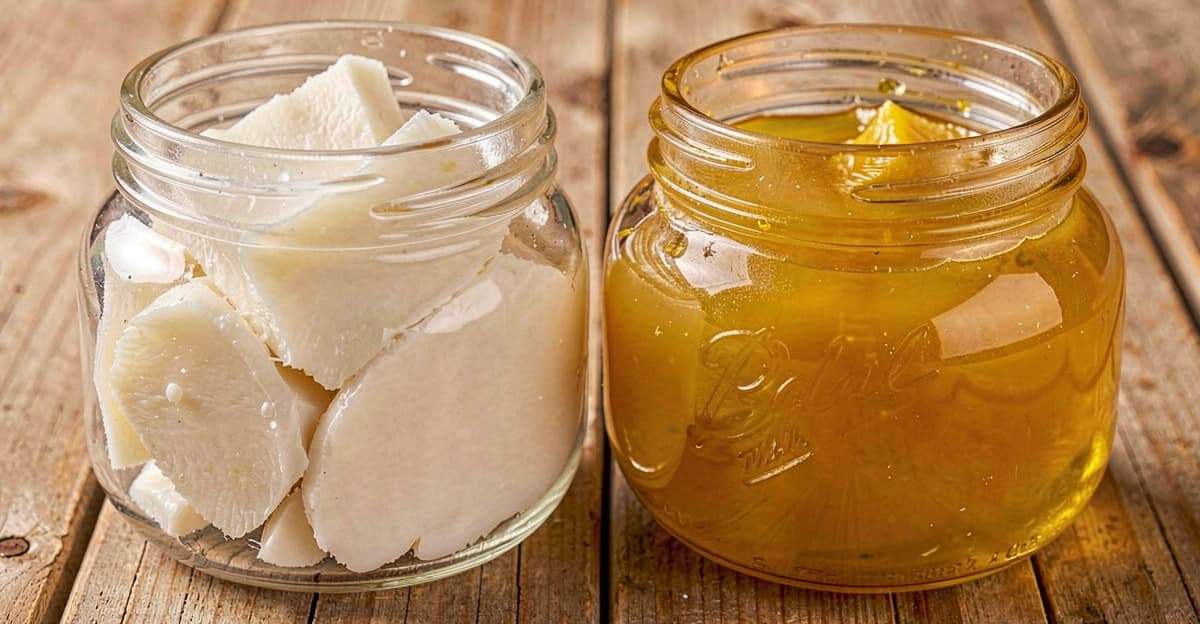
Quick Comparison (per 100g cooked)
| Nutrient | Beef Tallow | Ghee |
|---|---|---|
| Protein | 0g | 0g |
| Fat | 100g | 100g |
| Calories | 902 | 900 |
| Iron | 0mg | 0mg |
| Price/lb | $8.99 | $12.99 |
Nutrition data per 100g cooked. Source: USDA FoodData Central
Nutritional Breakdown
Both beef tallow and ghee are nearly pure fat at around 900 calories per 100g. Tallow is about 50 percent saturated fat, 42 percent monounsaturated, and 4 percent polyunsaturated. Ghee is roughly 62 percent saturated, 29 percent monounsaturated, and 4 percent polyunsaturated. Ghee contains small amounts of fat-soluble vitamins A, D, E, and K2. Tallow is a good source of stearic acid, a saturated fat associated with improved metabolic health.
Smoke Point and Cooking Performance
Beef tallow has a smoke point of around 400 degrees F (205 degrees C), making it excellent for high-heat searing and frying. Ghee has a slightly higher smoke point at 450 degrees F (232 degrees C), giving it an edge for the hottest cooking applications. Both are stable fats that do not oxidize easily, unlike seed oils. For everyday cast iron cooking, either works perfectly.
Flavor Profile
Tallow has a subtle, savory beef flavor that complements steaks, burgers, and roasts without overpowering them. Ghee has a rich, nutty, slightly sweet flavor from the milk solids that were browned during clarification. Some carnivore dieters prefer tallow for its neutral meatiness, while others love the depth ghee adds to eggs and pan sauces.
Cost and Availability
Beef tallow runs about $8.99 per pound when purchased rendered, or nearly free if you render it yourself from suet trimmings. Ghee costs around $12.99 per pound and is widely available in grocery stores. For the most budget-friendly approach, ask your butcher for beef suet and render your own tallow at home.
Which Is Better for the Carnivore Diet?
Strict carnivore dieters often prefer beef tallow since it comes entirely from beef with no dairy involvement. Ghee is technically clarified butter with milk solids removed, so most carnivore frameworks consider it acceptable. If you tolerate dairy well, ghee adds variety. If you are dairy-free or strict carnivore, stick with tallow. Track your fat intake in Carnivore Max to see how different cooking fats affect your daily macros.
The Verdict
Beef tallow is the purest carnivore option — cheaper, dairy-free, and great for high-heat cooking. Ghee wins on versatility and vitamin content. Use tallow as your everyday fat and ghee for added flavor when desired.
Frequently Asked Questions
Is beef tallow healthier than ghee?
Both are healthy animal fats. Tallow is higher in stearic acid and completely dairy-free. Ghee contains more fat-soluble vitamins (A, D, E, K2). Neither contains harmful trans fats or oxidation-prone polyunsaturated fats.
Can I use ghee on the carnivore diet?
Yes. Ghee is clarified butter with virtually all milk proteins and lactose removed. Most carnivore diet frameworks include ghee as an approved fat, even for those who avoid regular dairy.
Which has a higher smoke point, tallow or ghee?
Ghee has a higher smoke point at approximately 450 degrees F versus 400 degrees F for beef tallow. Both are well-suited for high-heat cooking methods like searing and frying.
How do I render beef tallow at home?
Cut beef suet into small pieces, place in a slow cooker on low for 8 to 12 hours, and strain through cheesecloth. Store in mason jars at room temperature for months. One pound of suet yields roughly 12 to 14 ounces of tallow.
Track Your Macros with AI
Track your macros instantly — describe what you ate and our AI does the rest.
Download Free on iOS →