Best Meats for the Carnivore Diet (Ranked)

By Marcus Whitley · Third-Generation Butcher · Published 2026-05-08
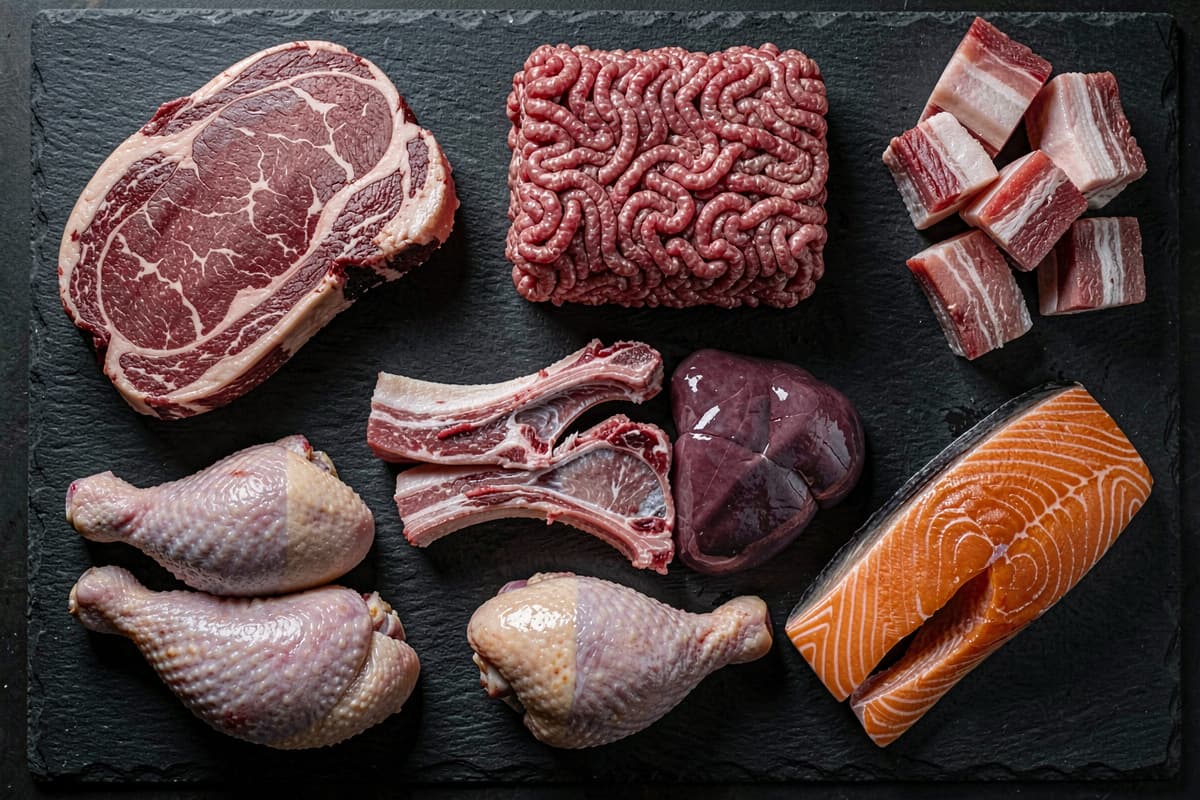
The best meats for the carnivore diet are the ones that hit four marks at once: complete protein with all essential amino acids, high enough fat content to be satiating, dense enough micronutrient profile to cover what plants would otherwise provide, and cost low enough to eat daily. The 12 cuts below are ranked by that combined value, with macros per 100g cooked. Beef ribeye and chuck roast top the list because they balance fat (18-20g per 100g) with protein (24-26g) at an accessible price ($8-12/lb). Pork belly leads on fat density (53g per 100g) and budget ($4-6/lb). Sardines are the highest-omega-3 option at any price ($1.50-3 per can). Organ meats — beef liver and beef heart — fill the micronutrient role that fruits and vegetables would otherwise play. The cuts to skip are listed at the end.
- 1Beef Ribeye
$12-17/lb · beef whole-muscle
The carnivore standard. 24g protein, 18g fat, 263 cal per 100g cooked. Marbling gives it the best flavor-per-bite of any common cut. Cost is the only downside — daily ribeye runs $700+/month per person. Use as the centerpiece 1-3 dinners per week.
Per serving: 24g protein · 18g fat · 263 cal
- 280/20 Ground Beef
$5-7/lb · beef ground
The workhorse of weekday carnivore eating. 26g protein, 20g fat, 287 cal per 100g cooked. Versatile (smash burgers, meatballs, plain skillet-browned), cheap, and renders just enough fat for the lacy crust on smash burgers. Buy 73/27 if your butcher carries it for even more fat density.
Per serving: 26g protein · 20g fat · 287 cal
- 3Pork Belly
$4-6/lb · pork whole-muscle
The highest-fat meat on the list at 53g per 100g cooked. 16g protein, 518 cal per 100g. Roast as crispy bites; cook the rendered fat into your other meals. Cheap and dense — the budget answer to 'how do I hit 150g of fat per day.'
Per serving: 16g protein · 53g fat · 518 cal
- 4Sardines (canned, in olive oil)
$1.50-3 per can · seafood
Highest omega-3 for the money. One 3.75 oz can has 22-25g protein, 11g fat, 700mg of EPA + DHA omega-3, and 250mg of calcium from the soft bones. Wild Planet and King Oscar are the clean-label brands. Lowest mercury option in the seafood category.
Per serving: 23g protein · 11g fat · 200 cal
- 5Beef Liver
$3-5/lb · beef organ
Nature's multivitamin. 100g of cooked beef liver gives you 600% of daily vitamin A, 1,200% of B12, 700% of copper, and 50% of riboflavin. The trade-off is the strong organ flavor; most people eat it hidden in ground beef at a 4:1 ratio. 4 oz once a week is the practical minimum.
Per serving: 27g protein · 4g fat · 175 cal
- 6Lamb Chops (loin)
$13-18/lb · lamb
26g protein, 14g fat, 234 cal per 100g cooked. More omega-3 than beef due to grass-finished feeding, plus naturally higher CLA. Distinct gamey flavor — break up monotony if you eat ribeye every other day. Don't overcook; pull at 130°F.
Per serving: 26g protein · 14g fat · 234 cal
- 7
Beef Short Ribs
$7-10/lb · beef whole-muscle
Almost as fatty as pork belly (28g fat per 100g cooked) with the depth of beef flavor. Needs 4-5 hours of low-and-slow cooking to render. The single most rewarding cut to cook well; not for weeknights. 22g protein, 36g fat, 400 cal per 100g.
Per serving: 22g protein · 36g fat · 400 cal
- 8
Bone-In, Skin-On Chicken Thighs
$2-4/lb · poultry
Cheapest quality protein in carnivore eating. 25g protein, 16g fat, 245 cal per 100g cooked. The skin is critical — boneless skinless thighs cook lean and dry, with the skin you get satiating fat. Don't bother with chicken breast.
Per serving: 25g protein · 16g fat · 245 cal
- 9
Pork Shoulder
$3-5/lb · pork whole-muscle
The meal-prep MVP. 25g protein, 19g fat, 269 cal per 100g cooked. Slow-cook 4 lbs at 225°F for 6-8 hours, shred, eat for a week. Dense, fatty, batch-friendly, and cheap.
Per serving: 25g protein · 19g fat · 269 cal
- 10
Wild Salmon
$10-18/lb · seafood
20g protein, 13g fat, 200 cal per 100g cooked. Very high in EPA + DHA omega-3 (1.5g per 100g) and vitamin D. Skip farmed Atlantic salmon when possible — wild king or sockeye is dramatically better on omega-3 ratio. Pan-sears in 8 minutes.
Per serving: 20g protein · 13g fat · 200 cal
- 11
Beef Heart
$3-5/lb · beef organ
The cheapest pure-muscle meat at the butcher. 28g protein, 5g fat, 150 cal per 100g cooked. Tastes like cleaner, leaner sirloin — most people who hesitate at 'heart' eat it without realizing. High in CoQ10 (mitochondrial co-factor). Quick-cook only — overcooked heart is rubber.
Per serving: 28g protein · 5g fat · 150 cal
- 12Eggs
$3-5/dozen · eggs
Cheapest complete protein. Per large egg: 6g protein, 5g fat, 70 cal, all 9 essential amino acids, plus choline and fat-soluble vitamins. 3-6 eggs daily is standard. Pasture-raised has 30-50% more omega-3 if you can swing the $7-12/dozen cost.
Per serving: 6g protein · 5g fat · 70 cal
Cuts to skip on carnivore
Lean cuts that don't earn their place. Chicken breast (3g fat per 100g), turkey breast (1g fat), pork tenderloin (4g fat), eye of round (5g fat). All taste fine, but on a high-fat diet they leave you hungry. Replace with the higher-fat alternatives in the list above.
Processed meats with sugar and additives. Most commercial bacon (0.5-2g sugar per slice), most breakfast sausages (1-3g carbs per link from binders), deli meats (sugar + dextrose + soy), pre-marinated 'tenderloins' (sugar + starch + preservatives). Read labels.
Imitation seafood. 'Crab' sticks (surimi) are pollock plus starch and sugar. Real crab is fine; surimi is not.
High-mercury fish at high frequency. Swordfish, king mackerel, shark, big-eye tuna — limit to monthly. Sardines, anchovies, mackerel, salmon, and shrimp are all low-mercury and safe at any frequency.
Building a balanced carnivore meat rotation
Daily staples (every day). 80/20 ground beef OR ribeye, eggs, salt. These are the foundation.
Weekly rotation (2-3x per week). Pork belly, sardines, lamb, chicken thighs, salmon. These add variety and broaden the micronutrient profile.
Weekly micronutrient (1x per week minimum). Beef liver (4 oz, often as hidden bites). Bone broth (2-3 cups per week).
Special occasions. Tomahawk steak, lamb shoulder, beef short ribs, smoked brisket. The expensive or time-intensive cuts that aren't weeknight food.
Most weekday carnivore eating ends up rotating through 8-10 cuts. The list above hits all of them.
Frequently Asked Questions
Is grass-fed beef worth the price?
Marginally. Grass-fed has 30-50% more omega-3 and roughly 5x the conjugated linoleic acid (CLA) of grain-finished beef. The cost premium is $4-7 per lb. For most people the practical answer is: prioritize buying enough beef to hit your protein target before paying premium for grass-fed. If your budget can absorb it, grass-fed is a real upgrade.
What's the cheapest way to eat carnivore?
Build the diet around 80/20 ground beef ($5-7/lb), pork belly ($4-6/lb), eggs ($3-5/dozen), and sardines ($1.50-3/can). Rotate cheap organ meats (beef heart, beef liver at $3-5/lb) for micronutrients. A week of carnivore eating on this base costs $50-80 per person.
What about chicken — is it bad for carnivore?
Not bad, just less satiating than red meat at equivalent calories. Chicken thighs with skin are fine and cheap. Chicken breast and turkey breast are too lean — you'll get hungry faster. Most carnivore eaters use chicken thighs as a budget rotation 1-2 times a week, not as a daily protein.
Are organ meats really necessary?
Not strictly, but they fill micronutrient gaps that pure muscle meat doesn't. Vitamin A, copper, folate, and CoQ10 are all dramatically higher in liver and heart than in steak. People doing carnivore for years without organ meats sometimes show deficiencies on labs. The minimum viable practice is 4 oz of liver once a week.
What's the best meat for weight loss?
Lean-ish red meat — sirloin (8g fat per 100g), 90/10 ground beef, beef heart, eye of round. Lower-fat cuts cut total calories without sacrificing protein. The trade-off is satiety: you'll need to add cooking fat (butter, tallow) to make these meals filling. Most people lose weight faster on slightly leaner cuts plus added butter than on ribeye eaten to satiety.
You Might Also Like
A detailed head-to-head comparison of ribeye and sirloin steaks covering macros, micronutrients, flavor profiles, and cost per pound.
ComparisonA detailed comparison of lamb and beef covering protein, fat, calories, iron, price, and which is better for carnivore diet success.
ComparisonFind out how tomahawk and ribeye steaks compare in nutrition, size, cooking method, and price. Are you paying more just for the bone?