Schmaltz (Rendered Chicken Fat)

By Lisa Martin · Mother + Batch-Cook Specialist · Updated 2026-05-08
Render 1 lb chicken skin and fat into 12 oz of schmaltz over 90 minutes. Cooking fat with deep poultry flavor — the Jewish-deli classic, carnivore-aligned.
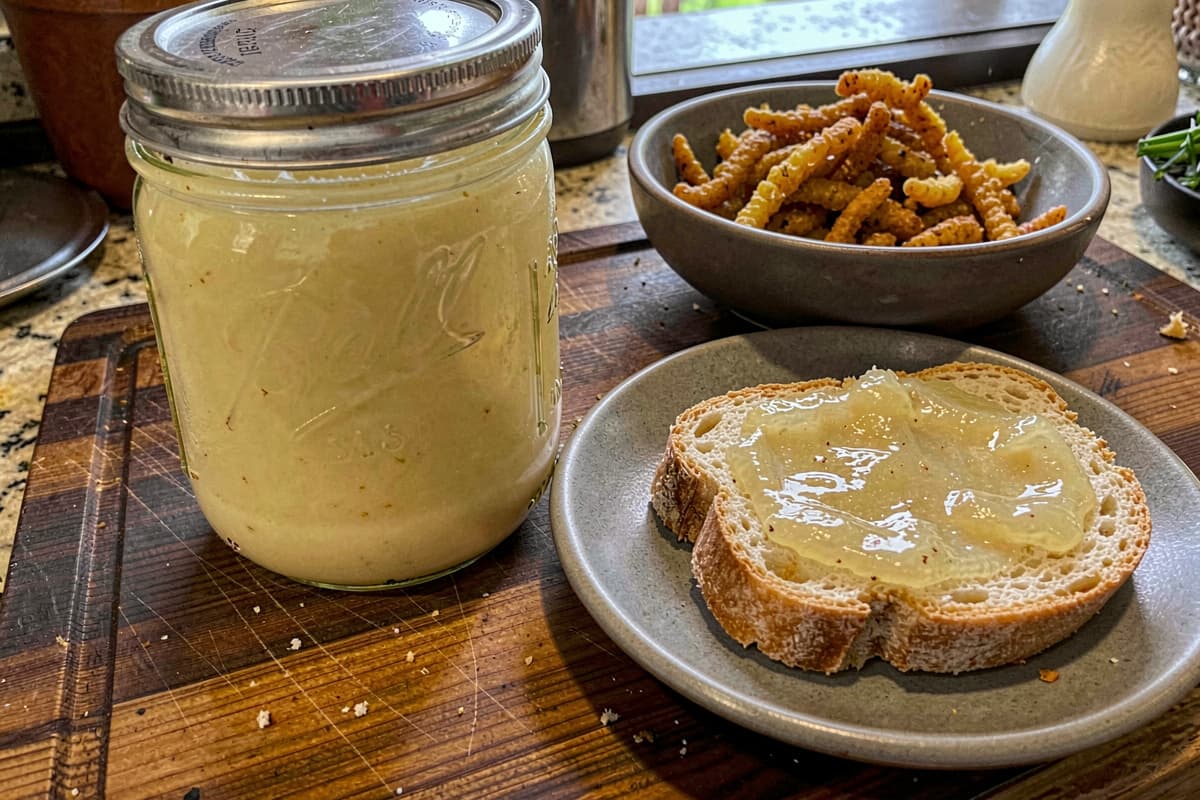
Carnivore schmaltz is rendered chicken fat — 1 pound of chicken skin and fat trimmings (saved from butchering whole birds or asked for at the meat counter) chopped fine and cooked over low heat for 90 minutes until the fat liquefies and the connective bits crisp into golden gribenes. Yields about 12 ounces of strained schmaltz plus 4 ounces of crunchy gribenes. Salt is the only seasoning. Schmaltz is the cooking fat of Eastern European Jewish tradition — used for searing, frying eggs, basting roasted poultry, and as a butter substitute. Stores 6 months refrigerated, 1 year frozen. A 1-tablespoon serving delivers 0g protein, 13g fat, and 115 calories. Chicken skin and fat trimmings cost $0 to $2 per pound at most butchers (often given away for free); commercial schmaltz at Whole Foods runs $14 per 8-ounce jar. Making at home costs $1 to $2 per cup with the bonus of gribenes — small crunchy pieces of crisped chicken skin that are the rendering byproduct most cooks consider the actual prize.
Ingredients
| Ingredient | Protein | Fat | Calories |
|---|---|---|---|
| 1 tbsp schmaltz (per serving) | 0g | 13g | 115 |
| Salt (per serving) | 0g | 0g | 0 |
| Per serving | 0g | 13g | 115 |
Macros per serving (after cooking and any fat draining). Source: USDA FoodData Central.
Instructions
- 1
Chop the chicken skin and fat trimmings into ½-inch pieces. Smaller pieces render faster.
- 2
Place chopped fat in a heavy-bottomed saucepan or Dutch oven. Add ¼ tsp coarse salt.
- 3
Cook over LOW heat (not medium, not low-medium — fully low) for 60 to 90 minutes, stirring occasionally.
- 4
Liquid fat will accumulate as the skin and fat tissue render. The skin pieces will turn from white to pale to deeply golden over time.
- 5
When the cracklings are deeply golden brown and crispy, the fat is fully rendered. This is your visual signal to pull off heat.
- 6
Strain through cheesecloth into a clean glass mason jar. The strained liquid is your schmaltz.
- 7
Save the cracklings (gribenes) — they're the crispy skin bits left in the strainer. Store separately and eat as a snack or sprinkle over cooked food.
- 8
Cool schmaltz to room temperature, then refrigerate. The fat solidifies into a creamy yellow-white spread. Stores 6 months refrigerated, 1 year frozen.
Nutrition per Serving
Frequently Asked Questions
What are gribenes?
Gribenes (Yiddish: griven) are the crispy chicken skin pieces left over from rendering schmaltz. They're crunchy, deeply savory, salty fragments — the chicken-fat equivalent of pork rinds. Most rendering recipes treat them as the byproduct, but in Jewish-deli tradition gribenes are the prize. Eat with schmaltz as a chip-and-dip pairing, or sprinkle over cooked steak as a salty crunch topping. Stores 1 week refrigerated; the texture stays crisp if kept dry.
Schmaltz vs duck fat?
Both are rendered poultry fats but with different flavor profiles. Schmaltz (chicken) is mild, savory, and slightly sweet. Duck fat is richer, gamier, and has a higher smoke point (375°F vs 360°F). Both work as cooking fats. Schmaltz is cheaper at $1 to $2 per cup home-rendered ($0 to $2 per pound for raw skin/fat); duck fat runs $4 to $6 per cup home-rendered ($6 to $10 per pound for raw fat). Schmaltz is the more economical everyday option.
What can I cook with schmaltz?
Anything that uses butter or other animal fats — searing steaks, frying eggs, basting roasts, sautéing organ meats. Schmaltz adds a deep poultry flavor that butter doesn't. The smoke point (360°F) is lower than tallow (400°F), so schmaltz is best for medium-heat cooking rather than blistering high-heat sears. For carnivore eaters, having schmaltz, butter, tallow, and lard as four different cooking fats lets you match the fat to the protein.
Track This Meal in Carnivore Max
Log this recipe, track your macros, and stay on top of your carnivore diet.
Download Free on iOS →You Might Also Like
Render 1 lb of beef suet into 12-14 oz of clean cooking tallow in 6-8 hours. Free from butcher trimmings, shelf-stable for 6+ months. 400°F smoke point.
Recipe1 lb pork leaf fat slow-rendered for 4 hours into 14 oz of clean white lard. Stores 6+ months refrigerated. Smoke point 374°F. 115 calories per tbsp.
RecipeBone-in skin-on chicken thighs smoked at 250°F for 90 minutes, then crisped at 425°F for 5 minutes. Salt only. The cheapest poultry per gram of protein.