How to Render Lard from Pork Fat

By Sophia Müller · German Butchery Tradition · Updated 2026-05-08
1 lb pork leaf fat slow-rendered for 4 hours into 14 oz of clean white lard. Stores 6+ months refrigerated. Smoke point 374°F. 115 calories per tbsp.
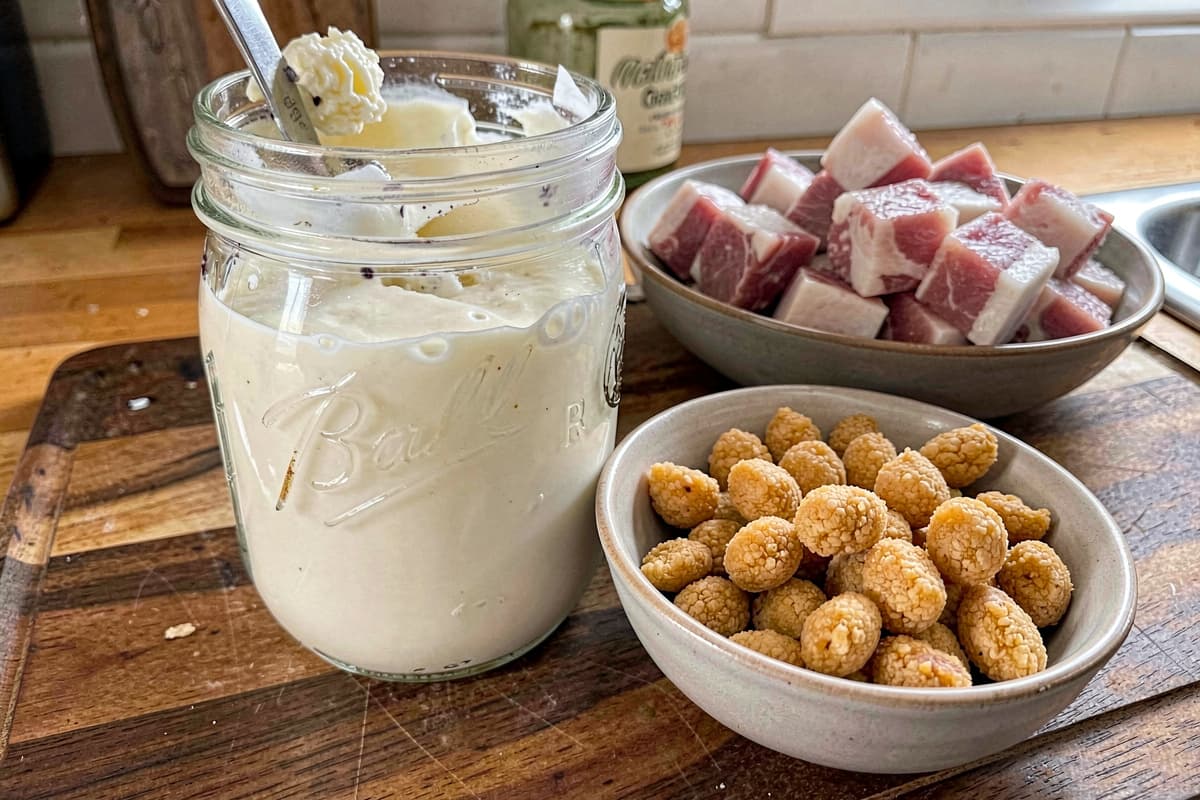
Carnivore lard is rendered from 1 pound of raw pork fat — preferably leaf fat (the soft white fat around the kidneys, the cleanest-tasting variant) — chopped fine and cooked over low heat for 3 to 4 hours until the fat liquefies and the connective bits crisp. Yields about 14 ounces of pure lard plus 2 ounces of cracklings. Salt is the only seasoning (added to the cracklings, not the lard). Pure lard has a smoke point of 374°F — lower than tallow (400°F) but higher than butter (302°F) — making it ideal for moderate-heat cooking, frying eggs, and pastry-style applications. Lard from leaf fat is white and clean-tasting; lard from back fat is slightly off-white and more pronounced in pork flavor. Both work for cooking. Pork fat costs $0 to $3 per pound at butchers (most discard or sell at a loss); home-rendered lard costs $1 to $2 per cup vs $5 to $7 per cup for shelf-stable Whole Foods lard. Stores 6 months refrigerated, 1 year frozen.
Ingredients
| Ingredient | Protein | Fat | Calories |
|---|---|---|---|
| 1 tbsp lard (per serving) | 0g | 13g | 115 |
| Per serving | 0g | 13g | 115 |
Macros per serving (after cooking and any fat draining). Source: USDA FoodData Central.
Instructions
- 1
Chop the pork fat into ¼-inch cubes. Smaller pieces render faster.
- 2
Place chopped fat in a heavy-bottomed saucepan or Dutch oven. Don't add water or oil — the fat renders itself.
- 3
Cook over LOW heat for 3 to 4 hours, stirring once an hour for the first 2 hours and then every 20 minutes.
- 4
Liquid fat will accumulate as the pork fat renders. The solid bits (called 'cracklings' or 'chicharrones') sink to the bottom.
- 5
Pull off heat when the cracklings are deeply golden-brown and have stopped releasing fat. This is the visual signal that rendering is complete.
- 6
Strain through cheesecloth-lined fine-mesh strainer into clean glass mason jars. Pure lard is light gold when warm and white-opaque when cooled.
- 7
Save the cracklings as a snack or topping. Toss them with a pinch of salt while still warm.
- 8
Cool lard to room temperature, then refrigerate. Solidifies into a smooth creamy spread. Stores 6 months refrigerated, 1 year frozen.
Nutrition per Serving
Frequently Asked Questions
Leaf fat vs back fat — which is better?
Leaf fat for cooking; back fat for sausages or charcuterie. Leaf fat (the soft fat around the kidneys) renders into clean, neutral-tasting white lard with a higher smoke point — best for general cooking and frying. Back fat (the harder fat across the loin) renders into more pork-flavored lard with a slightly lower smoke point — better for cured-meat applications where you want the pork character. For carnivore-eaters making one type of lard for everyday cooking, leaf fat wins.
Why low heat for 4 hours?
Higher heat (medium or above) browns the fat tissue too fast — the lard ends up off-color and tasting slightly burnt. Low heat for 4 hours renders the fat slowly and cleanly, producing white lard with a neutral flavor. The slow approach also concentrates the cracklings into a snack-worthy state rather than burning them. Slow cookers on LOW work for the same outcome with less attention; same time, same result.
Lard vs tallow vs schmaltz?
All three are animal-rendered fats with different flavor profiles and smoke points. Lard (pork) is mild, slightly creamy, smoke point 374°F. Tallow (beef) is firmer, more savory, smoke point 400°F. Schmaltz (chicken) is mildly sweet, distinctly poultry, smoke point 360°F. For carnivore cooking, having all three on hand lets you match fat to protein: tallow for beef searing, lard for pork dishes and pastry-style applications, schmaltz for poultry. Plus butter for everything else.
Track This Meal in Carnivore Max
Log this recipe, track your macros, and stay on top of your carnivore diet.
Download Free on iOS →You Might Also Like
Render 1 lb of beef suet into 12-14 oz of clean cooking tallow in 6-8 hours. Free from butcher trimmings, shelf-stable for 6+ months. 400°F smoke point.
RecipeRender 1 lb chicken skin and fat into 12 oz of schmaltz over 90 minutes. Cooking fat with deep poultry flavor — the Jewish-deli classic, carnivore-aligned.
Recipe1 lb pork skin scored, salted, slow-roasted at 300°F for 2 hours then crisped at 450°F. Salt only. The savory zero-carb chip alternative.