Homemade Biltong (Carnivore, No Vinegar)

By Marcus Whitley · Third-Generation Butcher · Updated 2026-05-08
South African air-dried beef. Top round salt-cured 24 hours, hung to air-dry 4-7 days. Salt only — no vinegar, no coriander. The strict-carnivore biltong.
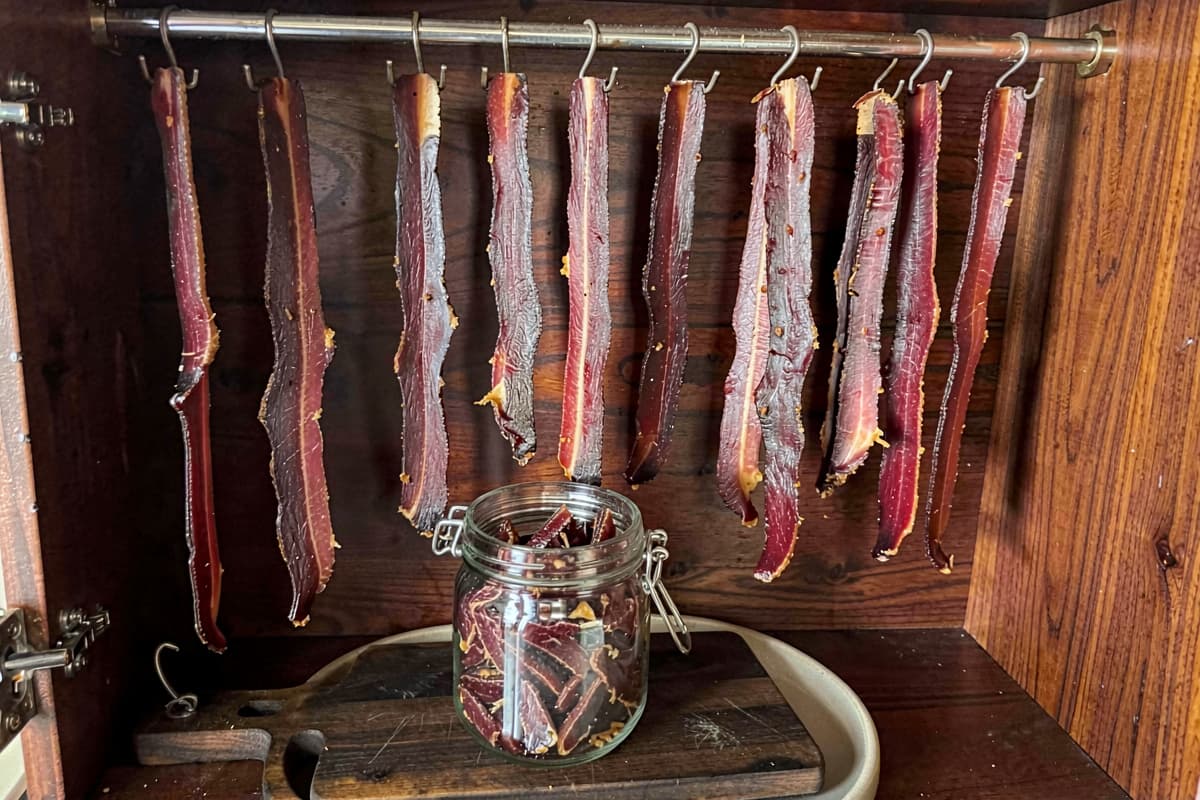
Carnivore homemade biltong is the South African dried beef tradition — sliced top round (about 1.5-inch thick strips), salt-cured for 24 hours, then hung to air-dry for 4 to 7 days at room temperature in a dry environment until the meat is firm and pliable. Salt is the only seasoning — traditional biltong recipes use vinegar (for safety and flavor) plus coriander seed, black pepper, and brown sugar. The strict carnivore version skips all of these and relies on salt alone for cure and preservation. Result is a more meat-forward dried beef than commercial biltong. A 1-ounce serving delivers 18g protein, 3g fat, and 100 calories. Top round costs $7 to $11 per pound; a 2-pound roast yields 12 to 14 ounces of finished biltong (60% weight loss to dehydration) at roughly $2 to $3 per ounce. Biltong drying requires a dry environment (humidity below 60%) — an unheated pantry, garage, or biltong box works; humid kitchens won't dry properly and risk spoilage.
Ingredients
| Ingredient | Protein | Fat | Calories |
|---|---|---|---|
| 1 oz biltong finished (per serving) | 18g | 3g | 100 |
| Salt cure (per serving) | 0g | 0g | 0 |
| Per serving | 18g | 3g | 100 |
Macros per serving (after cooking and any fat draining). Source: USDA FoodData Central.
Instructions
- 1
Slice the roast across the grain into 1.5-inch thick strips. Trim any visible fat (fat goes rancid during the long air-dry).
- 2
Toss strips with 2 tbsp coarse salt until evenly coated. Place in a non-reactive container (glass or stainless), cover, refrigerate 24 hours to cure.
- 3
After curing, rinse strips briefly under cold water to remove excess surface salt. Pat completely dry with paper towels.
- 4
Pierce one end of each strip with butcher's twine or hang from stainless steel hooks.
- 5
Hang in a dry environment (under 60% humidity) at room temperature 60 to 75°F. A pantry, unheated garage, or dedicated biltong box works. Strips should not touch each other.
- 6
Air-dry 4 to 7 days. Check at day 4 — biltong is done when the strips are firm but still flex slightly when bent.
- 7
If too soft at day 4, continue 24 hours and re-check. Most batches finish at day 5 or 6 in moderate climates.
- 8
Once dried, store in glass jars or vacuum-sealed bags. Keeps 1 month at room temperature, 6 months refrigerated.
Nutrition per Serving
Frequently Asked Questions
Biltong vs jerky — what's the difference?
Biltong is air-dried at room temperature over days; jerky is heat-dried at 165°F over hours. Biltong is thicker (1.5-inch strips vs ⅛-inch slices) and has a softer, more chew-and-flavor texture than the snap-and-crumble texture of jerky. Traditional biltong includes vinegar; traditional jerky includes soy sauce. Strict carnivore versions of both are salt-only. Biltong is a 5-day commitment; jerky finishes in 5 hours. For carnivore eaters who want both, the recipes are complementary.
Is room-temperature air-drying safe?
Yes — provided humidity is below 60% and air circulation is good. The 24-hour salt cure draws moisture out of the meat below the level where pathogens can multiply. The subsequent air-dry continues the moisture reduction at room temperature. Biltong has been made this way in South Africa for 200+ years without refrigeration. The danger zone is humid environments (above 70% humidity) where surface moisture stays high enough for mold to grow. If you live in a humid climate, refrigerator-drying or a dedicated biltong box with a fan is the safer route.
Why no vinegar?
Traditional biltong recipes include vinegar (apple cider, malt, or balsamic) for two reasons: safety (drops surface pH below the level where most pathogens grow) and flavor (slight tang). Strict carnivore excludes vinegar as fermented plant matter. The salt-only cure relies on salt's lower pathogen tolerance rather than acidity. For most home cooks in moderate climates this works fine. If you live in a high-humidity area or want the extra safety margin, traditional biltong with vinegar is fine outside of strict carnivore framing.
Track This Meal in Carnivore Max
Log this recipe, track your macros, and stay on top of your carnivore diet.
Download Free on iOS →You Might Also Like
2 lb top round sliced thin, salted, dehydrated at 165°F for 4-5 hours. Strict carnivore — no soy sauce, no Worcestershire, no brown sugar. $3.50 per oz.
RecipeTraditional Plains-Indian preserved food: dried beef ground fine, mixed 1:1 with rendered tallow. Lasts 6+ months unrefrigerated. Salt only.
RecipePork skin pre-dried then puffed in 425°F lard for 30 seconds. The bagged-snack texture, made at home. Salt only. 17g protein, 155 calories per oz.