Carnivore Diet vs Mediterranean Diet

By Sarah Jacobs, RD · Registered Dietitian · Published 2026-05-08
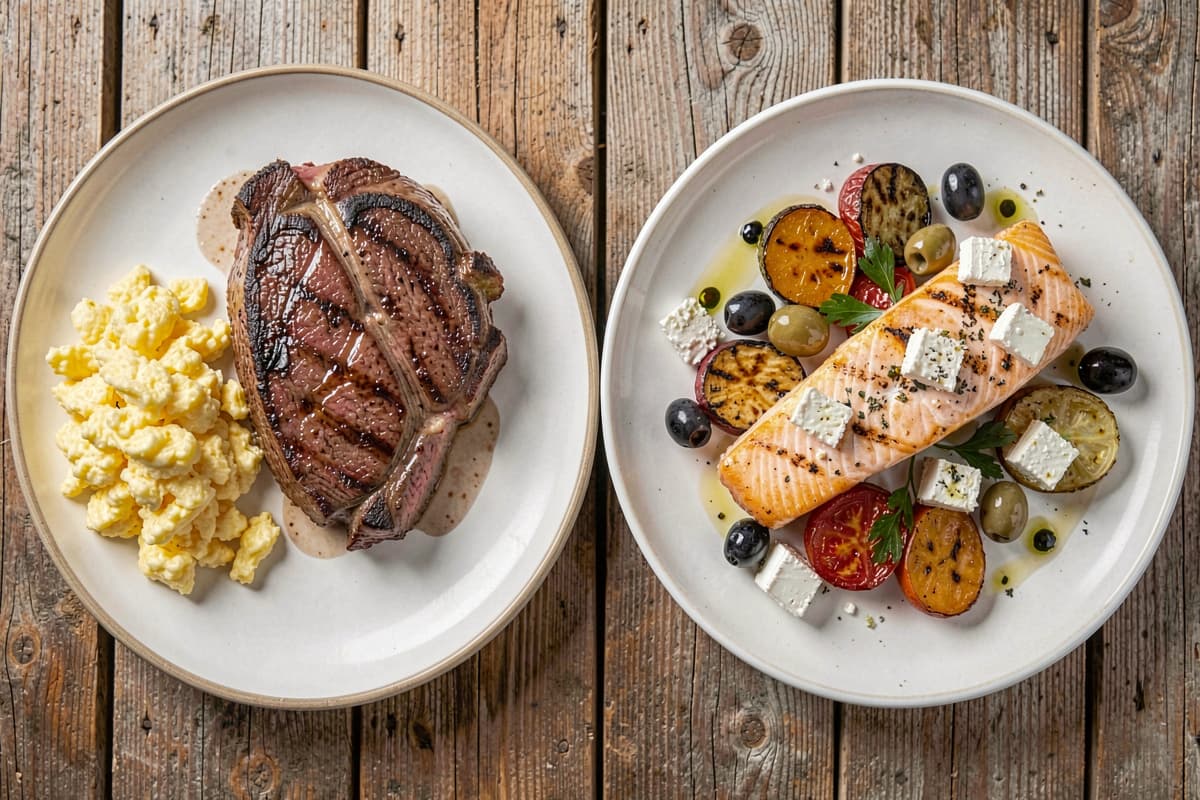
The carnivore diet and the Mediterranean diet sit at opposite ends of the dietary spectrum. The Mediterranean diet is plant-centric — vegetables, fruits, whole grains, legumes, nuts, olive oil — with moderate fish and poultry and minimal red meat. The carnivore diet is animal-only — beef, pork, lamb, fish, eggs, dairy — with zero plant foods. The Mediterranean diet has the most peer-reviewed research of any modern diet, particularly for cardiovascular outcomes; the carnivore diet has limited formal research but extensive self-reported autoimmune and weight-loss results. People aren't usually choosing between these two diets directly — they're choosing between two completely different framings of what 'healthy eating' means. The article below covers the actual food differences, what each diet prioritizes, and the goals each fits best. Mediterranean eaters typically consume 1,800 to 2,400 calories daily with 40 to 50% from carbs, while carnivore eaters consume similar total calories but with carbs near zero — the macro split is the most visible difference between the two frameworks.
Food list comparison
Mediterranean staples: olive oil, vegetables (tomatoes, cucumbers, leafy greens, eggplant, peppers), fruits (especially berries and citrus), whole grains (whole wheat bread, farro, bulgur), legumes (chickpeas, lentils, beans), nuts and seeds, fish (especially oily fish like salmon and sardines), moderate poultry, eggs, yogurt and feta cheese, herbs (oregano, basil, garlic, rosemary), red wine in moderation.
Mediterranean limits: red meat (1-2 servings per week), butter, processed foods, refined sugar, sweets.
Carnivore staples: beef (especially fatty cuts), pork, lamb, eggs, butter, beef tallow, hard cheese, fish (especially sardines), occasionally poultry. Salt.
Carnivore excludes: all plant foods including olive oil, all fruits, all vegetables, all grains, all nuts and seeds, herbs and spices (in strict frameworks).
The two diets share approximately one food: fatty fish like sardines and salmon. Almost everything else differs.
Macro and nutrient profile differences
Mediterranean. Roughly 35-40% fat (mostly mono-unsaturated from olive oil), 15-20% protein, 40-50% carbs (whole grains, fruits, vegetables). High in fiber (25-35g/day), antioxidants, polyphenols. Generally moderate in saturated fat.
Carnivore. 70-80% fat (mostly saturated and mono-unsaturated from animal sources), 20-30% protein, 0-1% carbs. Zero fiber. High in heme iron, B12, zinc, choline. Very high saturated fat by Mediterranean standards.
The two diets produce substantially different blood lipid profiles. Mediterranean typically lowers LDL cholesterol via the high mono-unsaturated fat and fiber; carnivore often raises LDL (especially in 'lean mass hyper-responders') while raising HDL and dropping triglycerides.
Research and outcomes
Mediterranean diet research. PREDIMED trial (most-cited diet study, 7,000+ participants over 5 years) showed 30% reduction in cardiovascular events compared to low-fat control. Multiple RCTs support metabolic syndrome reversal, cognitive decline reduction, and overall mortality benefits.
Carnivore diet research. Limited formal research. Lennerz et al. 2021 self-reported survey of 2,029 carnivore dieters found 95% reporting overall health improvements; results haven't been replicated in controlled trials. No long-term cardiovascular outcome studies yet.
For people deciding between the two, the practical answer is: Mediterranean has the safer long-term cardiovascular evidence; carnivore has more impressive short-term anecdotal results for specific symptoms (autoimmune, gut, mental health) that Mediterranean doesn't reliably produce.
Which fits which goal
Pick Mediterranean if: your goal is general cardiovascular and longevity optimization with the strongest research backing, you enjoy a wide variety of foods, you do moderate physical activity rather than strength training, or you're at elevated cardiovascular risk and want the most evidence-based approach.
Pick carnivore if: you have autoimmune disease, IBS, or other gut issues that haven't responded to plant-based approaches, you're using the diet for radical food simplification or elimination, your cardiovascular markers are good and you're optimizing for body composition or specific symptoms.
Don't try to combine them. Carnivore and Mediterranean are mutually incompatible by design — Mediterranean's plant-heavy structure is the inverse of carnivore's plant exclusion. People who feel pulled between the two often land on a third option (animal-based, paleo) that splits the difference.
Frequently Asked Questions
Is the Mediterranean diet healthier than carnivore?
By the standard of long-term cardiovascular research, yes. The Mediterranean diet has 50+ years of evidence for reducing heart disease and overall mortality. Carnivore lacks comparable research. By the standard of autoimmune symptom relief and severe weight-loss responses, carnivore often outperforms — but that evidence is anecdotal, not clinical.
Can a Mediterranean dieter switch to carnivore safely?
Yes, with adjustment. Coming from high-fiber, high-carb Mediterranean eating, the transition usually involves 1-2 weeks of digestive adjustment (lower fiber initially causes constipation in some people, then adapts). Bile production may take time to ramp up for the higher fat intake.
Why do they have such different views on saturated fat?
Mediterranean dietary research was conducted in the 1960s-1970s when saturated fat was understood to drive heart disease. Subsequent research has substantially walked back that interpretation, but the Mediterranean framing — saturated fat is bad, mono-unsaturated is good — remains. Carnivore eaters generally accept current research showing saturated fat from whole-food sources is fine for most people.
Can I eat a Mediterranean-carnivore hybrid?
Not really — they're philosophically opposed. The closest hybrid is 'pescatarian-keto' or 'low-carb Mediterranean,' which keeps fish, olive oil, and limited vegetables but cuts the grains and legumes. This isn't carnivore but isn't classic Mediterranean either.
Which is easier to maintain long-term?
Mediterranean is generally easier socially — most restaurants serve compatible food, family meals work, travel is straightforward. Carnivore is mechanically simpler (fewer foods to track) but socially harder. Long-term adherence rates favor Mediterranean for the average person; carnivore wins for people with strong identity-level commitment to elimination eating.