Burger Temperature Guide: Internal Temps + Cook Times

By Chris Bennett · Athlete + Injury Recovery · Published 2026-05-08
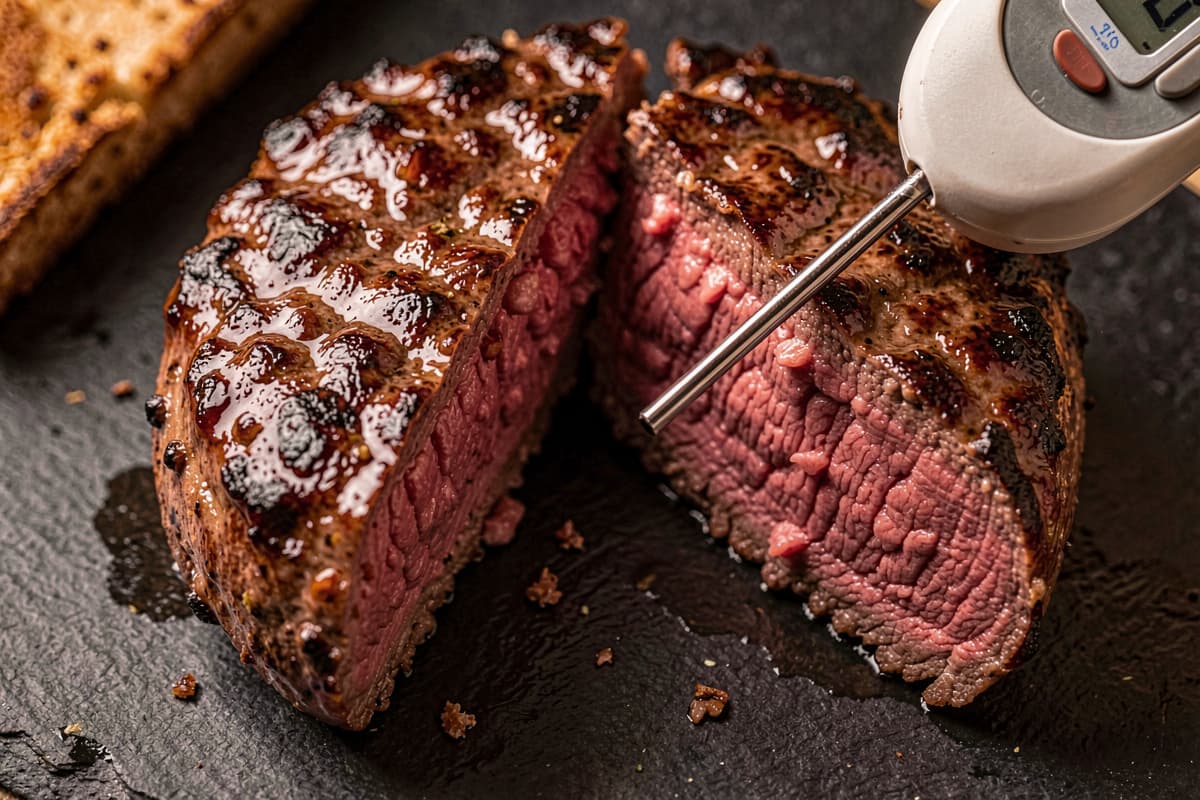
A burger's doneness is determined by internal temperature, not by color or time. The five standard doneness levels for ground beef are rare (120°F / 49°C), medium-rare (130°F / 54°C), medium (140°F / 60°C), medium-well (150°F / 66°C), and well-done (160°F / 71°C). The USDA recommends 160°F as the food-safety minimum for ground beef because grinding distributes surface bacteria throughout the meat. Most professional cooks pull burgers at 140-145°F when using high-quality 80/20 ground beef from a clean source. The table below lists internal temps, descriptions, and pan-sear times for ½-inch and ¾-inch thick patties cooked over high heat in cast iron. All pull-temperatures account for 3-5°F of carryover cooking during a 90-second rest. Smash burgers cook faster than the listed times because they're roughly ¼-inch thick — typically 2 to 3 minutes per side total.
Burger doneness chart (high-heat cast iron sear)
| Doneness | °F | °C | Description | ½ in (per side) | ¾ in (per side) |
|---|---|---|---|---|---|
| Rare | 120 | 49 | Cool red center, soft texture | 1.5 min | 2 min |
| Medium-rare | 130 | 54 | Warm red center, firm but yielding | 2 min | 2.5 min |
| Medium | 140 | 60 | Warm pink center, firm | 2.5 min | 3 min |
| Medium-well | 150 | 66 | Slightly pink center, firm-dry | 3 min | 3.5 min |
| Well-done (USDA min) | 160 | 71 | No pink, dry texture | 3.5 min | 4 min |
Doneness at a glance
Pull-temp vs final temp (carryover cooking)
When you pull a burger from the heat, the internal temperature continues to rise for the next 60-90 seconds as residual heat from the surface conducts inward. This is called carryover cooking. For burgers it's typically 3-5°F.
To land at a target final temperature, pull at: - 117°F to land at 120°F (rare) - 125-127°F to land at 130°F (medium-rare) - 135-137°F to land at 140°F (medium) - 145-147°F to land at 150°F (medium-well) - 155-157°F to land at 160°F (well-done)
Use an instant-read digital thermometer probed sideways through the thickest part of the patty, not from the top — surface heat throws off the reading.
Why USDA recommends 160°F (and why most cooks pull earlier)
The USDA's 160°F recommendation is based on grinding mechanics: when meat is ground, surface bacteria (E. coli, salmonella) get mixed throughout the patty. Cooking a whole steak to medium-rare is safe because the surface bacteria are killed by the sear; the rare interior was never exposed to outside air. With ground beef, the entire patty is essentially 'surface' once mixed.
Practically, professional cooks and home eaters who source from clean, fresh, recently-ground beef (asked the butcher to grind chuck right then, or used pre-packaged 80/20 within 1-2 days of grinding) pull burgers at 140°F (medium) for noticeably better juiciness without meaningful illness risk. People with compromised immune systems, pregnant women, and young children should follow the 160°F recommendation strictly.
Why smash burgers cook faster than these times
Smash burgers are 4 oz balls pressed to roughly ¼-inch thickness. Cook time at high heat is 3 minutes on the first side (long enough for the deep crust to form), then 60 seconds on the second side. Total: under 4 minutes versus 5-7 minutes for a ¾-inch patty.
Because they're so thin, smash burgers reach 140-150°F internal almost regardless of cook time — the goal isn't temperature management, it's getting the maximum surface crust before the interior overcooks. This is why thin smash burgers don't need a thermometer; thick ¾-inch burgers do.
Doneness by sight (when you don't have a thermometer)
Rare: patty feels soft when pressed with a spatula, deep red interior visible if cut. Medium-rare: patty has slight resistance, warm red center, juices running clear-pink. Medium: patty is firm to the touch, warm pink center, juices clear with a pink tint. Medium-well: patty is firm and slightly hard, only a sliver of pink, juices run clear. Well-done: patty is hard, gray throughout, juices fully clear.
This works in a pinch but a digital thermometer is faster and far more reliable. The $15 instant-read thermometer is the best burger-cooking purchase you can make.
Frequently Asked Questions
What temperature is medium-rare burger?
130°F (54°C) internal. Pull from heat at 125-127°F to account for 3-5°F of carryover during a 90-second rest. Most professional cooks consider this the optimal balance of warmth, juiciness, and safety for 80/20 ground beef from a clean source.
Is medium-rare burger safe?
USDA's safe-minimum recommendation is 160°F. Practically, medium-rare (130°F) burgers from fresh, properly handled 80/20 ground beef carry minimal illness risk — that's why every steakhouse and most restaurants serve burgers below 160°F. People with compromised immune systems, pregnant women, and young children should follow the 160°F minimum.
How long do you cook a burger on each side?
For ¾-inch thick patties on high heat: 2 minutes per side for medium-rare, 3 minutes for medium, 4 minutes for well-done. For ½-inch patties: 1.5, 2.5, 3.5 minutes per side respectively. For thin smash burgers (¼ inch): 3 minutes on the first side, 60 seconds on the second — total 4 minutes.
Can you eat a burger pink in the middle?
If the ground beef is fresh, properly stored, and from a known source, pink in the middle (medium or medium-rare) is widely considered safe by professional cooks. The USDA's stricter recommendation (160°F, no pink) applies if you don't know the supply chain or are immunocompromised.
What's the best thermometer for burgers?
Any instant-read digital thermometer with a thin probe and a 1-3 second response time. ThermoWorks Thermapen is the gold standard ($90+); $15-25 alternatives work well enough. Probe sideways through the thickest part of the patty, not from the top — top probing gets thrown off by surface heat.
You Might Also Like
Crispy-edged, juicy smash burgers made with 80/20 ground beef and butter. The ultimate simple carnivore meal ready in under 15 minutes.
RecipeA perfectly seared ribeye basted in golden butter — the king of carnivore dinners. 48g protein and 42g fat per 10 oz cooked. Pull at 130°F medium-rare.
ComparisonA detailed head-to-head comparison of ribeye and sirloin steaks covering macros, micronutrients, flavor profiles, and cost per pound.